

Today’s Mitsubishi is an odd brand. Not only does it have a lineup that’s just a fraction of what it once was, key vehicles with the Mitsubishi brand aren’t really Mitsubishis. It sells a Renault in Europe as the ASX, and it just revealed its version of the Nissan Leaf as the Eclipse Sportback. At least those badge-engineered cars come from within the Renault-Nissan-Mitsubishi Alliance. Mitsubishi’s newest effort, though, comes from outside the family, from the island of Taiwan.
This ASX Doesn’t Have A French Accent
This new Mitsubishi is called the ASX VR-e. Despite that name, the only thing it has in common with the Renault-based ASX is that it’s a SUV of sorts. It doesn’t even have fuel in common, as the VR-e is fully electric. So, where did Mitsubishi get the ASX VR-e? It actually comes from Foxtron, a Taiwanese automaker formed with investment from electronics manufacturer Foxconn. More specifically, it’s a rebranded Foxtron Bria, the production version of the Model B concept.
Mitsubishi ASX VR-e from the front three-quarter angleMitsubishi
It’s helpful to know that the ASX VR-e is the Bria, the production version of the Model B, because Mitsubishi didn’t share any detailed specifications about the car. So, we can glean those details from the Foxtron. Most versions feature a single motor powering the rear wheels that makes 229 horsepower and 258 pound-feet of torque. On the highest trim, Foxtron offers a second motor at the front, adding all-wheel drive and bringing power to 401 hp and torque to 516 lb-ft. It also reduces the 6.8-second 0 to 62 mph time down to just 3.9 seconds.
Regardless of the motors, all the Bria models use the same lithium-iron-phosphate battery pack with 57.7 kWh of capacity. Foxtron says that pack offers 320 miles of range on a charge, though that’s on a generous NEDC test cycle. We would expect that to be much lower on an EPA test cycle, especially as the Chevy Bolt and Nissan Leaf have more capacity and lower ranges. The Bria also supports DC fast charging at rates up to 134 kW, and Foxtron says it can reach an 80% charge in about half an hour.
Wide shot showing the Mitsubishi ASX VR-e dashboardMitsubishi
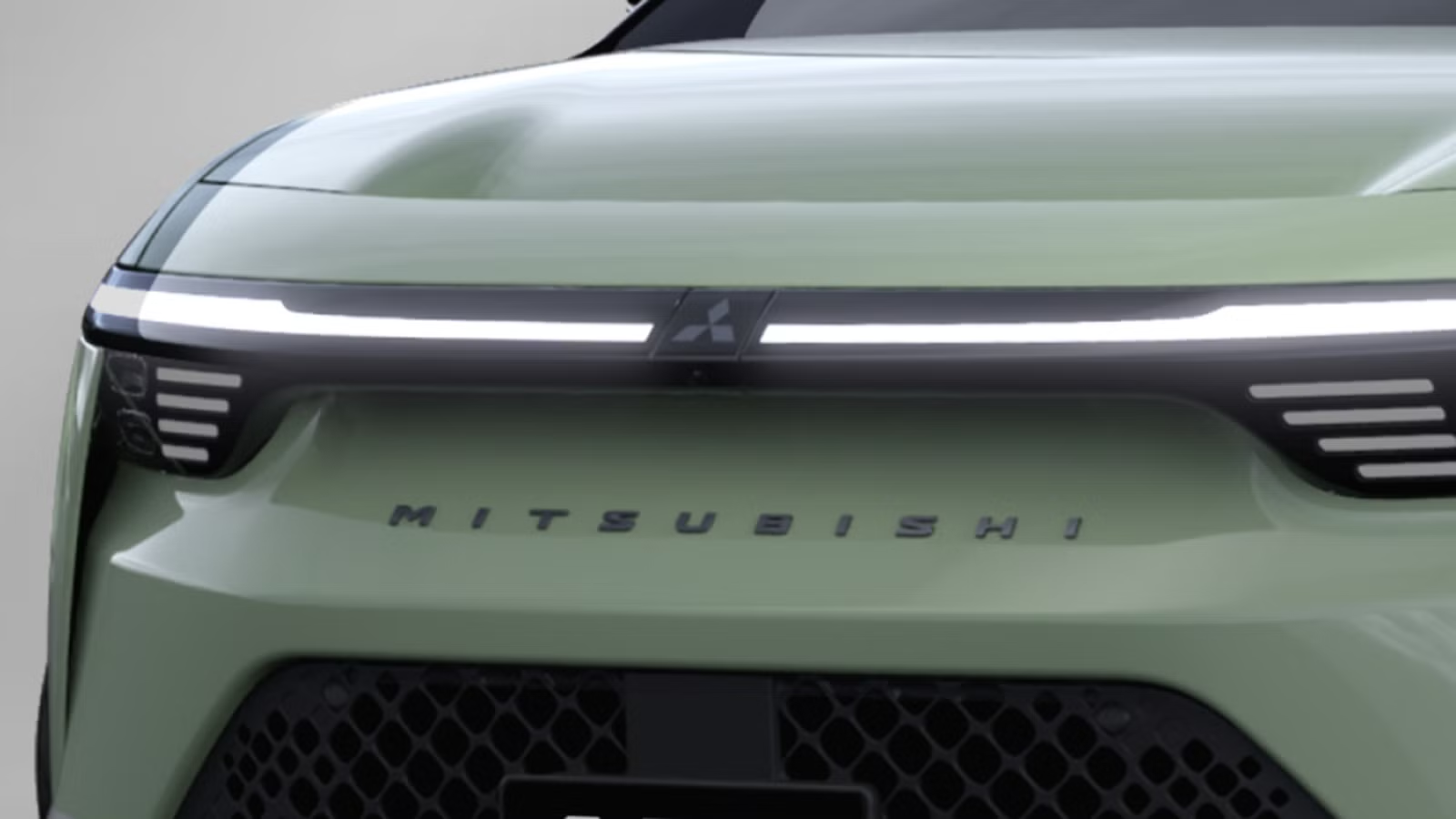
With the main details out of the way, we can get to what makes the Mitsubishi unique, and that boils down to the slight styling changes. Mitsubishi really did use the same playbook it used for the Eclipse Sportback on the ASX VR-e. It even leaned on the company’s sporting heritage by using the “VR” trim prefix, with the company itself highlighting the connection to its high-performance VR-4 models of cars such as the Galant and 3000GT. The front end of the Mitsubishi has the brand spelled out in the front vent, and the lighting signature is slightly different. It also has different patterns on the rear-most pillars, plus unique wheels. Otherwise, it has the same Pininfarina-penned body as the Foxtron. As for the interior, it’s identical except for the badge on the steering wheel.
It Goes On Sale In Australia This Year
Mitsubishi hasn’t announced pricing for the ASX VR-e yet, but it will be available by the end of the year. We don’t expect to see the car in the US anytime soon, though we wouldn’t rule it out completely. Mitsubishi already has the small EV niche in its US lineup filled with the Eclipse Sportback, so it doesn’t need to add another one. Also, Foxtron doesn’t sell cars in the US. We did notice something interesting in Foxtron’s release about the Bria, though. The company highlighted the fact that it leaned on development team based in the US for the chassis and platform, and apparently the project was led by someone in Detroit. So Foxtron may be angling at trying to get its cars into the US.
CarBuzz Insight – Why This Matters:
While it’s a little disappointing to see that so much of Mitsubishi’s lineup around the world has become rebadged products from other automakers, it’s probably helping to keep the automaker afloat. Without having to spend huge amounts of money to develop completely new vehicles, especially EVs, from the ground-up for relatively small market segments, it can save money for bigger selling products that are more representative of the brand. It is working on its own platform for the next Outlander, and it will lead the new body-on-frame platform that will be shared with Nissan when it launches the Pajero around the world this year.
As for the ASX VR-e, it probably won’t play a role in the US, but we’ll be curious to see what its original creator, Foxtron, has planned. While the VR-e hasn’t been announced for markets besides Australia, it doesn’t seem like Foxtron plans to stop there, based on how it’s using expertise from regions with established car industries. It’s possible we could see the company try to enter the European market, and maybe the US in the future. Besides the American team working on the Bria, Foxtron has previously looked into the US, having sought partnerships with various American automotive startups.
