

Disconnecting your sway bar is great for off-road articulation and for on-highway ride comfort. But breaking the link between wheels on the same axle is also the fastest way to some very terrifying handling. CarBuzz has just found a new patent from Hyundai that could bridge that gap. Offering adjustable levels of roll control instead of an on-off switch.
A Sway Bar With A Little Sway Inside
Hyundai Sway bar patentHyundai
A stabilizer bar (or sway bar or anti-roll bar) is a solid metal bar that connects the suspension on the left side of an axle with the suspension on the right. Front, rear, whatever the driver or engine, nearly every modern vehicle has one in front and one in the back. They work by pushing the suspension on the other side of the vehicle in the opposite direction, reducing body roll.
Because they limit suspension movement, they, well, limit suspension movement. They also make the car feel stiffer unless you hit a bump that’s perfectly perpendicular to the road and hits both tires at the same moment. Like an expansion joint.
In Hyundai’s new invention, the sway bar is sliced in the middle to create two pieces. They join at the center of the vehicle with the help of a short shaft that goes inside the two sections.
Springs And Machined Grooves Make Things Happen
Hyundai Sway bar patentHyundai
The joining section has multiple springs that stick out of it from the middle. Those short leaf springs mesh with grooves cut into one of the two halves of the sway bar.
To hold the joining section in place, and keep the bar as one assembly, Hyundai uses dowel pins. One goes into the same section of the sway bar as the spring notches, through an elongated hole in the bar. The other side uses a round hole, and both corresponding holes in the joining section are also round.
The elongated hole and the springs let the joining section rotate in the first section of the bar. That changes the resistance of the sway bar, and the more the two sections twist the higher the resistance. Until it hits the end of its movement, at which point it acts like a solid bar.
When you steer, the body roll will quickly use up the movement and then the vehicle shouldn’t roll much further. But when you hit small bumps, the two wheels can move small amounts without the full force of the bar.
That movement should improve ride comfort because you’re feeling the car’s springs and not the sway bar. Hyundai says it will reduce road noise as well. Even better, this system doesn’t require any electrical components or complex mechanisms. Just some relatively simple machining.
Because it’s so simple, it won’t be as effective as some hydraulic systems like those used by Rivian and others or the active end links used by Porsche, or the actuator systems used by BMW and Bentley. But it has the advantage over all of those of being incredibly simple and therefore cheap. A big win for Hyundai.
CarBuzz Insight – Why This Matters
Hyundai RN22e Concept renders preview what will become the Ioniq 6 N.Hyundai
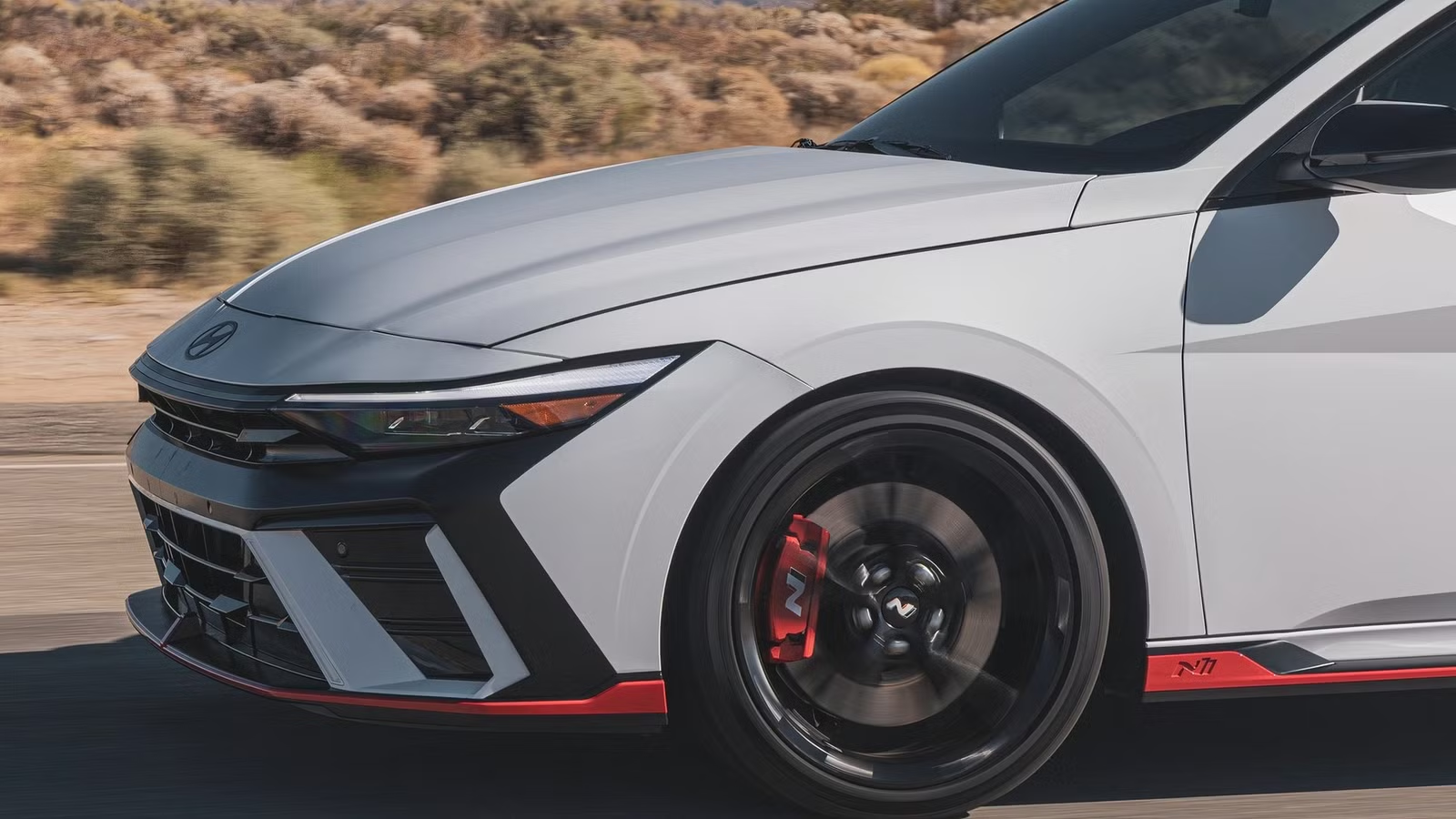
Improving ride comfort without hurting highway stability and handling (and the other way around) is a big issue for automakers. This seems to be a very clever yet incredibly simple way to do it. Which makes it more likely than most to end up on cars you can actually buy and afford, like the Elantra N, which is one of the few affordable driver’s cars left on the market.
Patent filings do not guarantee the use of such technology in future vehicles and are often used exclusively as a means of protecting intellectual property. Such a filing cannot be construed as confirmation of production intent.
Source: US Patent & Trademark Office
