

Automotive
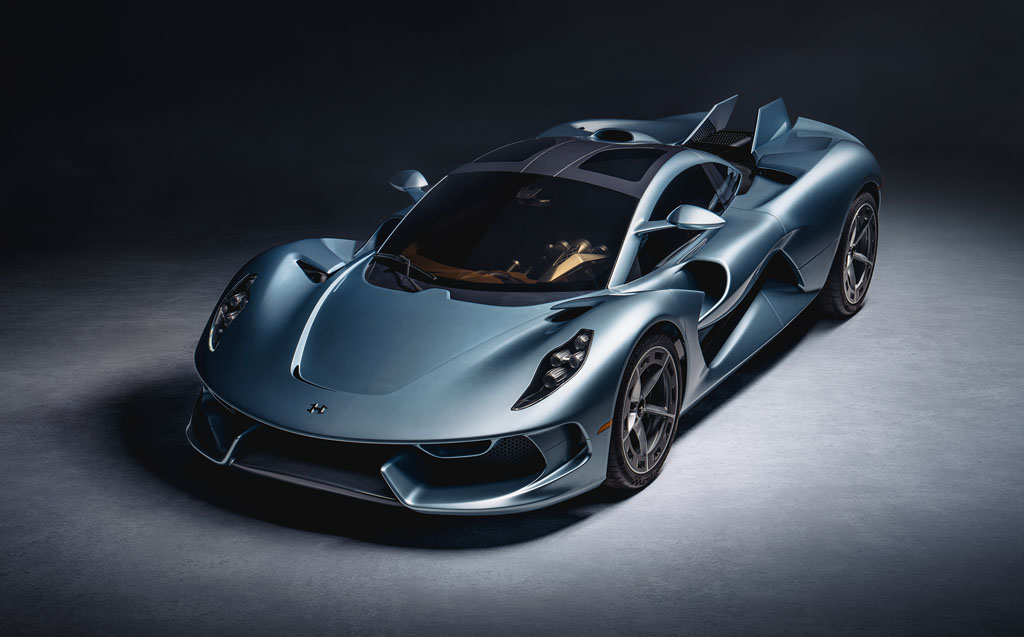
Hennessey appears ready to take a very different path with its next bespoke supercar, and that is exactly what makes the reported Blackbird so interesting. Named after the legendary Lockheed SR-71 Blackbird spy plane, this new machine sounds like a deliberate rejection of where much of the hypercar world has gone. No turbochargers, no hybrid system, no giant dashboard screens, and no automatic-only experience. Instead, the Blackbird is said to lean into one of the most emotional formulas left in the performance world: a high-revving naturally aspirated V8, rear-wheel drive, and a six-speed gated manual gearbox.
That alone makes the Blackbird feel special in 2026. While most modern supercars chase power through electrification, forced induction, and complex drive systems, Hennessey is reportedly working with Ilmor Engineering on an all-new 6.2-liter V8 that could produce between 800 and 850 horsepower while revving beyond 9,000 rpm. If those numbers hold, the Blackbird would not just be powerful. It would be theatrical in a way that modern performance cars too often forget. There is something deeply old-school about asking the driver to manage all that power through three pedals and a visible metal gate.
Weight is another major part of the story. Hennessey is reportedly targeting a dry weight under 3,000 pounds by using a full carbon-fiber tub and carbon-fiber body panels. That would put the Blackbird in rare territory for a modern supercar, especially one with V8 power and real roadgoing equipment. With rear-wheel drive, Michelin Pilot Sport Cup 2 R tires, and projected acceleration to 60 mph in about 2.5 seconds, the car sounds more like a driver’s weapon than a number-chasing science project. A claimed 220-mph top speed may not dethrone the McLaren F1 as the naturally aspirated benchmark, but it is still more than enough to make the Blackbird properly exotic.
The design reportedly follows the same analog-meets-aerospace idea. A roof scoop, flying buttresses, large side intakes, a massive rear diffuser, diamond-shaped quad exhaust outlets, and active rear flaps give it the presence expected from a seven-figure supercar. Those rear flaps are said to deploy at 71 mph at a 71-degree angle, a clever nod to the planned 71-unit production run and the aviation theme. It sounds dramatic, but with a name like Blackbird, drama is part of the assignment.
Inside, the reported cabin may be the best part for purists. The gated shifter is expected to sit proudly as the centerpiece, backed by five analog gauges with a 10,000-rpm tachometer placed front and center. Physical controls, a rotary drive-mode selector, an overhead start button, aviation-inspired switches, and no screens would make the Blackbird feel almost rebellious compared with today’s glass-cockpit supercars. Even the practical details sound thoughtful, with rear luggage pods and a front cargo area reportedly sized for two full-size carry-on bags.
Hennessey is said to be planning the Blackbird for 2029, after Venom F5 production wraps in 2028. Only 71 examples are expected, priced at $2.5 million before taxes, with global homologation planned. If the final car lives up to the reported specifications, the Blackbird could become one of the rarest and most compelling analog supercars of the modern era. In a world where performance cars keep getting quicker, quieter, heavier, and more digital, Hennessey may be preparing something that feels refreshingly human: loud, mechanical, lightweight, manual, and unapologetically built for drivers.
Mike Floyd is a finance executive by trade and a car enthusiast at heart. As a CFO with a keen eye for detail and strategy, Mike brings his analytical mindset to the automotive world, uncovering fresh insights and unique perspectives that go beyond the surface. His passion for cars—especially his favorite, the Porsche 911, fuels his contributions to Automotive Addicts, where he blends a love for performance and design with his professional precision. Whether he’s breaking down industry trends or spotlighting emerging innovations, Mike helps keep the site both sharp and forward-thinking.
