

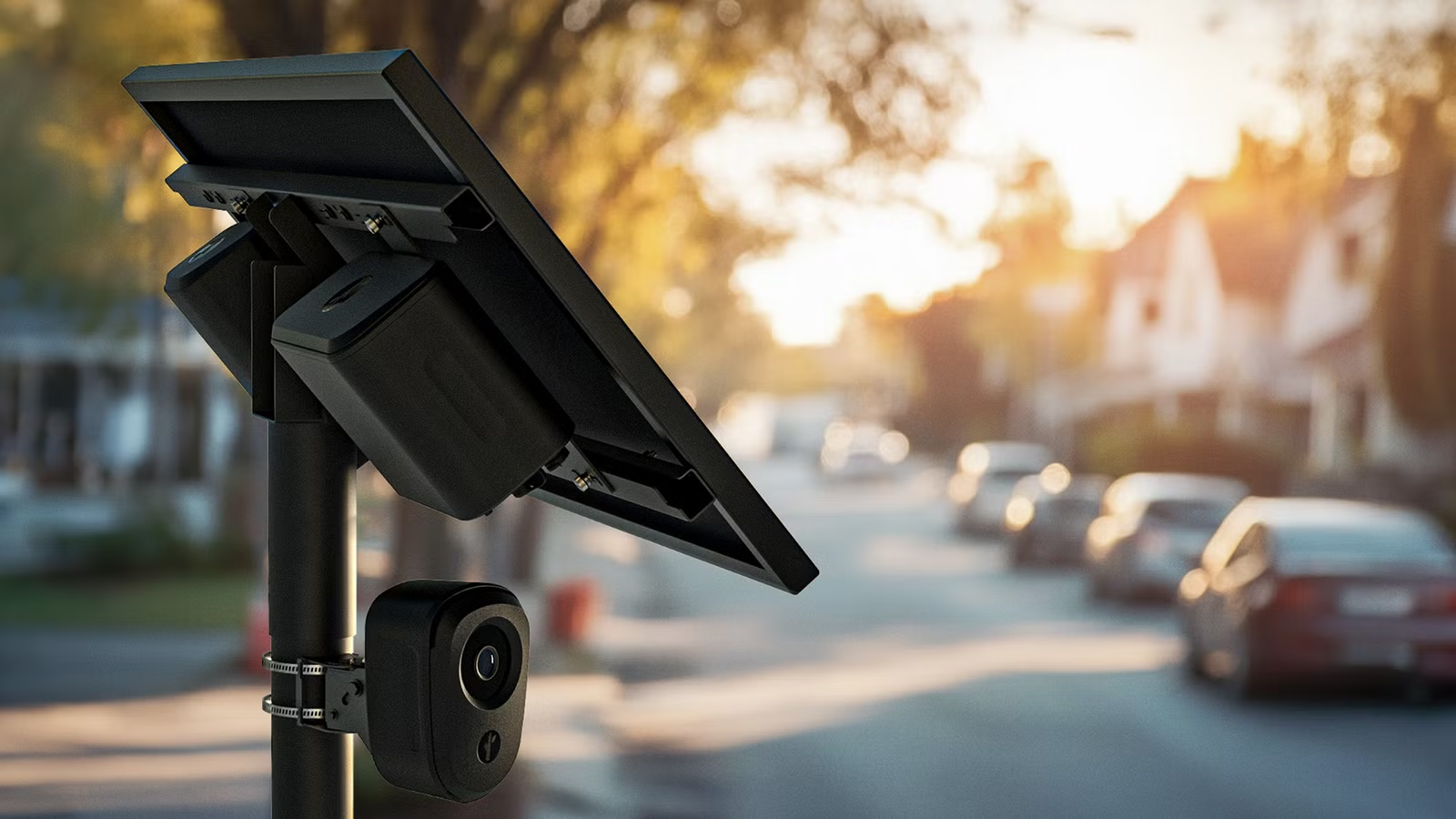
Flock has become one of the most hated private companies in the US, with its AI-powered mass surveillance cameras scanning over 20 billion cars per month. With Flock’s ever-expanding network across the country, the chances are high you were scanned at some point. And if you were scanned once, then you were probably scanned several times. Welcome to the modern world.
On that note, a non-profit has set up a website that could tell you if your vehicle was searched for in the system. And it’s supremely easy to use.
Watching The Watchers
Have I Been Flocked – Flock Camera database tool.HaveIbeenFlocked.com
A website called Have I Been Flocked aggregates records of searches performed by Flock’s customers (law enforcement agencies) and makes them searchable by license plate number. The data consists of “audit logs” tracking searches made within the Flock system, so it’s not a record of all cars being captured by the Flock system. Rather, it’s a data set of vehicles that have had searches run on them in the system.
The data comes from audit logs that have been released via Freedom Of Information Act (FOIA) requests. We have a link in the source block at the end of this post if you want to check it out.
“The basic function of the Freedom of Information Act is to ensure an informed citizenry, which is vital to the functioning of a democratic society.”
– US Department of Justice
However, this doesn’t mean your license plate will return a result if it has been searched for. As Footnote4a, the non-profit group behind the website points out, “the data is incomplete as few governments provide easy access to these logs, and the records we obtain are often redacted.” Still, it’s at least something people can do amid all this controversy.
Escaping Algorithmic Surveillance
The noRecognition wrap designed to confuse Flock cameras.Bill Swearingen
Naturally, many people are disgusted by national mass surveillance networks and have been coming up with strategies to defeat them. Of course, a stepladder and a can of spray paint are a guaranteed solution, but it’s also highly illegal. So, people have been coming up with more creative approaches to preventing their movements from being tracked by legislatively unchecked surveillance. One interesting workaround comes from cybersecurity researcher Bill Swearingen, which doesn’t touch the cameras at all.
During this year’s Def Con cybersecurity conference in Las Vegas, Swearingen displayed a 2009 Toyota Yaris wrapped with a confusing pattern, and featuring the logo of automotive publication Donut Media. The computer-generated patterns don’t block surveillance cameras. Instead, they scramble the camera’s ability to identify the object as a car and, as Swearingen puts it, allows people to “opt out of being tracked.”
CarBuzz Insight – Why This Matters
Flock NovaFlock
The nature of Flock’s unchecked, privately owned mass surveillance network is something we in the US, as a free society, have been destined to face sooner or later. A common point made is that the kind of tracking Flock makes available should require warrants, legislation, and functional oversight, and that lookups should be rare. However, Flock is a private company and that would hurt the business model of access to all the data all the time.
Websites like HaveIBeenFlocked.com exist to show how these systems are designed for citizens’ private movements to be collected, cataloged in databases, and sold for profit. Of course, for law enforcement, it’s an incredible tool to be able to put in a license plate number and see where it’s been or follow it around the city. But being able to stop and search anyone’s car without having to provide a lawful reason would also be a useful tool.
The next stage for Flock and its competing surveillance systems is tagging wireless signals (particularly Bluetooth IDs) to create digital fingerprints of people, so the system can follow the person rather than the car.
Sources: HaveIBeenFlocked.com / DeFlock / Flock Safety / FOIA.gov / TechCrunch / noRecognition
