

The Drive 🤝 your inbox. Every weekday
The Daily Brief wraps up the biggest stories and our exclusive reporting on the auto industry and car culture.
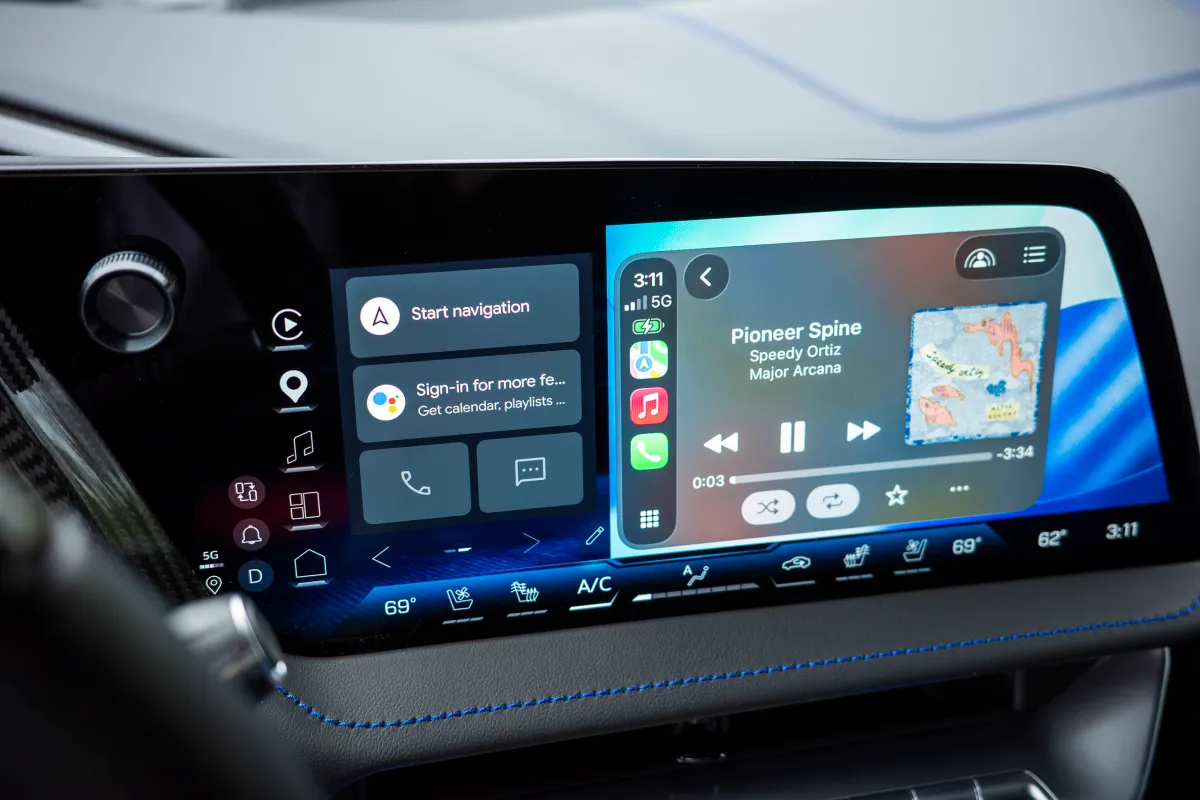
Last week, General Motors announced a new infotainment user experience launching first in trucks before “expanding across the broader portfolio,” in the company’s words. The revamped UX features Apple CarPlay and Android Auto in a new, picture-in-picture layout, and because the text billed this system as “a single scalable foundation that can extend across electric, gas and diesel-powered vehicles,” many—myself included—interpreted it to mean that GM was finally conceding its war against phone projection in EVs. Today, I regret to inform you that it seems nothing’s actually changed.
To quickly recap, every new GM EV since 2024 has forgone easy, full-featured connectivity with Apple and Google’s smartphones—except, weirdly, the Cadillac Lyriq. Gas cars have been spared of this, though CEO Mary Barra once teased ditching it on those, too.
On Monday, prominent tech journalist Joanna Stern posted on X that, “GM has confirmed it is NOT rolling phone projection to GM EVs. Instead this announcement is specific to JUST their new gas powered light-duty pickups, which have always supported Apple CarPlay and Android Auto.” This was the worst case scenario: That GM would remain on its path to withhold phone projection, a feature the vast majority of car buyers say they want, from their EVs for reasons that, frankly, are pretty hard to justify. We’ve been over them before, so we won’t revisit them here.
The CarPlay and Android Auto experiences as they’ll appear in the 2027 Chevrolet Silverado and GMC Sierra. General Motors
This was a very definitive claim, so I reached out to GM itself and asked directly: Will phone projection be offered in upcoming EVs? A representative responded with a decidedly less definitive statement that, frankly, just convinces me that GM is maintaining its current position on the matter:
“We don’t have any news about EVs. The team’s focus is on the 2027 light-duty pickups given their importance to the business. GM’s mention about ‘broader portfolio’ and the UI being a ‘scalable foundation’ is intended to convey flexibility of the new UI framework and not meant to signal future plans regarding projection.”
So, there you have it: While some higher-ranking folks at the company have billed this new picture-in-picture approach in trucks as a marriage of the projection and native environments—”a single experience rather than moving from room to room inside a house,” in the words of Software Defined Vehicle Engineering Executive Director Mike Wahlstrom—it appears that gas cars will still get CarPlay and Android Auto, and battery-powered ones won’t.
At this point, the nebulous nature of GM’s stance and the arbitrary line drawn between the haves and have-nots (why the Lyriq?) have arguably sowed enough confusion to the point that they’re not really delivering any value to the business. That confusion will be difficult to dispel if GM eventually relents here. All I can say is that the new infotainment system looks good, and GM should carry it over, exactly as it appears in the Silverado and Sierra, to as many of its products as possible. Wouldn’t that be nice and simple?
Got a new tip? Drop us a line at tips@thedrive.com
Add The Drive as a preferred source on Google to see more of our reporting.
Backed by a decade of covering cars and consumer tech, Adam Ismail is a Senior Editor at The Drive, focused on curating and producing the site’s slate of daily stories.
