

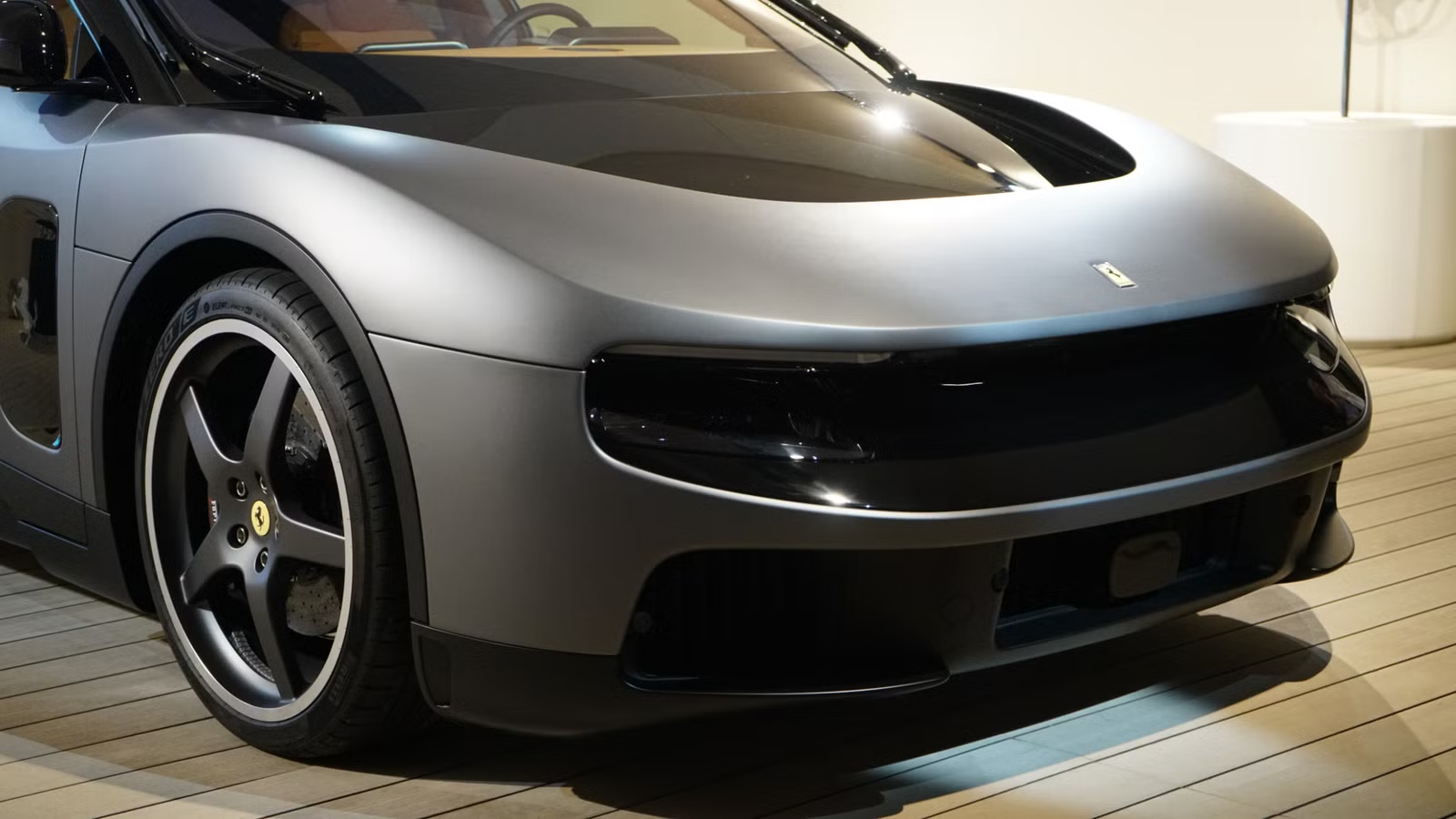
Ferrari’s first-ever EV hasn’t had a warm reception, at least from the broad public. Most of the gripes have to do with the looks, which generous viewers may describe as unique, while others may call it a travesty. Ferrari’s old boss is certainly in the latter camp, and we can’t say we’re exactly fans of the look either. Ferrari may have the last laugh, though, because it’s selling them without any trouble.
Ferrari Has Already Hit Its Sales Target
The Financial Times reports that Ferrari has already sold enough Luces to hit their first-year goal, citing two knowledgeable anonymous sources. That target was apparently around 500 cars, and the news outlet further reports that the target will rise to 600 units for the years following. The sources also indicated that China seemed more receptive to the car than other markets.
Ferrari Luce designed by Sir Jony Ive.Ferrari
It’s impressive that Ferrari managed to hit the goal in just about two months since the reveal, though the target isn’t especially ambitious. For perspective, Ferrari sold 13,640 cars globally last year, and the previous year was nearly identical. If sales of all its current models remained the same, plus 500 Luces, that would be 14,140, and those Luces would make up just 3.5% of the automaker’s sales.
Why People May Be Buying The Luce
Even though Ferrari hasn’t set huge sales targets for the Luce, the reaction to it still makes the low bar seem towering. However, we have a few ideas as to why Ferrari hasn’t had trouble selling them. The first is that there are collectors that won’t want to miss out on the very first electric Ferrari. Even if the styling is polarizing, and it doesn’t have a sonorous engine, it’s a genuinely historic car for the brand. If you pride yourself on owning significant Ferraris from history, how could you pass this up?
Ferrari Luce designed by Sir Jony Ive.Ferrari
Another reason would be to curry favor with Ferrari. Ferrari’s rarest, fastest, and most-desirable cars are made in extremely limited numbers, and they’re usually sold out even before they’re revealed. This is because Ferrari will get in touch with potential customers ahead of time and give them an opportunity to get the car ahead of others. It’s well-known that you have to have a good relationship with the company and have a history of purchasing from them if you want to ever be selected to buy one of these special cars. Now, Ferrari made it clear that buying a Luce would not be a requirement to be eligible for other special vehicles. Even though buying a Luce may not be a requirement, it could still help your reputation with the company. It certainly won’t hurt it.
If it’s true that Chinese buyers are buying these, there may also be a practicality component to the sales. That sounds a bit crazy when talking about a Ferrari, but bear with us. In some parts of China, there are restrictions on road access for combustion-powered cars that EVs get to bypass, among other perks for EV owners. If you’re in one of those areas and want a Ferrari, but also want to be able to drive it without hassle, the Luce would make a lot of sense. It’s also entirely possible that there are some buyers that are excited to potentially having not just their sports cars, but their practical cars, all wearing the prancing horse, and the Luce with its seating for five and a big hatch, will also be able to do.
2027 Ferrari Luce exterior at Goodwood Festival of SpeedMichal Okonski/CarBuzz/Valnet
CarBuzz Insight – Why This Matters:
For Ferrari, this is obviously good news that, even if much of the world was thoroughly disappointed with the Luce, the people that matter most to it, the customers, are still willing to buy. It’s also a sign that established supercar companies can launch an EV and see some success. It’s particularly interesting in the wake of Lamborghini seeming to back off of EV development as a result of sluggish adoption of the technology across segments. We’ll be curious to see if Ferrari’s experience might get Lamborghini and other supercar automakers to look at continuing EV development, at least for niche models.
Source: Financial Times, Transportation Research Part A: Policy and Practice
