

Credit: FAW Hongqi
- FAW Hongqi said the battery needs just 8 minutes and 3 seconds to go from 10% to 97%.
- Hongqi didn’t reveal a mass production timeline.
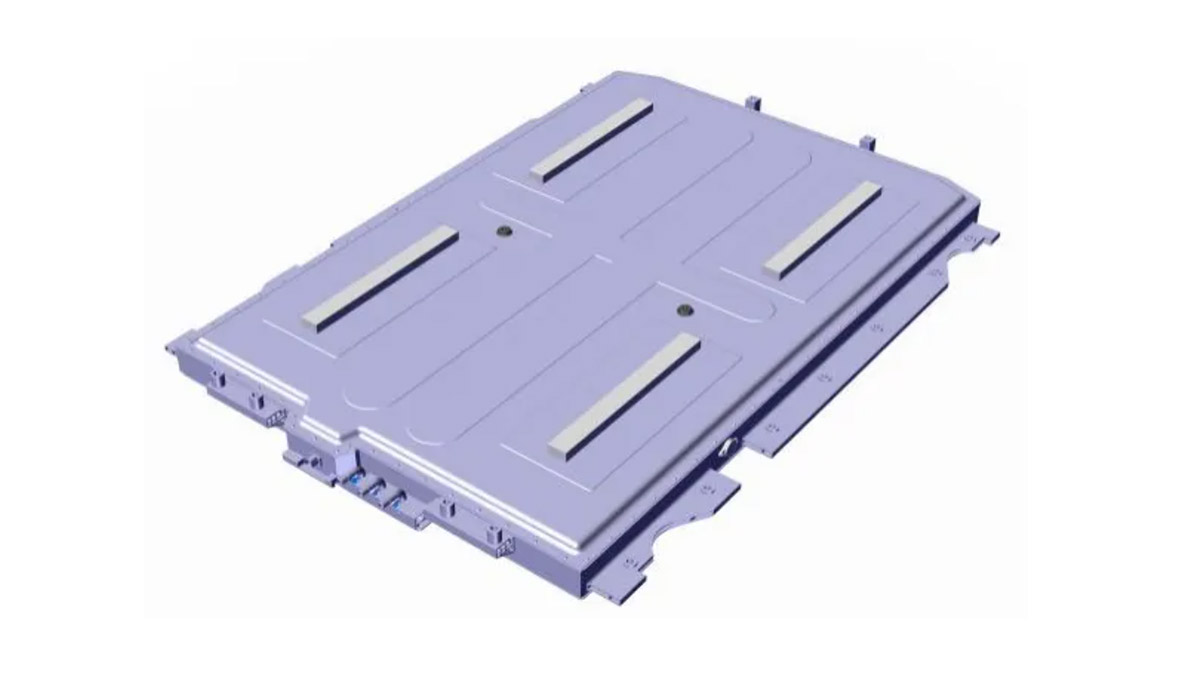
China FAW Group’s Hongqi brand said its newly developed ultra-fast charging battery can go from 10% to 70% in 3 minutes and 41 seconds. If it reaches mass production, that would be faster than BYD’s (HKEX: 1211) second-generation Blade Battery.
The battery, developed in-house by the Hongqi brand together with China Automotive New Energy Battery Technology (CNET), recently completed charging performance tests at 25 C, according to a statement on Tuesday.
Test data showed the battery needs just 3 minutes and 41 seconds to charge from 10% to 70% SOC (state of charge), and 8 minutes and 3 seconds to go from 10% to 97% SOC, figures that lead the industry, Hongqi said.
By comparison, BYD’s second-generation Blade Battery, unveiled on March 5, takes 5 minutes to go from 10% to 70% and 9 minutes to go from 10% to 97% with the company’s latest flash charging facilities.
Hongqi didn’t mention a mass production timeline for the battery, nor which model would be the first to carry it. BYD’s second-generation Blade Battery and flash charging technology are already available in a large number of models.
The battery features a highly efficient ultra-fast charging anode that breaks through the charging rate bottleneck of cells, allowing a peak charging rate of 12C, Hongqi said.
The brand also developed its own electrolyte with low desolvation energy to lower the barrier to lithium-ion migration.
Using composite carbon source coating plus bulk-phase doping modification technology, the cell’s internal resistance is 15% lower than that of comparable cells, improving charge transfer efficiency and charging response speed, Hongqi said.
On thermal management, the battery uses an intelligent liquid cooling system for even temperature distribution, keeping the temperature difference across the pack within 3 C during fast charging.
The system adaptively adjusts its temperature control strategy based on conditions such as driving and parking, keeping the battery in its optimal operating range and reducing thermal management energy consumption, the brand said.
The battery also uses a safety-boundary-based adaptive fast-charging strategy that monitors and limits the rate of cell temperature rise in real time, dynamically adjusting the charging power output curve.
At the same time, the system performs real-time closed-loop verification of cell voltage and charge to avoid problems including overcharging and overvoltage.
The validation of the ultra-fast charging technology marks a significant milestone in power battery technology innovation, Hongqi said.
This is Hongqi’s second move in batteries in recent months. On December 31, the brand rolled out its first prototype vehicle equipped with an all-solid-state battery pack, built on the Hongqi Tiangong 06.
FAW Hongqi is in talks with Stellantis to utilize its Spanish plant to accelerate European expansion.
