

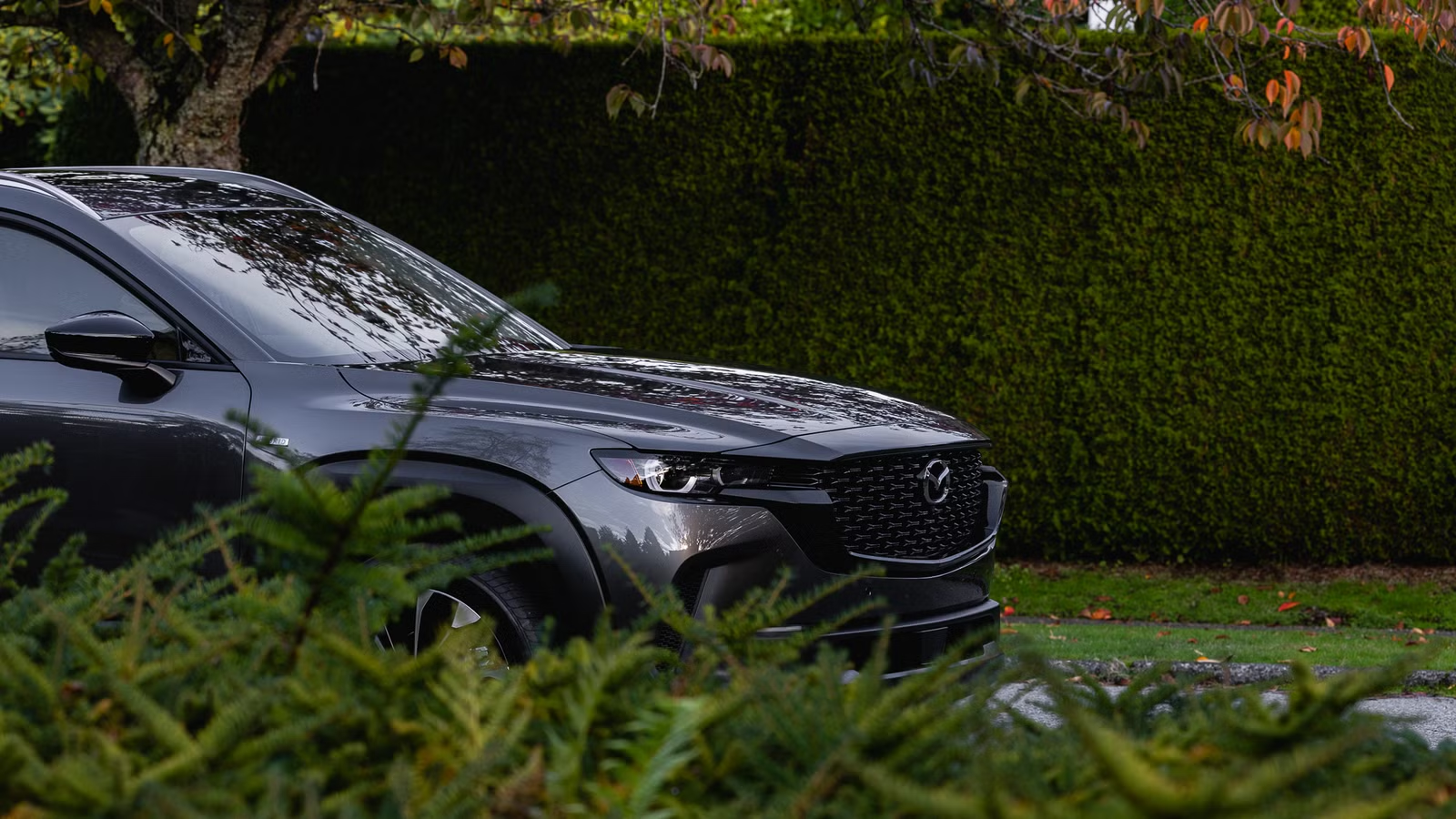
When almost every other automaker was scrambling to catch up with Tesla, buoyed by the tech industry pushing the narrative that in just a few years the only cars people would be buying are all-electric, Mazda seemed to just shrug its shoulders and toss out a compliance car in the US and appease European legislation, albeit with realistic range this time. Now, Mazda is saying the quiet part out loud – it doesn’t believe the all-electric hype.
That doesn’t mean Mazda doesn’t accept the realities of new technologies, though.
Mazda’s Reluctance To Dive Headfirst Into Electrification Has Paid Off
2025 Mazda CX-60 PHEV ChargingMazda
Some automakers have gone so far as committing to a complete all-electric lineup by a certain year, and have been forced to walk that back due to reality. Mazda wasn’t one of them. Those brands invested enormous amounts of money racing each other to develop electric vehicles and increase range, and are suffering for it now. Mazda has stuck with combustion engine development and, speaking with Car Magazine, Moritz Oswald says there’s no plan to change that.
“Combustion engines are still, globally, super relevant. If you talk about markets, such as the US, combustion engines for the next couple of years will definitely be the way to go. BEV [Battery Electric Vehicle] share is still super low there, even with Tesla’s home market. Also in Japan, we see combustion engines are still very relevant.”
– Moritz Oswald, Project Manager for Product Planning and Co-Creation at Mazda Motor Europe.
That doesn’t mean Mazda can’t resist electrification, and hybrids appear to be very much part of its strategy. Both regular hybrids and plug-in hybrids (PHEVs) feature in Mazda’s lineup, but Oswald told Car there is ‘a surprise coming for the 3.3’ in the CX-60, along with a more potent and Euro 7-compliant powertrain for the CX-5. This sounds an awful lot like PHEV drivetrains will reach further across Mazda’s model lineup.
What About Software-Defined Vehicles?
2024 Mazda CX-90 PHEV e SkyActive PHEV Rear ScriptCarbuzz
Mazda has kept things relatively simple while other automakers have been pumping money into making their cars as high-tech as possible. Mazda is not rushing into that, although it finally buckled from a small-screen, more-buttons approach to infotainment with the new Mazda CX-5. When it comes to software-defined vehicles (SDV), Mazda doesn’t appear to be rushing, and for good reason, but knows it’s an inevitability.
‘The industry is very quickly moving toward SDVs,’ Oswald said. ‘I’m not sure if customers are also going that route – but anyway, we need to stay competitive because probably it’s going to be a very quick adaption and at some point, you have to be in that game.“
CarBuzz Insight – Why This Matters
Mazda6e electric sedan for EuropeMazda
It would be easy to call Mazda’s avoidance of the all-electric vehicle bubble burst excellent foresight, but something Oswald said is telling: ‘If we make a car that does not work, it’s tough for Mazda. If you’re a very big player you maybe have one shot that can go wrong. In our case, we cannot. So, we need to make sure that every car we develop is bringing a return on investment.”
Mazda is a fiercely independent automaker and not in the same league in terms of size as Toyota or Volkswagen, which means it’s also not in the same financial league. That means a ‘wait and see’ approach is necessary, as Mazda can’t afford to suddenly decide it’s going to invest billions in the latest and greatest technology. All-electric vehicle adoption could have played out very differently over the past few years. As we’re being reminded, the price of gas is always a war in the Middle East away from rising dramatically, and consumers react accordingly.
As it stands, though, Mazda’s approach looks like it’s going to be well positioned in the coming few years, as it has hybrid systems as well as all-electric drivetrains to lean into.
Source: Car Magazine
