

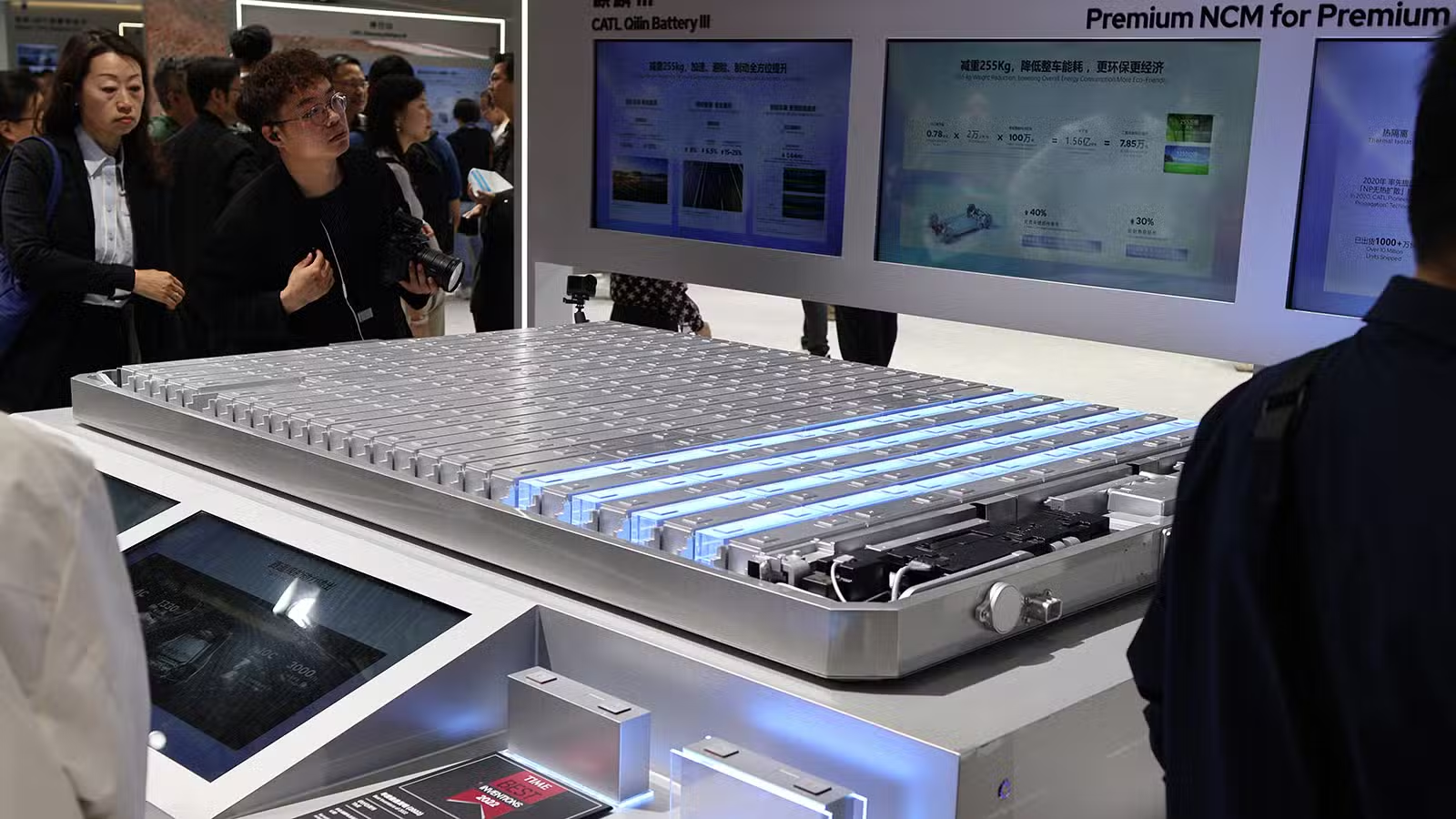
A CATL battery pack on display at the Beijing Auto Show in April 2026. Credit: CnEVPost
- Eleven battery makers, including CATL, BYD and CALB, have backed an initiative to speed up payments to suppliers.
- The move extends China’s efforts to rein in excessive competition in the battery industry.
China is pushing makers of power and energy storage batteries to pay their suppliers faster, part of the government’s efforts to curb excessive competition in the industry.
The China Automotive Battery Innovation Alliance (CABIA) and the China Energy Storage Alliance (CNESA) jointly issued a public initiative on Monday, calling on battery firms to pay small and medium-sized suppliers within 60 calendar days at most.
The payment period starts from the date the supplier delivers the goods or the date the goods pass inspection. If the due date falls on a public holiday, it is deferred.
Eleven companies backed the initiative and made commitments, including CATL (HKEX: 3750), BYD’s (HKEX: 1211) FinDreams Battery, CALB (HKEX: 3931), Eve Energy (SZSE: 300014) and Sunwoda (SZSE: 300207).
In a statement, CATL said the health and stability of the supply chain is the foundation for high-quality development of the industry. Safeguarding the legitimate rights of suppliers is the company’s bounden duty, it said.
The initiative aims to implement China’s Regulations on Ensuring Payments to Small and Medium-Sized Enterprises. The practice of large firms using their dominant position to delay payments to suppliers has long drawn criticism.
The initiative also sets specific requirements for the inspection stage. For materials and components, buyers should in principle complete inspection within seven working days.
On payment methods, the initiative encourages firms to use cash, including bank transfers and wire transfers. For small and medium-sized suppliers, it advocates paying entirely in cash.
The initiative also calls for gradually reducing the use of commercial acceptance bills and electronic payment vouchers. Such instruments tend to further lengthen the time it takes suppliers to actually receive payment.
The first equipment industry department of China’s Ministry of Industry and Information Technology (MIIT) voiced support for the move. An official at the department said the response from the 11 key battery firms reflects corporate responsibility and commitment.
The official noted that the power and energy storage battery industry is still in its growth phase overall. Technology routes iterate quickly, the market landscape shifts substantially, and coordination mechanisms across supply-chain links are not yet well developed.
Upstream firms face a double squeeze from sustained R&D spending and lengthening payment cycles. Overly long payment periods worsen suppliers’ cash strains and weaken their ability to invest in technology research.
The initiative continues China’s policy tone of tackling excessive competition in the battery industry. In November 2025, MIIT Minister Li Lecheng convened a meeting of industry entrepreneurs, urging them to resist irrational competition.
At that meeting, China pledged to strengthen capacity monitoring, early warning and regulation in the battery industry. The MIIT also said they would step up supervision and inspection of production consistency and product quality.
As China’s EV industry has expanded rapidly over the past several years, battery capacity has grown sharply alongside it. Fierce price wars have squeezed profit margins across the entire supply chain.
The initiative also encourages buyers and sellers to build long-term, stable partnerships. Building on existing procurement contracts, firms can further sign long-term framework agreements to safeguard supply-chain stability.
The MIIT said it will leverage inter-departmental coordination mechanisms to promptly resolve issues in implementation. Regulators aim to foster a collaborative, win-win development ecosystem across the entire power and energy-storage battery supply chain.
China requires carmakers to strictly comply with pricing regulations, strengthen price compliance and enhance product quality control.
