

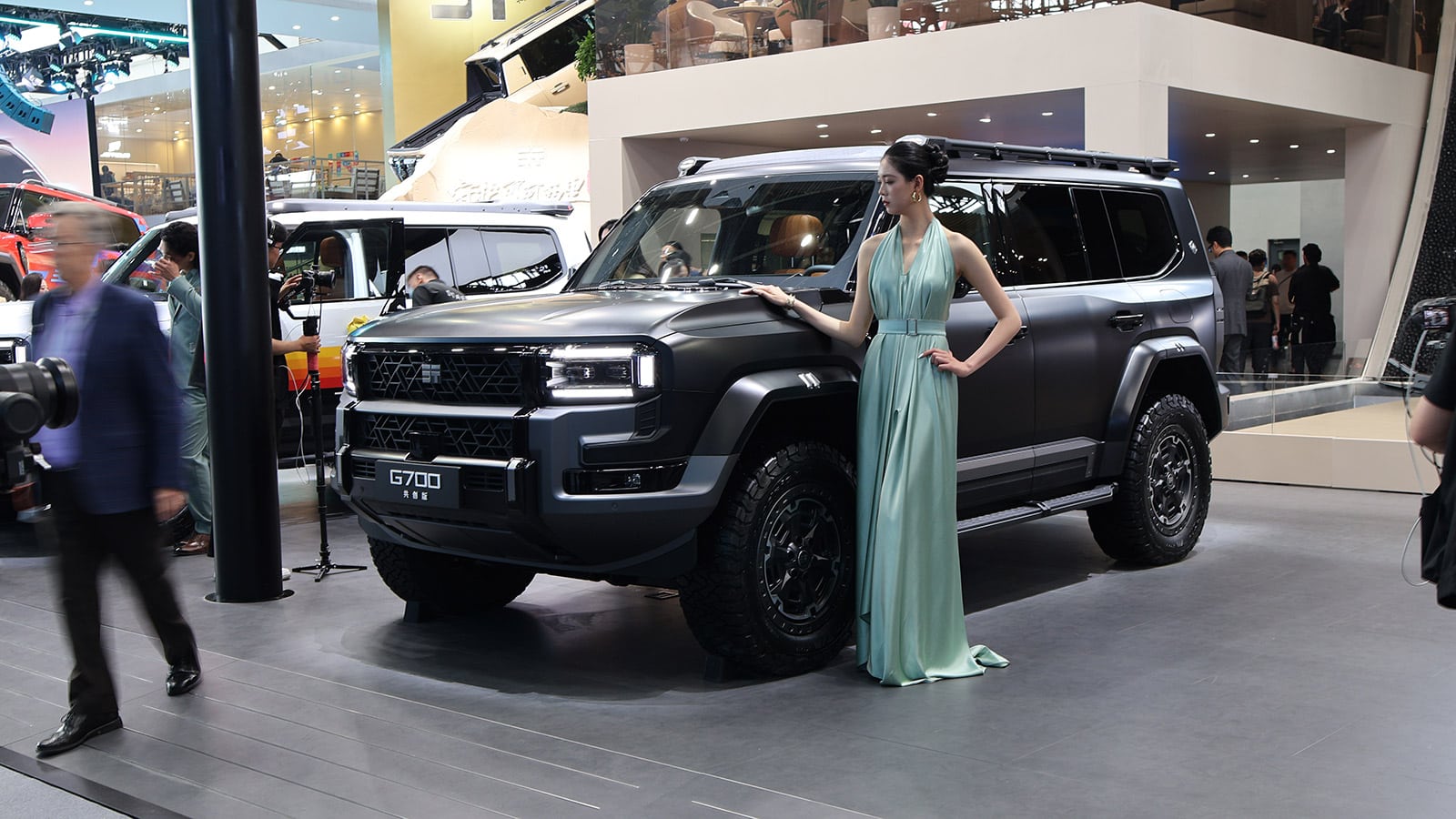
A Chery model on display at the Beijing Auto Show in April 2026. Credit: CnEVPost
- NEV retail penetration reached 63% during July 1-19, with wholesale penetration at 68.1%.
- Production of pure gasoline light vehicles plunged 56% year-on-year to 250,000 units over the same period.
China’s retail sales of passenger new energy vehicles (NEVs) continued to decline in the first three weeks of July, but the drop was far smaller than that of the overall car market, showing relatively strong resilience.
During July 1-19, China’s passenger NEV retail sales stood at 485,000 units, down 4% year-on-year and down 6% from the same period last month, according to data released by the China Passenger Car Association (CPCA) on Wednesday.
So far this year, China’s cumulative passenger NEV retail sales have reached 5.19 million units, down 13% year-on-year.
NEV retail penetration reached 63% during July 1-19, staying above the 60% mark. The firmness of the penetration rate largely stems from the continued contraction of the gasoline car market.
In the first three weeks of July, China produced 250,000 pure gasoline light vehicles, down 56% year-on-year and down 17% from the same period last month. Over the same period, combined production of hybrid and plug-in hybrid models totaled 219,000 units, down 16% year-on-year and down 1% from the same period last month.
The wholesale side performed relatively better. During July 1-19, China’s passenger car makers wholesaled 509,000 NEVs, up 5% year-on-year but down 14% from the same period last month. NEV wholesale penetration reached 68.1%.
So far this year, cumulative NEV wholesale volume has reached 7.296 million units, up 5% year-on-year.
The overall car market, meanwhile, remained mired in off-season weakness. During July 1-19, China’s overall passenger car retail sales were 770,000 units, down 16% year-on-year and down 4% from the same period last month.
Cumulative passenger car retail sales so far this year stood at 9.47 million units, down 20% year-on-year.
The retail decline widened week by week. In the third week of July, China’s average daily passenger car retail sales were 47,000 units, down 18% year-on-year, a steeper drop than the 15% in the first week and 16% in the second week.
The CPCA said July retail is in a traditional off-season, with overall consumer demand weak. The World Cup, combined with scorching summer heat, sharply reduced showroom traffic, and with no holiday to boost spending, consumers remained firmly in wait-and-see mode.
Meanwhile, the price war in the first half of the year continued to exhaust market demand, and the normalization of discounts intensified consumers’ inclination to hold off on purchases.
Still, there were some structural bright spots. Summer graduation purchases and family road trips drove a modest release of essential demand, while the nationwide trade-in subsidy program provided incremental support for retail sales of mid-range models.
NEVs, backed by product upgrades, policy incentives, and cost-performance advantages, continued to offset the steep decline in gasoline car retail sales.
On the wholesale front, China’s passenger car makers wholesaled 747,000 units in total during July 1-19, down 17% year-on-year and down 14% from the same period last month.
The CPCA attributed the wholesale weakness to automakers’ mid-year sales push in June, which pulled demand forward, compounded by the industry’s high base a year earlier.
Elevated channel inventories put pressure on dealers’ cash flow, dampening their willingness to restock, and most brands opted to curb production and reduce volumes.
Inventory pressure remains elevated. At the end of June 2026, China’s passenger car industry inventory stood at 3.43 million units, enough to support about 62 days of future sales, higher than the levels in the same period of 2023 and 2024. Of this, inventory held by NEV-only manufacturers was 790,000 units.
Nio’s retail sales jumped 62.6% year-on-year in June, ranking 8th in China’s NEV market.
