

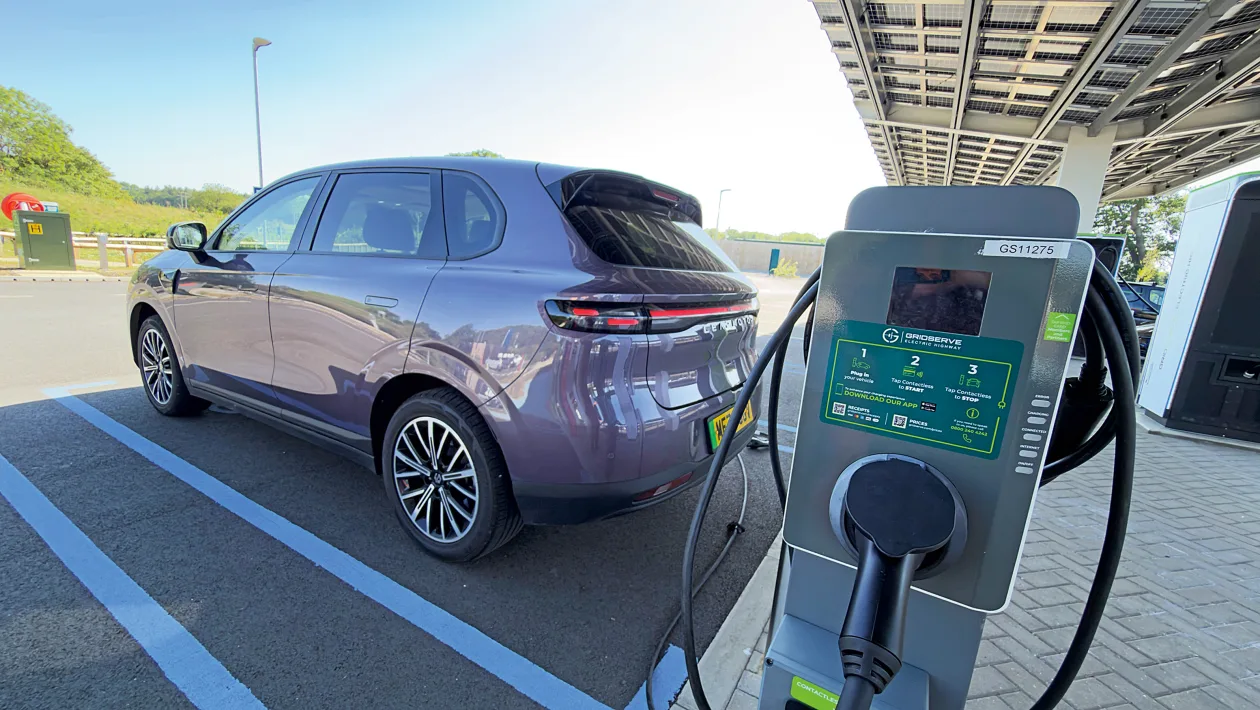
Reducing the price of public EV charging could be the key to solving the Government’s problem with the ZEV Mandate – that’s the consensus following a survey by YouGov, which found that the number of people who would consider an EV for their next car would rise significantly if using electric car infrastructure was cheaper than filling up with petrol or diesel.
Advertisement – Article continues below
The investigation, commissioned by chargepoint operator trade body ChargeUK, revealed that currently only a quarter of people would be likely to consider an EV for their next car. However, this figure would rise to 37 per cent under a scenario whereby public EV charging is cheaper than buying petrol – beyond the 33 per cent target set for 2026 by the ZEV Mandate.
Using Government advisory rates for vehicle efficiency combined with the current prices for EV charging, petrol and diesel, the cost of topping up an EV currently sits around 22 pence per mile – roughly six pence per mile more, on average, than fueling an internal combustion equivalent. Charging an electric car via an off-peak energy tariff remains by far the cheapest means of travel, though, equating to just over two pence per mile.
YouGov’s survey consulted over 2,000 people from across the political spectrum, with results weighted to reflect the view of the electorate. Perhaps unsurprisingly, Labour and Green Party voters were found to be the most likely to purchase an electric car in the next year, with those who voted Reform UK at the 2024 General Election the least likely. That said, a change in public charging pricing to be cheaper than petrol and diesel would have the biggest impact for voters of Nigel Farage’s party, with the percentage who would consider an EV jumping from 13 to 21 per cent.
Advertisement – Article continues below
