

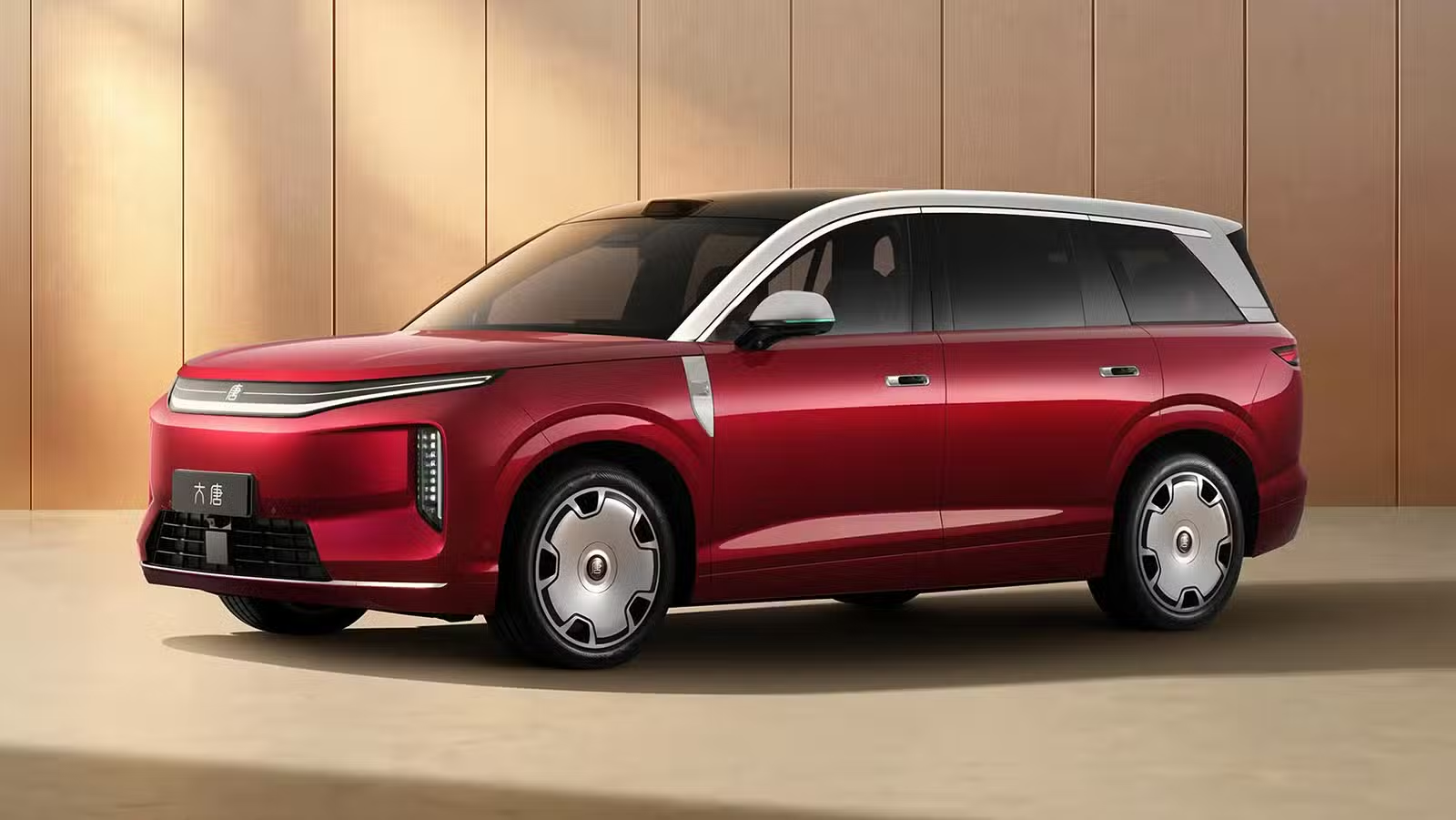
BYD Da Tang EV. Credit: BYD
- BYD’s Da Tang EV starts at 239,900 yuan ($35,500), with an all-electric range of up to 950 kilometers.
- The model has garnered over 150,000 pre-orders since pre-sales began on April 24.
BYD (HKEX: 1211) on Wednesday officially launched the Da Tang EV (or Great Tang, Grand Tang), the first D-segment flagship SUV (sport utility vehicle) in its Dynasty lineup.
The new model comes in four versions, priced from 239,900 yuan ($35,500) to 309,900 yuan, below the previously announced pre-sales range.
The model offers a battery range of up to 950 kilometers, which BYD said is the longest among full-size SUVs globally.
The entry-level 800-km rear-wheel-drive version is priced at 239,900 yuan. The 950-km rear-wheel-drive version costs 269,900 yuan, the 850-km all-wheel-drive version is priced at 289,900 yuan, and the top-tier version costs 309,900 yuan.
BYD said the Da Tang EV has garnered over 150,000 pre-orders since pre-sales began on April 24 at the Beijing Auto Show 2026.
The model measures 5,263 millimeters in length, 1,999 millimeters in width and 1,790 millimeters in height. Its wheelbase reaches 3,130 millimeters.
It is equipped with BYD’s latest second-generation Blade Battery, with a battery capacity of 105.7 kWh for the entry-level model and 130.1 kWh for the others.
The SUV adopts a 1,000-volt high-voltage architecture and features flash-charging technology, enabling charging from 10% to 97% in 9 minutes.
To date, BYD has built a total of 6,682 flash charging stations in China, covering 321 cities.
For power, the Da Tang EV offers a choice of single-motor and dual-motor all-wheel-drive configurations.
The single-motor version has a maximum power of 300 kW (402 hp) or 370 kW, while the dual-motor all-wheel-drive version has a maximum power of 585 kW.
The all-wheel-drive version can accelerate from 0 to 100 km/h in just 3.9 seconds, while the rear-wheel-drive flagship does so in 6.2 seconds. The vehicle has a top speed of 250 kilometers per hour.
The new model is equipped with BYD’s DiSus-A dual-chamber air suspension, which supports 100-millimeter free lifting and road preview functions.
The vehicle also features a rear-wheel steering system, with a maximum rear-wheel steering angle of plus or minus 7 degrees. This gives it a turning radius of just 5.2 meters and enables a crab-walk mode.
The Da Tang EV is equipped with BYD’s God’s Eye 5.0 driver-assistance system. It comes standard with a roof-mounted LiDAR to support assisted driving on urban roads and highways.
Its interior adopts a 2+2+3 seven-seat layout, a first in China, focusing on spacious seating.
The model offers dual zero-gravity seats in the front row and dual zero-pressure aviation seats in the second row.
The launch of the Da Tang EV fills a gap in BYD’s product lineup in the 300,000-yuan segment and forms a clearly tiered product matrix alongside the Denza and Yangwang lineups.
In its segment, the Da Tang EV’s direct rivals mainly include large SUVs such as the D19 from Leapmotor (HKEX: 9863) and the L90 from Onvo, a sub-brand of Nio Inc (NYSE: NIO).
The new model also poses competitive pressure on the mid-to-high-end models of brands such as Li Auto (NASDAQ: LI) and Huawei-backed Aito.
The strong pre-sales performance is expected to help BYD achieve a further recovery in sales. The company sold 383,453 NEVs wholesale in May, up 0.26% year-on-year. This ended eight consecutive months of sales declines.
Wang said BYD will deliver better returns to shareholders through forward-looking planning and seizing key milestones.
($1 = 6.7587 yuan)
