

When it comes time to buy a car, a few key questions immediately crop up. The largest, of course, is whether you should buy a new or used vehicle. That question alone can change things in a major way. If you go with a new car, you’d pay more, but you’d have a full factory warranty and the peace of mind that comes with knowing no one has owned your car before. However, a used model means you can, potentially, save a boatload of cash.
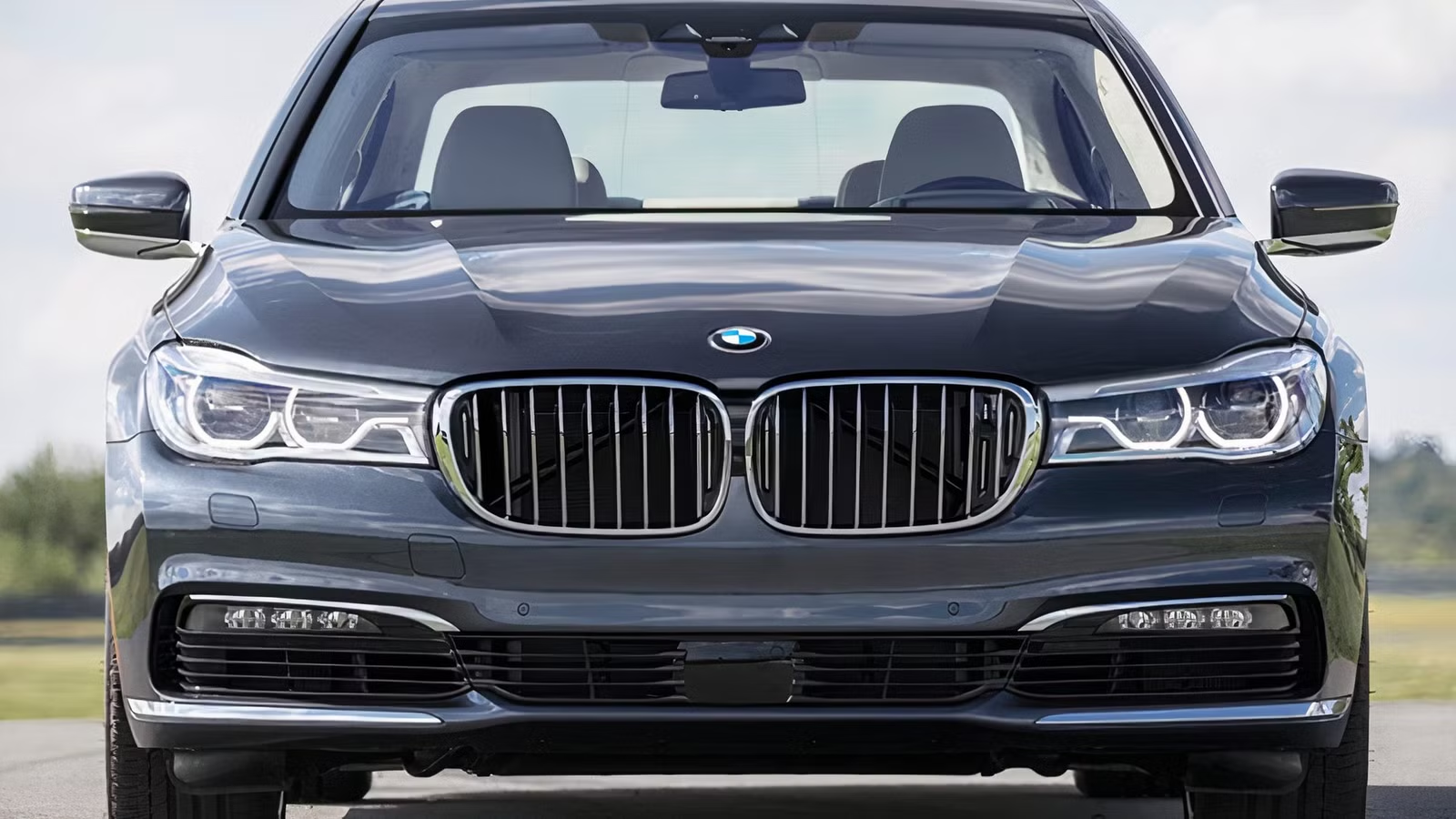
So, when faced with a choice between a brand-new Toyota Camry XSE and a slightly used 2016-2022 (G11-generation) BMW 750i or the all-wheel-drive 750i xDrive, it can be tough to decide. However, once you learn that the BMW packs a 445-horsepower, twin-turbocharged V8 and a whole host of luxurious amenities that the Camry can only dream of, it’s natural if your opinion begins to sway towards the Bavarian. Not to mention, the 7 Series is less than 10 years old.
However, there are a few things to consider before going full-bore into the 7 Series.
Depreciation Did The Hard Work For You
2016 BMW M760Li xDrive Black Front Angled ViewBMW
Let’s start with the price. When the G11-gen 750i was new, BMW listed it with a sticker price starting at roughly $94,600. The xDrive all-wheel-drive-equipped variants had a slightly higher starting price of approximately $97,600. However, the destination charge added roughly an additional $2,000 to the price right off the bat. Plus, once you tack a couple options onto the thing, you could easily get the MSRP well above $100,000 for either iteration.
2016 BMW M760Li xDrive Black Rear Angled ViewBMW
At present, the G11 750i and 750i xDrive carry average used prices that are much, much lower than those original stickers. As for the rear-drive 750i, an average example with average mileage and in good condition typically fetches about $21,322 on the used market, with some well-maintained, low-mile examples topping out at around $35,000.
According to our used-market pricing trends, the 750i xDrive’s current average used price is a bit lower at $20,354. It’s important to keep in mind that minor differences in used pricing can be attributed to a relatively small sample size for these premium vehicles, as well as the overall condition and average odometer mileage of each model.
On the other side of the proverbial coin, you have the 2026 Toyota Camry XSE. Without any additional options selected, a brand-new example is priced at $36,000 before any fees are added. You can have all-wheel drive added for an extra $1,525 from the factory, bringing the subtotal to $37,525. Thanks to the Bimmer’s whopping 61.8% depreciation rate over five years, though, it comes in at a lower price than the brand-new Toyota.
It’s no secret that luxury flagships — especially those made in Europe — depreciate like a sinking rock. It’s terrible news for new-model buyers, but a great phenomenon for the luxury-oriented bargain hunter. As it stands between the new Camry and a used 750i or 750i xDrive, the latter is, of course, a lot more car for less money.
The BMW’s Hidden Secret Is Its Engine
2008 BMW N63 V8 Engine Close-UpBMW
BMW N63TU2 Specs
Horsepower
445 hp
Torque
480 lb-ft
Cylinder Bore
3.50 in
Piston Stroke
3.48 in
Compression Ratio
10.5:1
Engine Weight (Dressed)
503 lbs
*Specs courtesy of BMW
While the G11 750i and 750i xDrive are impressive flagships in their own right, much of the credit is due to the engine they both share. It’s a 4.4-liter, twin-turbocharged V8 carrying the code name “N63TU2.” The mill itself uses twin-scroll turbochargers arranged in a “hot-V” configuration, in which the turbos are buried within the engine’s V. In fact, the N63 marked the first series-production engine to use this layout. It was also the first time BMW used direct fuel injection in one of its V8s.
The N63 V8 has a checkered past that needs some exploring, though, before you dive into buying a G11 750i/750i xDrive of your own. When the mill first hit the market in 2008, problems with its timing chain guides wearing out prematurely sprang up almost immediately. Timing chains were also prone to stretching. In addition, the valve stem seals were weak, potentially causing an alarming rate of oil consumption. Topping these issues off is a penchant for coolant and oil leaks that, according to some reports, seemed to crop up overnight.
2008 BMW N63 V8 Engine DeconstructedBMW
However, between the motor’s introduction and the G11 7 Series’ launch, BMW released two technical updates to the engine. The first came about in 2012, and addressed the valve stem seals and revamped the valvetrain to include BMW’s Valvetronic setup. The powerplant also received a second water pump, a forged crankshaft and connecting rods, and a lighter set of pistons. A small 2016 update widened the engine’s power band by a slim margin, and included a new pair of twin-scroll turbos, just in time for the arrival of the G11 7 Series.
Maintenance Costs
2016-2019 BMW 7 Series Side Profile in blackBMW
With any European luxury flagship, maintenance costs aren’t going to be anywhere near as cheap as a Toyota Camry. The G11 750i/750i xDrive uses a lot of electronic equipment that’s expensive to replace, and even routine oil changes can cost upwards of $250. If you need to replace just a single air suspension strut, for example, that can run you $1,500 for just the component alone. Its tires are also run-flat, and can easily run you over $300 each.
Herein lies the ugly side of the Bimmer’s tantalizing, depreciated price. Because it’s so expensive to fix and its N63 engine has such a poor reputation, the low average used price reflects that many folks are simply afraid to buy used examples.
Here’s How You Can Make The Camry/BMW Budget Make Sense
2016-2019 BMW 7 Series PHEV Rear 3/4BMW
Simply going out and buying a 2017 to 2019 G11-gen 750i or 750i xDrive that costs the same as a new Toyota Camry XSE would probably land you in a field of heartbreak and financial misery. After all, it’s exceedingly unlikely that the new Camry would require any sort of expensive maintenance right off the bat. If it does require servicing for some odd reason, the factory warranty would most likely cover whatever needs to be done.
A used BMW flagship sedan, though, might need some fixing-up as soon as you get it. Instead of buying a $36,000 example, if you shoot for one closer to the used-market average of $22,000, you can budget the remaining $14,000 or so for maintenance. That much set aside could float you along for years, meaning you wouldn’t have to wring your hands every morning on your way to work, hoping that nothing expensive breaks.
2016 BMW M760Li xDrive Black/Beige Interior Driver AreaBMW
In reality, having that money in reserve can’t be an optional decision if you’re looking to make the used G11 BMW 750i/750i xDrive purchase make fiscal sense. You’ll also need to dissect the individual service records for whichever specific 750i/750i xDrive you’re looking at. One that boasts an extensive, regular maintenance record is a clear winner over one with incomplete or, worse, missing service records. Of course, mileage, number of owners, and whether the car’s mileage is majority city or highway make a difference, too. Remember, used pricing for the G11 750i/750i xDrive can vary considerably, so it’s especially important to do your due diligence.
The BMW Or The Camry?
2017 BMW 7 Series exteriorBMW
That decision boils down to whether you’ve done your homework and found a good, clean, well-maintained example of the G11 750i/750i xDrive. If you have enough money in reserve for potential future maintenance, the BMW could offer a huge amount of value that’s much greater than that of the new Toyota Camry XSE. After all, the big flagship sedan packs loads more luxury, tech, and features than the everyday Toyota sedan, and it does so with much more poise and grace.
Sure, there’s always a risk involved with used cars, especially when it comes to European flagship luxury sedans, but the G11-gen 750i and 750i xDrive’s 445-horsepower engine and stately looks can make your drive to work feel like an event, rather than just another day at the office.
Sources: BMW, Kelley Blue Book, Progressive, BMWBlog.com.
