

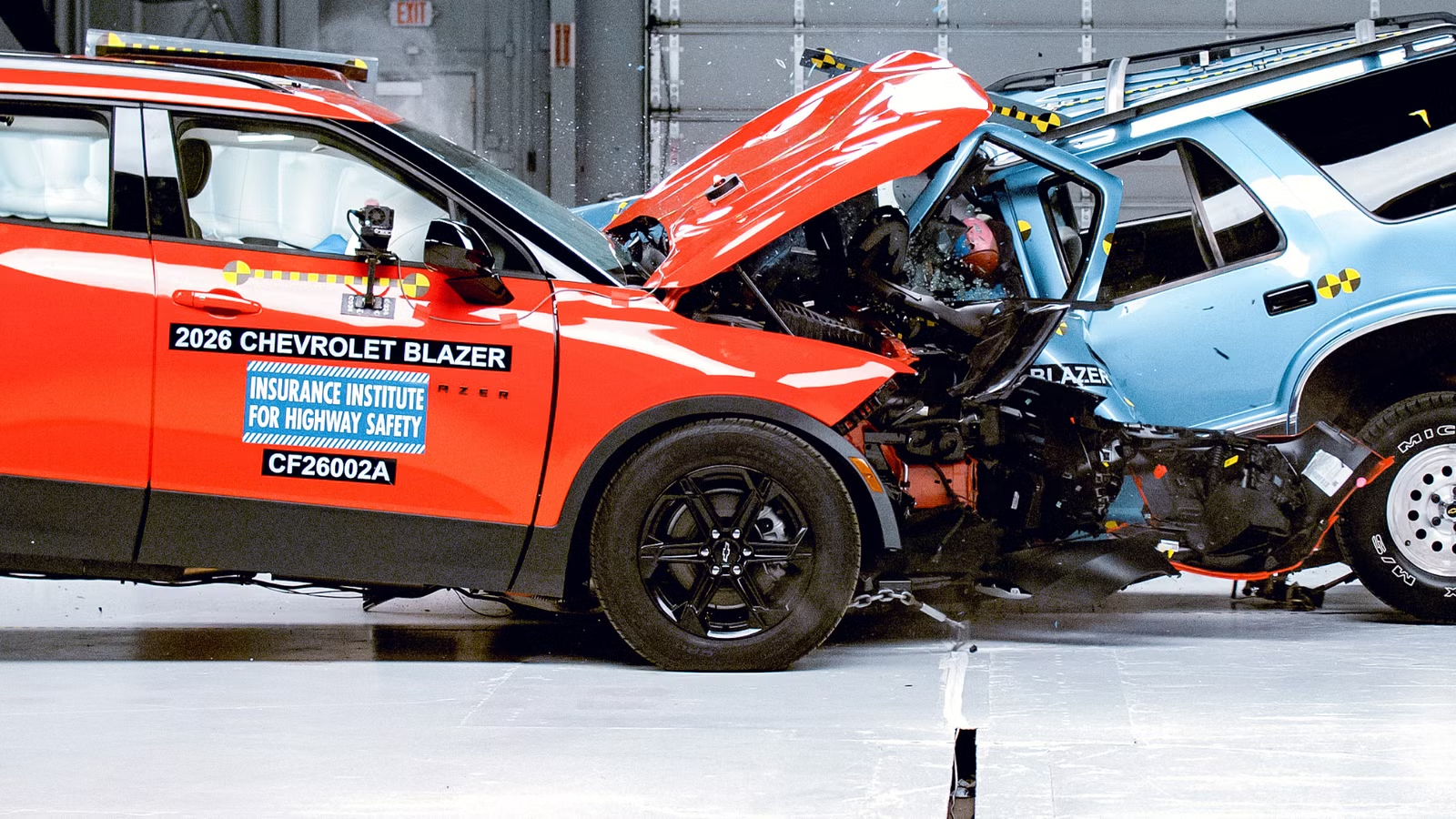
Everybody knows that big, old cars with massive chrome bumpers and long hoods are like tanks, making them safe in a collision, right? How else could old-school engineers build in some safety when frontal airbags wouldn’t be required as standard equipment until 1998?
The progress made in designing and building safer cars over the past 30 years is nothing short of remarkable, and now there’s living proof, literally: The Insurance Institute for Highway Safety estimates its crash testing of vehicles has saved 50,000 lives since the testing began in 1995. And to mark the occasion, the organization released a shocking crash test video clearly showing the differences between the 1990s and today.
1996 Chevrolet Blazer Interior Crash Test ScreenshotIIHS
It’s been quite a journey for the independent, non-profit organization as crash testing progressed over the next 30 years. That first offset crash test, still done today, runs two identical vehicles head to head into each other at just under 40 mph. The offset covers approximately 40% of the width of each vehicle, and that’s where much of the post-crash research is centered.
The test was updated in 2022 to include protection for back-seat passengers. But in 2012 and 2017, the institute introduced the driver- and passenger-side small overlap front tests to simulate a collision with only 25% overlap. Side crash tests started in 2003 and were updated in 2021. Rollover crash tests came in 2009.
That brings us to the video above, featuring a 1996 Chevrolet Blazer against a 2026 Blazer in their crash lab, like two knights ready to joust but colliding violently with more than wooden lances. And we say this without exaggeration – the results of the test are legitimately shocking.
Bumps And Bruises Vs. A Snapped Neck
The new Blazer got the best of the old Blazer. While the driver in the 2026 model would have likely walked away with bumps and bruises, IIHS says the driver of the 1996 model would have suffered potentially fatal injuries. The video says it all.
Related
IIHS’s New Crash Test Is A Real Pain In The Neck
Making phony whiplash claims just got a lot harder.
While the 2026 passenger compartment remained intact, the driver in the 1996 Blazer would have been crushed by the dashboard and steering column. And then, the fully inflated airbag would have snapped the driver’s head back and toward the window. For the record, earlier testing for the 2026 Blazer earned it a top-tier good rating (going back to its 2019 reintroduction), while the 1996 Blazer got an overall rating of poor back in the day. Honestly, we’re going to think twice before setting foot in an old Blazer.
“These results highlight the role of IIHS ratings in driving many of the key vehicle safety improvements of the past 30 years.”
–Joe Nolan, IIHS chief operating officer.
But this isn’t the first time IIHS has done cross-generational crash testing. The institute did a similar test between a 1959 Chevrolet Bel Air and a 2009 Chevrolet Malibu. “It exploded the myth that older vehicles were built like tanks and therefore safer for their occupants,” the IIHS said.
Cost Savings Of $500 Billion
Based on all the safety improvements automakers have baked into their vehicles over the past 30 years, the IIHS estimates the reduction in serious injuries to vehicle occupants (as well as vehicle damage) has saved society more than $500 billion, based on the US Department of Transportation’s historical estimates for the value of a statistical life.
IIHS crash test between 1959 Chevy Bel Air and 2009 Chevy MalibuIIHS
In tallying up the impact of 30 years of crash testing and the resulting improvements made by automakers, IIHS researchers compared the real-world fatality rates for vehicles rated good with those rated acceptable, marginal or poor in each test. Then they calculated the potential fatalities that would have occurred if the percentage of good-rated vehicles had not risen. The results showed that vehicle improvements made after these tests saved an estimated 48,352 lives from 1999 to 2024.
Related
IIHS Study Blames Advertising, Media For Dangerous Drivers. We Have Questions About That
A new study says ads are encouraging people to drive way too fast. But the same study and previous IIHS data casts doubt on that conclusion.
CarBuzz Insight – Why This Matters:
With at least 35,000 people dying in car crashes in America every year since 2018, it’s a good thing the IIHS has been running crash tests in an effort to make cars safer. Automakers have responded. At some point, might the driving public take safety more seriously as well? There are more cars on the road today than there were 30 years ago and a lot more drivers. So the death toll on American highways would have been staggering. Thankfully, automakers take the IIHS ratings seriously and design their vehicles accordingly.
Source: IIHS
