

Slowing demand for electric vehicles and a growing number of automakers walking back once-ambitious EV targets are reshaping the performance car landscape. That shift isn’t just breathing new life into high-dollar internal-combustion halo cars, though. It’s also reopening the door to affordable enthusiast machines that seemed destined for extinction.
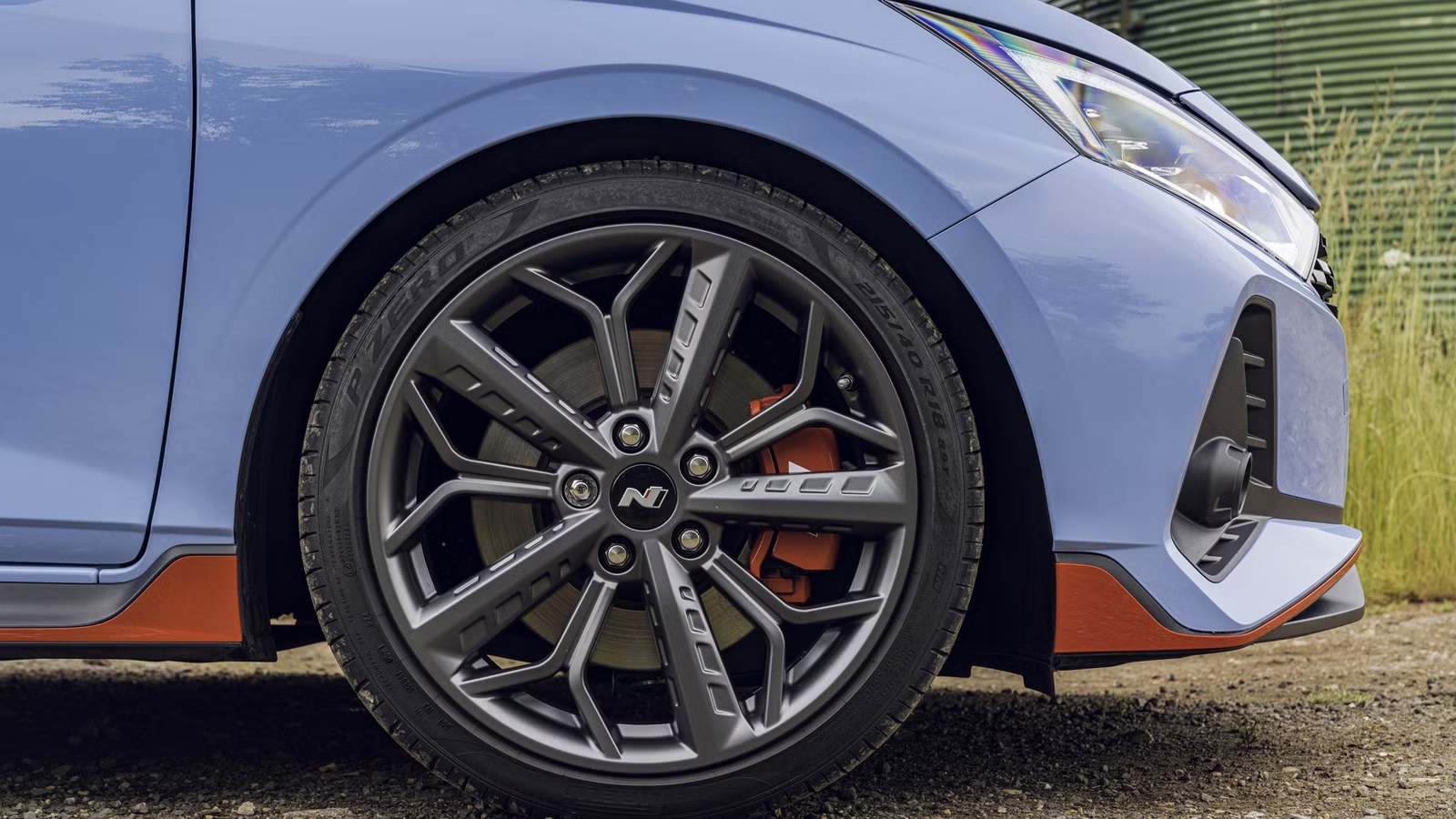
2025 Hyundai i20 N Front 3/4 ViewHyundai
A prime example is Hyundai. The Korean automaker’s N performance division once offered a pair of standout pocket rockets in the i20 N and i30 N, only to discontinue them in most markets as attention turned to EV stars like the brilliant Hyundai Ioniq 5 N and newly unveiled Hyundai Ioniq 6 N. Now, Hyundai is preparing an ICE-powered comeback, with a new generation of the rally-bred i20 N set to lead the charge.
New Hyundai i20 N Coming Soon
2026 Hyundai i20 For BrazilHyundai
Hyundai is already preparing a fourth-generation version of its i20 subcompact hatchback, with a reveal expected in the near future. A higher-riding variant developed for the Brazilian market broke cover last week, offering the first glimpse of the model’s next evolution. More importantly for enthusiasts, a senior Hyundai executive has now confirmed that the new i20 will once again underpin a hot N-badged performance model.
Speaking to Autocar, Hyundai’s global R&D chief Manfred Harrer said an i20 N successor is “a must,” arguing that the brand’s current N lineup leaves too large a gap below its electric flagships. In Europe, the entry point to Hyundai N ownership is now the pricy Ioniq 5 N, while US buyers can still opt for the considerably cheaper Hyundai Elantra N. But because the compact sport sedan isn’t sold globally, Hyundai sees an opportunity to bring younger enthusiasts back into the fold with a new generation of its smallest performance car.
Related
Hyundai’s Hot Hatch Revival Raises Interesting Possibilities For America
The i30 N and Elantra N were close before, will that continue to be the case?
Electrification On The Table
2025 Hyundai i20 N Rear 3/4 ViewHyundai
In a separate interview with Wheels, Harrer, an engineer whose career includes stints at BMW and Porsche, confirmed that the next-generation i20 N will feature some form of electrification. While he stopped short of discussing technical specifics, the publication reports that the most likely configuration will follow the previous model’s turbocharged 1.6-liter inline-four format but augment this with a hybrid system integrated into the transmission, sending power exclusively to the front wheels.
The setup is expected to utilize Hyundai Motor Group’s new twin-motor hybrid architecture. In this system, a P1 motor functions as the starter-generator and can provide supplemental torque when needed, while a larger P2 motor assists with propulsion and regenerative braking. Hyundai has already previewed a version of the powertrain paired with a turbocharged 1.6-liter four-cylinder producing around 300 horsepower and 280 pound-feet of torque.
Those figures would represent a significant leap over the outgoing i20 N’s 201 hp and 203 lb-ft. The tradeoff, however, is that the added hybrid hardware will almost certainly spell the end of the beloved six-speed manual gearbox – a prospect unlikely to please hot-hatch purists, even if the performance gains help soften the blow.
Related
America Will Love The Next-Gen Hyundai Elantra N
Hyundai’s popular sedan will keep its winning formula for its next full revamp.
CarBuzz Insight – Why This Matters:
Last year, Hyundai N boss Joon Park pushed back against the notion that the performance division was headed toward an all-electric future, insisting that internal-combustion power would continue to play a key role alongside EVs. The return of the i20 N is perhaps the clearest evidence yet that Hyundai intends to deliver on that promise, using electrification to enhance performance rather than replace gasoline engines altogether.
The move also comes as Hyundai N works to broaden its lineup and appeal to a wider range of enthusiasts. While the next-generation i20 N, as well as the standard i20 range it’s based on, will likely remain too small for the US market, the hybrid performance technology being developed for it could – and likely will – find its way into future Hyundai N models sold stateside.
Sources: Autocar, Wheels
