

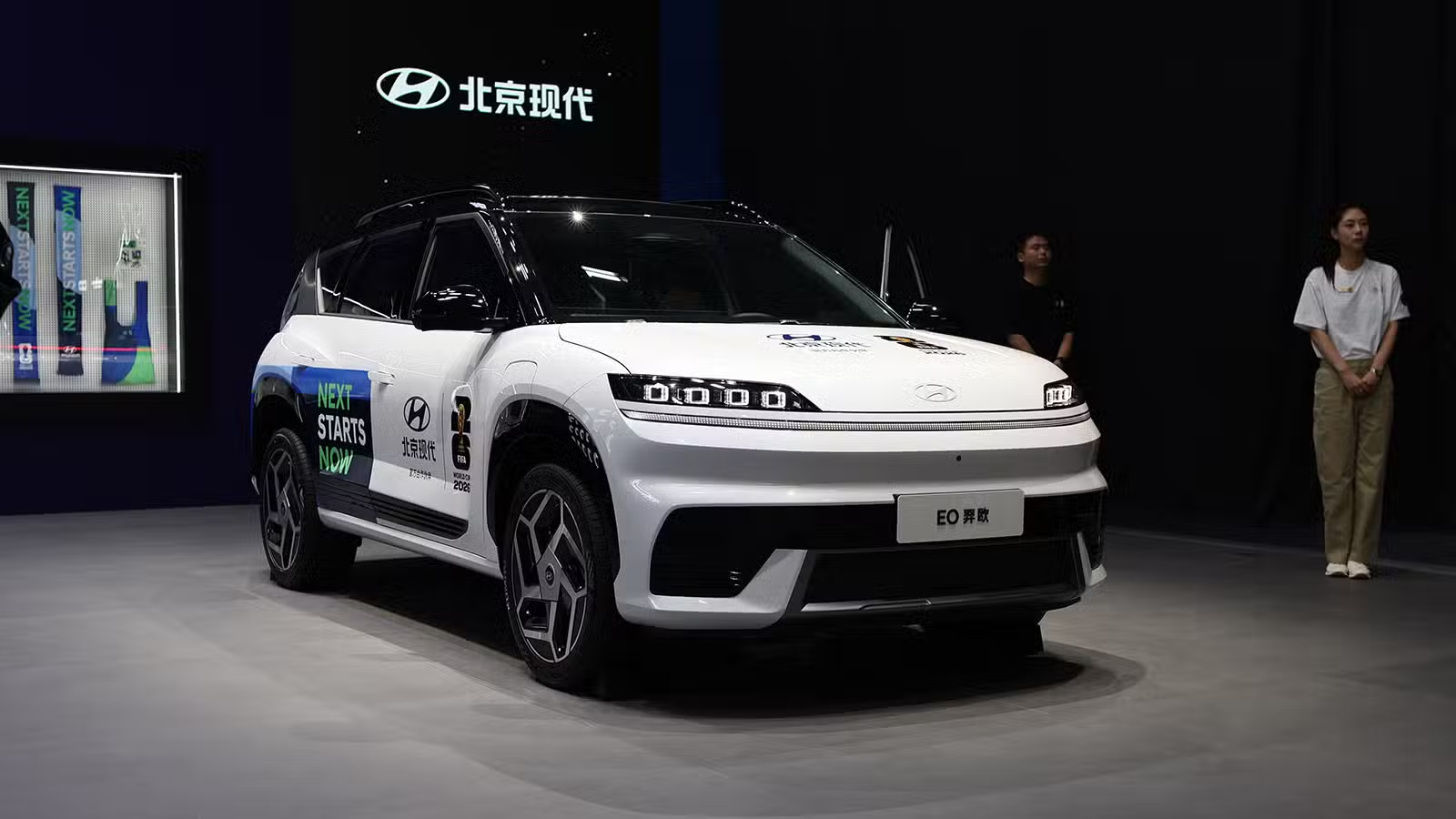
A Hyundai EO on display at the Beijing Auto Show in April 2026. Credit: CnEVPost
- China’s NEV retail totaled 341,000 units in June 1-14, down 8% from a year earlier but up 5% from the same period last month.
- The broader car market remained weak, with overall passenger vehicle retail falling 18% year on year.
China’s retail sales of passenger new energy vehicles (NEVs) fell 8% year on year in the first two weeks of June, narrowing from the decline in the first week.
NEV retail in China reached 341,000 units in June 1-14, down 8% from the same period last June. That marked an improvement from the 14% year-on-year drop in the first week of June, according to data released Wednesday by the China Passenger Car Association (CPCA).
Compared with the same period last month, NEV retail rose 5%, suggesting demand is gradually picking up.
So far this year, China’s cumulative passenger NEV retail totaled 4.04 million units, down 15% from a year earlier.
The NEV retail penetration rate reached 63.9% in the first two weeks, easing from the 66.7% weekly high seen in the opening week. Even so, the level remained above that of a year earlier, reflecting a steady electrification trend.
The elevated penetration rate stemmed largely from the continued contraction of the traditional fuel-vehicle market. In the first two weeks of June, China’s production of pure fuel-powered light vehicles came in at 225,000 units, plunging 44% year on year.
Combined production of hybrid and plug-in hybrid models stood at 160,000 units, down 16%. The sharp contraction in fuel-vehicle output and sales is reshaping the overall landscape of China’s car market.
The wholesale side performed more strongly. China’s passenger NEV wholesale reached 378,000 units in June 1-14, up 10% year on year and up 22% from the same period last month.
The NEV wholesale penetration rate reached 67.9%, higher than the 67.2% in the first week of June.
So far this year, cumulative NEV wholesale has totaled 568,000 units, up 2% from a year earlier.
The contrast between wholesale and retail highlights manufacturers’ expectations for a later sales push.
The broader car market remained weak. China’s overall passenger vehicle retail came in at 534,000 units over June 1-14, down 18% year on year and down 5% from the same period last month.
So far this year, China’s cumulative passenger-vehicle retail totaled 763,000 units, down 19% from a year earlier.
The CPCA attributed part of the early-June year-on-year decline to base effects. Last year, China’s Dragon Boat Festival fell on May 31, which boosted sales in early June 2025.
In addition, consumers remained in a wait-and-see mood, and weak demand ahead of China’s national college entrance exam slowed the overall pace of demand release.
The CPCA noted that the biggest difference from a year earlier was the absence of strong policy support.
At the middle of last year, subsidy funds in some cities were running low, triggering panic buying. This year, policy has remained steady with no additional boost, leaving the market relatively soft.
The CPCA also warned that rising costs are weighing on consumption growth, as upstream profits keep climbing and downstream pressure intensifies.
The industry price war is continuing, with consumers holding strong expectations for further price cuts and new models. Dealers, based on cautious judgment, are actively cutting their purchases to avoid inventory buildup.
The data bore out the strain on the consumer side. Over the first five months of 2026, China’s auto consumption totaled 1.6 trillion yuan ($236.9 billion), down 12% year on year.
By contrast, retail sales of consumer goods excluding autos rose 2.7% year on year, underscoring the relative weakness of car-market consumption.
Still, production-side data showed resilience. In May 2026, China’s auto industry value added rose 8.3% year on year, and was up 6.6% over the first five months.
Exports are becoming a key pillar of support. In May, China’s vehicle exports reached 988,000 units, up 42% year on year and approaching the 1 million-unit mark.
Cumulative exports over the first five months totaled 4.25 million units, with year-on-year growth of 49%, a multi-year high for the period. Overseas markets are becoming the core growth engine for Chinese automakers.
Inventory pressure, meanwhile, is building slowly. At the end of May 2026, China’s passenger vehicle industry inventory stood at 3.48 million units, down 60,000 units from the previous month.
Based on retail estimates for the next three months, current inventory can support 66 days of sales, up from 57 days in May 2025, indicating relatively higher overall inventory pressure.
Looking ahead to the full month, the CPCA believes the sales push over the remaining two weeks will directly determine June’s trajectory. If oil prices stay high, consumption remains sluggish and the sales push falls short of previous years, June retail may still face the pressure of a year-on-year decline.
Tesla’s retail sales in China rebounded sharply to 47,281 units in May, returning to the top 10 NEV list and entering the top 10 in the overall passenger car market.
($1 = 6.7565 yuan)
