

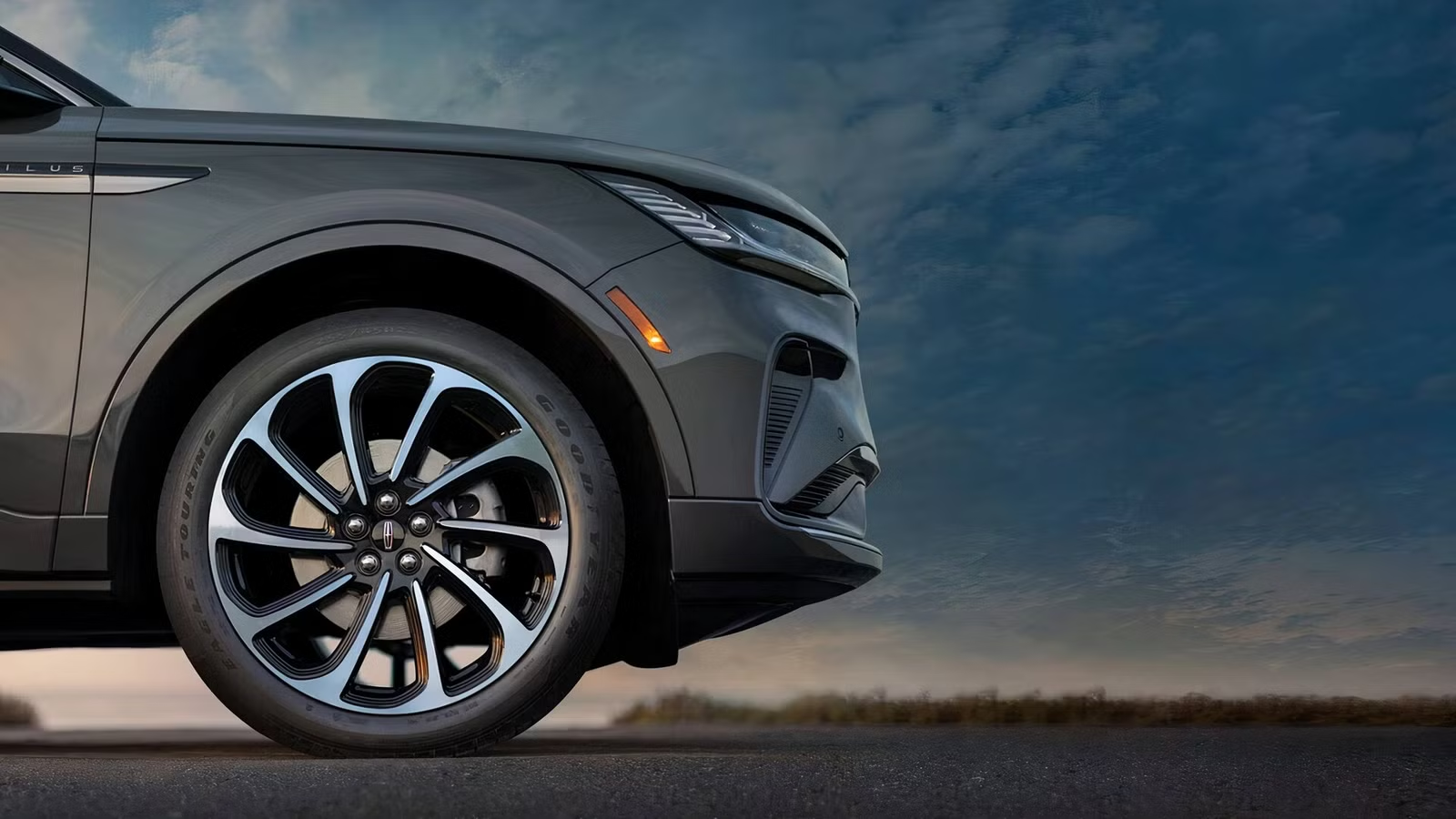
If you’re buying a Chinese-built car in the US today, there’s a good chance it wears the badge of a US domestic brand. But the decisions made to build vehicles in that country are coming back to bite them. The US is imposing bans on cars from China that will soon go into effect, and while the idea was to keep Chinese brands out of the US, domestic brands operating in China are also subject to the new rules. And now, the best-selling model from Lincoln is one of those that will need special permission if Ford wants to keep selling it here.
Connected Car Software Ban Starts Soon
2025 Lincoln Nautilus Infotainment SystemLincoln
A ban on most connected car software installed on vehicles built in China was first made law in January 2025, still under the Biden administration. The worry was that vehicles could be collecting data on American owners, and even on US Government facilities. The bans were set to go into effect with software for model year 2027 and hardware for 2030, and the Trump administration kept them in place.
For model year 2024, Ford moved production of the Lincoln Nautilus from a plant in Ontario, Canada, to a factory in China. It has been importing every Nautilus from there since, and that added up to 33,744 units last year, a figure that made it the brand’s bestseller by around 8,000 vehicles.
Come January, when Ford wants to start importing 2027 model year Nautilus SUVs from China, it won’t be able to. Unless, that is, it gets approval from the US Commerce Department. Reuters reports that Ford is seeking to get that authorization as one of the few automakers affected.
Related
Automakers Are Trembling In Fear Of Incoming Connected Car Ban
Automakers are concerned about how soon the rule could go into effect.
Lincoln isn’t the only US brand affected by this software restriction. Curiously, it’s another SUV from a premium brand, this time the Buick Envision. GM sold 41,924 Envisions last year, and though it plans to move production to the US in 2028, it will still be impacted until that time. At least it isn’t Buick’s bestseller.
2030 Could Cause Real Headaches
2025 Lincoln Nautilus Front Angle View in redLincoln
Polestar and Volvo have also been affected. The two brands import EVs rather than gas-powered models, so production has already been shifted to avoid tariffs. But Volvo said in May it had gotten authorization, while Reuters reports Polestar still needs to.
It’s not just automakers that need to worry about the new rules, though. Earlier this year, the Italian government imposed changes on Pirelli to reduce Chinese government influence in an effort to avoid its CyberTyre connected tire receiving a ban. The report says that Pirelli shifted production of some components to avoid the issue.
Related
China’s Cheap EV Dominance Is On The Verge Of Imploding
Price wars and overproduction are becoming a big problem.
According to the report, many suppliers are worried. A supplier association wondered if a single line of code would be enough to ban a car part from the US. When hardware changes come into effect, the impact could be even greater.
If that’s not enough, US lawmakers are looking for even more restrictions. Changes to a new automotive bill would look to ban vehicles completely from automakers with “any direct or indirect equity interest by a foreign-adversary government.” That means no importing, no selling, and no US manufacturing to get around it.
CarBuzz Insight – Why This Matters:
2024 – 2025 Buick Envision exteriorBuick
In the short term, Ford, Buick, and any other automakers are likely to get the software exemption they need. It’s in 2030 when this becomes a serious problem, because while software can be developed anywhere, hardware is more complicated.
It’s not just removing chips and other hardware components made in China, it’s identifying them and finding solutions. There are thousands of components in every vehicle, sourced from an almost unidentifiable number of suppliers. From the finished module down to the raw materials, everything must be gone over and sourcing changed as needed. That will be the real challenge, unless the government gives waivers for that requirement, too.
Source: Reuters
