

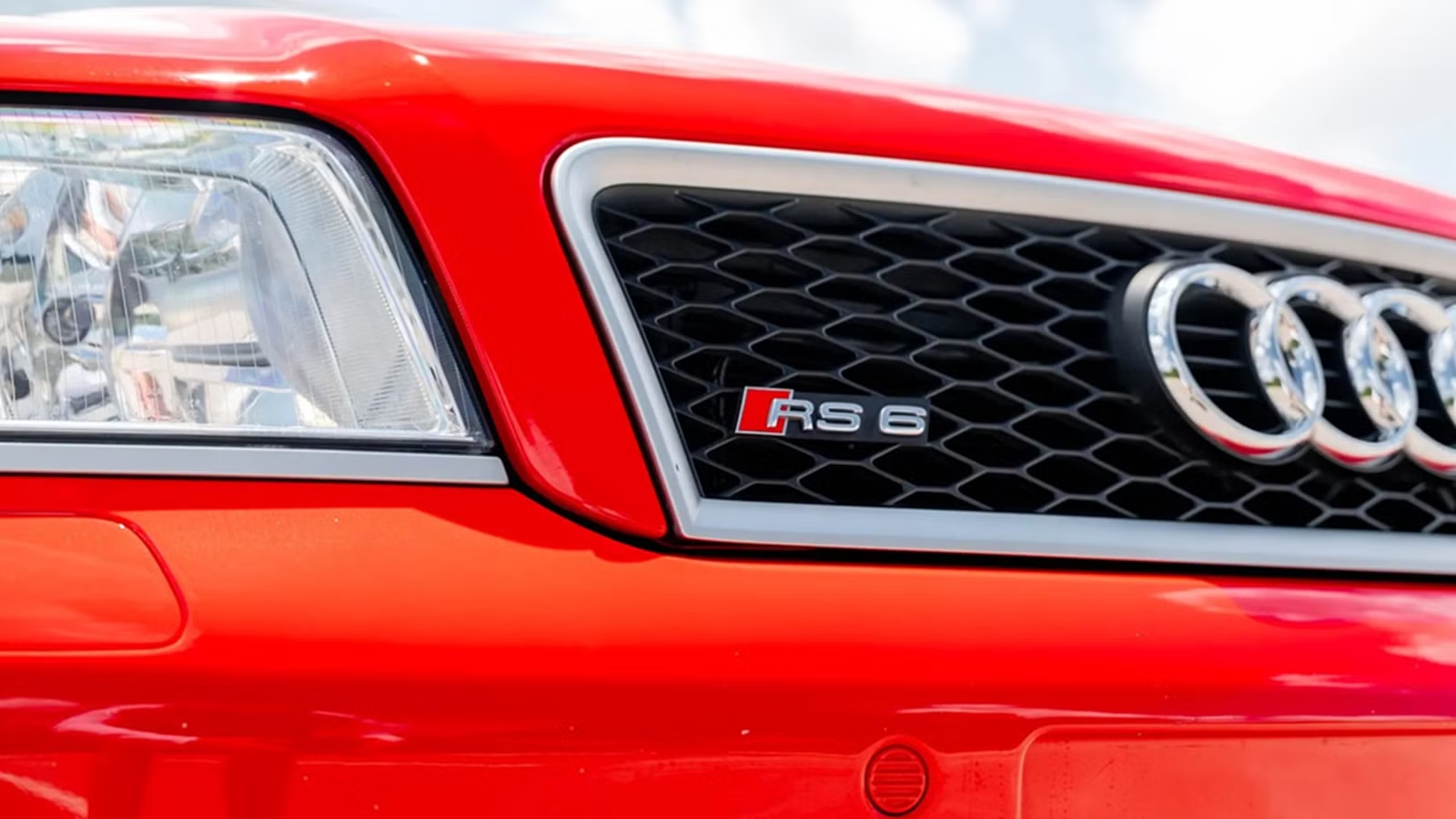
When the time comes to secure yourself a new family-friendly sedan, there’s always the risk of the devil on your shoulder influencing which direction you go in. While purchasing something like a brand-new 2026 Toyota Camry is the sensible choice, as it’s good value, reliable, and very fuel-efficient, it perhaps lacks the verve that sports sedans can offer. That’s where the devil comes in, as it may suggest opting for something used, like the 2003 Audi RS 6. It’s part of the C5 generation of the A6 available in the US from the 1998 through 2004 model years.
They are very affordable in 2026, much more so than a new Camry. As it turns out, there are some excellent reasons as to why this could be a genius idea. And one, well, not so.
The RS 6 Is A Serious Performance Machine
Blue 2003 Audi RS 6 Sedan frontAudi
2003 Audi C5 RS 6 Sedan
Engine
4.2L twin-turbo V8
Transmission
5-Speed Auto
Power
450 hp
Torque
415 lb-ft
0-60 mph
4.6 seconds
Average Used Value
$16,625
Having focused primarily on equipping its cars with either a five or six-cylinder engine throughout the 1990s, Audi went a different direction with the 1999 C5-generation S6. Based on the mid-size A6 sedan, the vehicle had a commanding 4.2-liter V8 shoehorned beneath the hood. The naturally aspirated unit kicked out a healthy 335 horsepower, but this was eventually deemed to be a little weak for the German marque’s tastes.
In 2002, the RS 6 premiered in Europe. It packed a twin-turbocharged 4.2-liter V8 and some cylinder-head tweaks to keep the unit cool under heavy use. Wanting to leave German rivals BMW and Mercedes-Benz red-faced, Audi comfortably achieved its goal. With 450 hp being shared between all four wheels via the brand’s venerable Quattro all-wheel drive setup, it got the better of contemporaries such as the BMW E39 M5 and Mercedes-Benz E55 AMG by 50 and 100 hp, respectively. As a result, it could also shoot past 60 mph a couple of tenths of a second faster than the M5, with a 4.6-second sprint versus 4.8 seconds.
In fact, the RS 6 was so powerful that Audi couldn’t offer it with a manual gearbox option, as the whole Volkswagen-Audi Group lacked a unit that could take the punishment from the upgraded V8. Instead, a five-speed automatic transmission was the only offering on the menu.
The RS 6 Wasn’t Only Effective In A Straightline
Blue 2003 Audi RS 6 Sedan rear endAudi
Wanting the RS 6 to be the whole package, Audi also worked hard to ensure it could take a corner much more competently than its considerable size and weight would suggest. The vehicle was a full inch lower than a normal A6 4.2, while its all-aluminum independent suspension was 30% stiffer and its dampers were 40% stiffer than those of a standard A6. Furthermore, the RS 6 was graced with Audi’s Dynamic Road Control system, which worked by sending hydraulic fluid between the shocks on each corner of the car in real time to reduce body roll.
Beefy Brembo brakes handled stopping the RS 6. A center active differential did its best to reduce power understeer by shifting the engine’s grunt between the front and rear axles as needed. It wasn’t as agile as the beloved M5, but the RS 6 was still a surefooted option.
A Used C5 RS 6 Is Much Cheaper Than You Might Expect
2003 Audi RS 6 Sedan cabin seats shotBring a Trailer
Along with getting the better of its German rivals in the performance stakes, a C5 RS 6 is also much quicker than a Camry, which only musters up 184 hp thanks to its hybrid-assisted 2.0-liter engine. The RS 6 sedan is also considerably cheaper, with online results showing that the average used value of the machine currently stands at just $16,625, over $10,000 less than the base MSRP of an entry-level Camry LE.
Granted, at this kind of money, you’d have to take an RS 6 with over 100,000 miles on the clock, which brings its own challenges. That said, find one that has been well maintained over the years, and it could be in just as good condition as a much less well-traveled specimen. If you’re after a lower-mileage example, expect to spend closer to $30,000, which is about the same outlay as a new Camry. Bearing in mind the RS 6 would have set you back $84,660 back in 2003, around $154,000 in today’s money, it’s hard to argue with the level of saving.
This Is Despite Its Considerable Rarity
Blue 2003 Audi RS 6 Sedan side shotAudi
On the face of it, the RS 6 being worth so little these days is hard to understand. While high-end luxury cars tend to depreciate in general, the fact that this model comes adorned with an RS badge immediately lends it a level of performance and heritage that should afford it some collectability. In addition, the C5 RS 6 sedan is ultra-rare, at least in the US.
The machine was only offered in the States for the 2003 model year, and fewer than 1,500 examples were sold during that time. When combined, you’d normally expect these factors to be the ideal recipe for a handy dose of appreciation, rather than the inverse.
Related
The Most Affordable Way To Own One Of The Best Naturally Aspirated V8s Ever Made
Are you ready to own one of Germany’s best V8 engines?
It Hasn’t Fared As Well As Some Of Its Siblings And Rivals
2001 BMW E39 M5. Motion. FrontBMW
This sentiment is backed up when you take a look at some of the C5 RS 6’s contemporaries. Take the 2007-2008 Audi RS4 from the B7 generation, with an average value of $37,891. Aside from being a lower-end model than the RS 6, it’s also less exclusive.
Related
10 Used V8 Sedans With 400+ HP For New Toyota Camry Money
One of them, arguably, is the best BMW M car ever made.
And then we come to the big one: the E39 M5. Despite around 10,000 examples being sold in the US, making it much less rare than the C5 RS 6, and of a similar performance standing, used values for the model have started to escalate rapidly. The average used value sits at a smidge over $35,000, but lower mileage specimens are now attracting well over $100,000, which is double that of RS 6 sedans in similar condition. Before too long, expect higher-mileage M5s to head in a similar northwards direction.
The RS 6 Has Demanding Maintenance Requirements
2003 Audi RS 6 Sedan V8 engine topBring a Trailer
While the C5 RS 6 may begin to capture collectors’ interest as it ages, there is a key reason the model remains dirt cheap right now. It’s extremely difficult to keep running on a reasonable budget. In terms of servicing, the V8 needs fresh oil every 5,000 miles. In addition, the unit needs a new timing belt every 35,000 miles, which will set you back around $4,000 due to how labor-intensive the job is.
Then we come to the Dynamic Ride Control suspension (DRC) setup. The dampers are notorious for eventually leaking hydraulic fluid, which requires either rebuilding or replacing them. Doing so costs between $750-$1,000 per corner, meaning you can easily spend north of $4,000 to have the whole system refreshed. It’s such a headache that many RS 6 owners replace the DRC system with a standard coilover setup instead.
The automatic transmission is also known to be problematic, with full rebuilds or replacements costing up to $10k all-in. Need a turbo replaced? Budget for around $7,500, since the whole engine needs to be removed from the vehicle to access them.
Related
The Most Powerful Audi That’s Doesn’t Wear An RS Badge
If you’re after a rapid Audi, but don’t fancy a more hardcore RS model, then this sleek offering is the most powerful you can buy in 2026.
These exorbitant costs make owning a C5 RS 6 on an average budget pretty much impossible, and as a result, the car’s value is heavily restricted. Once the vehicle becomes collectible enough to function essentially as a static museum piece, expect its value to rise considerably.
This is undoubtedly a lot of car for its current used market value, but a C5 RS 6 sedan demands incredibly deep pockets to keep it running at its full potential. As a result, entering into ownership of such a specimen needs to be done with your eyes firmly open, and with plenty of homework in hand.
Sources: Audi, Classic.com.
