

The middleweight motorcycle segment has never been more competitive. Riders shopping for a new machine can choose from naked bikes, sports bikes, retro roadsters, and adventure models that offer performance levels once reserved for flagship motorcycles. Yet despite all the choices, only a handful of bikes manage to deliver genuine excitement without becoming expensive, intimidating, or difficult to live with. Somewhere between beginner-friendly twins and fire-breathing liter bikes sits a sweet spot that more riders are discovering every year.
Yamaha Middleweights Tend To Stand Out Among Their Rivals
Yamaha
Yamaha has spent the better part of the last decade building some of the most respected middleweight motorcycles on the market. Whether it’s naked bikes, sport-tourers, adventure machines, or retro-inspired roadsters, the company has consistently found ways to deliver performance and character without pushing prices into premium territory. As a result, many of Yamaha’s middleweights have become benchmarks within their respective segments rather than merely alternatives to more expensive motorcycles.
Yamaha Knows That Bigger Isn’t Always Better
Yamaha Motorsports
A significant part of that success comes from Yamaha’s engine platforms. The CP2 parallel twin and CP3 inline-three have earned loyal followings because they offer something many competitors struggle to replicate: personality. The CP2 powers everything from approachable everyday commuters like the MT-07 to adventure bikes like the Tenere 700, while the CP3 has developed a reputation as one of the most entertaining engines available at any price point.
Those platforms have allowed Yamaha to build a diverse lineup that appeals to a wide range of riders. Models like the MT-07, Tenere 700, MT-09, and XSR series have proven that middleweight motorcycles can deliver excitement, practicality, and value simultaneously. It’s a formula that has kept Yamaha at the forefront of the category even as competitors have poured resources into the segment.
Related
Why The Yamaha MT-07 Might Be The Best Used Bike On Earth
The Yamaha MT-07 proves that the best used bike isn’t always the fastest or fanciest. Sometimes, simple just works better.
Some Bikes Punch Above Their Weight Class
Yamaha MT-07 Rider cruising on highway at nightYamaha Motorsports
Success has never been limited to a single motorcycle within Yamaha’s lineup. The company has built a reputation for creating machines that consistently deliver more performance, capability, and enjoyment than their specifications or price tags suggest. That’s especially true among its middleweights, where several models have earned cult followings by offering experiences that rival motorcycles from categories above.
What connects all of these motorcycles is Yamaha’s ability to prioritize the riding experience above spec-sheet bragging rights. Rather than chasing the highest horsepower figure or the longest equipment list, the company has repeatedly focused on building motorcycles that are engaging, accessible, and rewarding in real-world conditions. That philosophy has helped several Yamaha models become benchmarks in their respective categories.
2025 Yamaha Tracer 9 touring bike corneringYamaha
Yet even among those standout motorcycles, one model occupies a particularly interesting position. It takes the proven ingredients that made Yamaha’s performance middleweights so successful and wraps them in a package that appeals to both enthusiasts and traditionalists. More importantly, it manages to outperform not only its direct rivals but, in many situations, motorcycles that cost considerably more.
The Yamaha XSR900 Outperforms The Competition
Yamaha XSR900 parked in a suburban settingYamaha
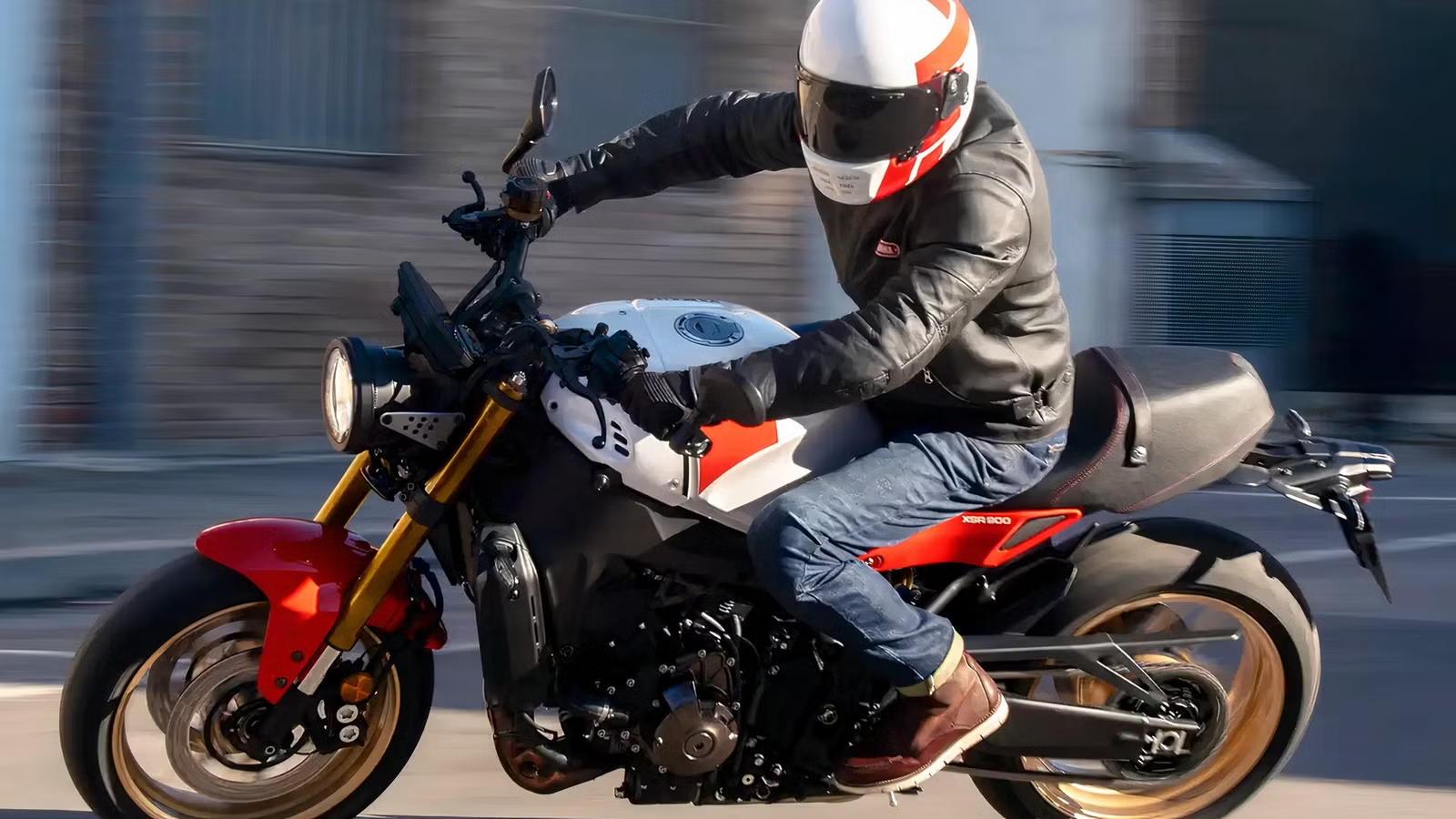
One motorcycle exemplifies that philosophy better than almost anything else currently on sale. The Yamaha XSR900 may wear retro-inspired styling, but underneath its nostalgic appearance lies one of the most capable performance platforms in motorcycling today. Based on Yamaha’s acclaimed 890cc CP3 engine architecture, this produces 117 horsepower at 10,000 rpm and 68.6 pound-feet of torque at 7,000 rpm.
Those numbers are paired with a curb weight of just 425 pounds, creating a power-to-weight ratio that allows it to challenge motorcycles from categories above its own. Yet what makes the bike special isn’t merely how quickly it accelerates. It’s how accessible that performance remains throughout the rev range.
Engine
890cc liquid-cooled DOHC inline-three, 12 valves
Output
117 horsepower @ 10,000 rpm / 68.6 pound-feet @ 7,000 rpm
Transmission
6-speed manual with Assist & Slipper clutch and Quick Shift System
0 to 60mph Time
Approximately 3.0 seconds
The Retro Motorcycle With Modern Superbike DNA
Yamaha XSR900 riding on winding roadsYamaha
The liquid-cooled inline-three has become something of a legend among enthusiasts. Combining the low-end pull of a twin with much of the top-end urgency associated with four-cylinder engines, it delivers a character that few competitors can match. The six-speed transmission is assisted by a slipper clutch and Yamaha’s third-generation quickshifter system, allowing clutchless upshifts and downshifts for seamless acceleration.
The chassis is equally impressive. Yamaha’s Deltabox aluminum frame works with a fully adjustable 41 mm KYB inverted fork and a fully adjustable KYB rear shock. Braking duties are handled by dual 298 mm front discs with radial-mount Brembo hardware, while lightweight SpinForged wheels help reduce unsprung weight and sharpen handling responses.
Yamaha
Cutting-edge technology further reinforces the bike’s premium positioning. Riders get a six-axis IMU governing lean-sensitive traction control, slide control, lift control, engine brake management, and cornering ABS. A five-inch TFT display provides access to ride modes and smartphone connectivity, creating a package that rivals motorcycles costing substantially more.
Frame
Aluminum Deltabox frame
Suspension
Front: 41 mm fully adjustable KYB inverted fork; Rear: Fully adjustable KYB monoshock
Brakes
Front: Dual 298 mm hydraulic discs with radial master cylinder; Rear: Single 245 mm hydraulic disc; Cornering ABS
Wheels and Tires
Front: 120/70ZR17 tire on 17-inch wheel; Rear: 180/55ZR17 tire on 17-inch wheel
Wet Weight
425 pounds
Where The XSR900 Leaves Most Rivals Behind
The XSR900’s greatest strength emerges when all those individual components begin working together. Plenty of motorcycles offer strong engines. Others boast sophisticated electronics. Some deliver excellent chassis dynamics. Few combine all three while remaining approachable and reasonably priced.
Comfort and versatility also play a significant role in the motorcycle’s appeal. The upright riding position, relatively relaxed ergonomics, and well-shaped seat allow riders to spend hours on the bike without sacrificing control. Whether navigating city traffic, exploring mountain roads, or covering long highway distances, the XSR900 adapts remarkably well to changing demands.
Yamaha
Then there’s the value equation. With an MSRP of $10,599, the XSR900 undercuts many motorcycles that offer fewer features and less performance. Riders shopping with larger budgets may discover that spending substantially more doesn’t necessarily produce a substantially better riding experience.
Related
The Japanese Adventure Bike That Does Everything Well
This ADV strikes an impressive balance between off-road capability, touring competence, and everyday usability.
The Real Reason The XSR900 Has Become A Modern Benchmark
Yamaha XSR900 parked, top left quarter angleYamaha
What ultimately separates the XSR900 from much of the competition isn’t any single specification. It’s the way the motorcycle manages to satisfy multiple audiences simultaneously. Experienced riders appreciate its performance potential and sophisticated engineering. Newer riders admire its manageable nature and forgiving behavior. Few motorcycles bridge that gap so effectively.
The retro styling certainly helps broaden its appeal, but the real story lies beneath the bodywork. Yamaha has created a motorcycle that captures much of what riders love about liter bikes without inheriting many of their compromises. It delivers serious speed, advanced technology, premium hardware, and everyday practicality in a package that remains attainable for a wide range of enthusiasts.
Source: Yamaha
