

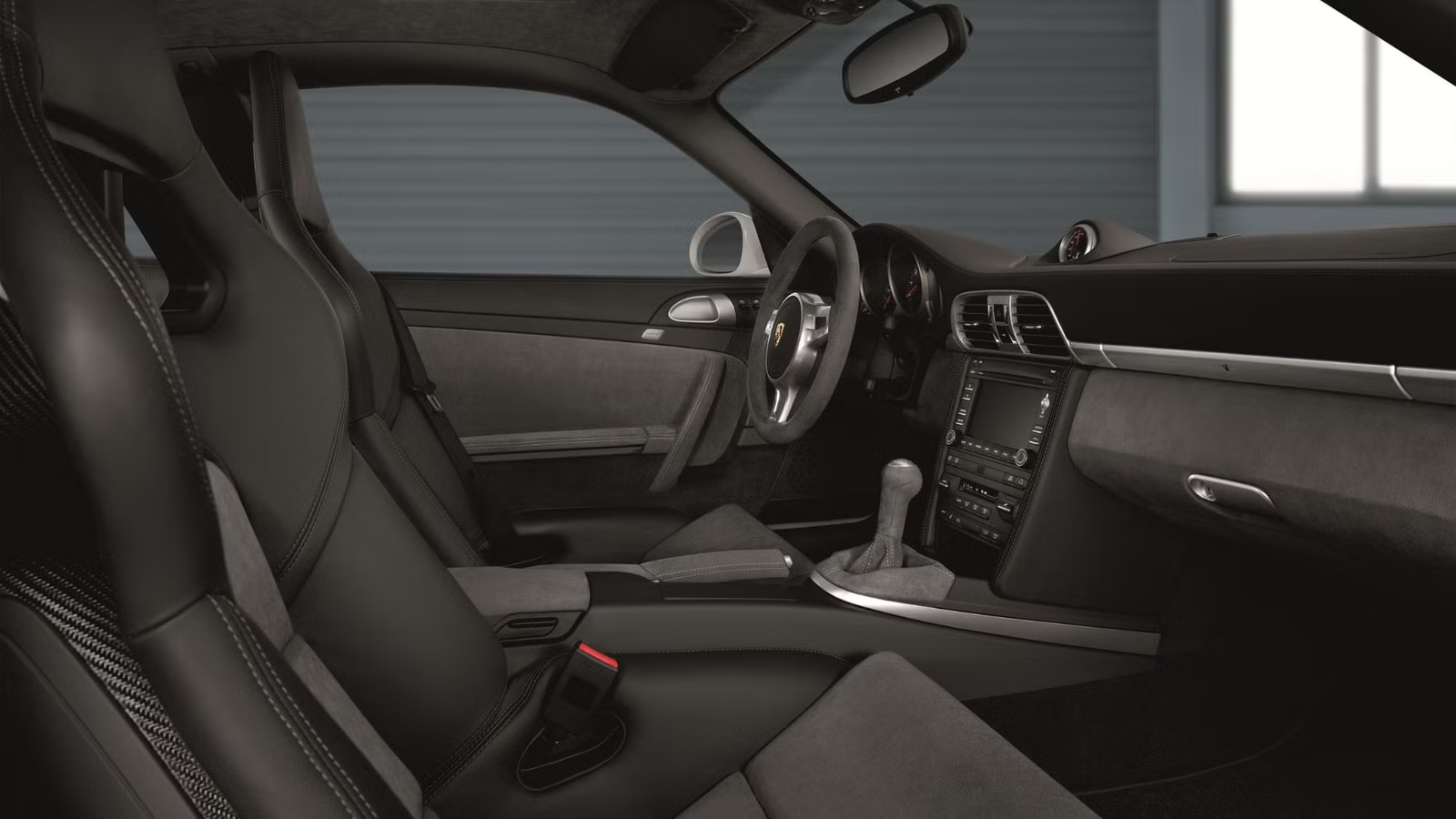
Every generation of the Porsche 911 needs to introduce new innovations and achieve even higher standards than the one before it. When developing the 991-generation Porsche 911, which first hit the road for the 2012 model year, one such innovation would put a world-first piece of hardware in the driver’s right hand: a 7-speed manual transmission. The six-speed manual had long been the standard for performance cars, and a 7-speed box had never been done before.
Selling a new manual was no small feat, especially with rising fuel prices and decreasing manual take rates. The business case for offering a three-pedal performance car was getting tougher and tougher, but Porsche rose to the occasion and applied some engineering magic to help keep the stick-shift alive for fans, creating a unique moment in history as part of the process.
Why 7 Gears In A Manual?
2013 Porsche 911 CarreraPorsche
Some context can be helpful to understand why the number of gears in both manual and automatic transmissions has been creeping up over the past several decades. As fuel economy and emissions regulations tightened, adding more gears to transmissions was a key means of keeping up with those regulations, while maintaining or improving performance along the way.
When fuel prices and emissions weren’t of any concern, two-speed automatics and three-speed manuals worked just fine. Eventually, three- and four-speed automatics and four- and five-speed manuals came along, offering more gears to simultaneously enable quicker acceleration and lower cruising revs. Drivers who liked to shift gears didn’t mind having a few more to browse.
For decades, a five-speed transmission, whether automatic or manual, was pretty much the industry standard. Six-speed manuals started to arrive in very exotic applications by the late 80s. As the 90s rolled in, six-speed manual transmissions became the go-to gearbox for many of the world’s fastest three-pedal cars, and it remained that way for decades.
2012 Porsche 911 Carrera
Engine
3.4-liter flat-six cylinder gas NA
3.8-liter flat-six cylinder gas NA
Maximum Power
350 hp @ 7,400 rpm
400 hp @ 7,400 rpm
Maximum Torque
287 lb-ft @ 5,600 rpm
325 lb-ft @ 5,600 rpm
Compression ratio
12.5:1
12.5:1
Engine redline
7,800 rpm
7,800 rpm
Output per liter
102.9 hp
105.2 hp
Valvetrain
Four overhead camshafts, four valves per cylinder, variable valve timing and valve lift (VarioCam Plus)
Intake System
Direct fuel injection
Fuel
Premium unleaded
Transmission
7-speed manual / 7-speed double-clutch (PDK)
Would seven gears be too much? Apparently not. Many Porsche drivers love shifting gears, so an extra gear to shift meant more enjoyment at the wheel. The addition of the 7th gear also allowed for reworked ratios in gears 1 through 6, optimizing performance. With 7th gear acting as a sort of “ultra overdrive”, the 7-speed stick would help you go an extra two miles on every gallon of fuel, too. This combination of performance, a purist connection, and improved fuel economy were the sort of win-win technologies that helped sell many 911s.
2013 Porsche 911 CarreraPorsche
If you’re wondering, manual transmissions stop at 7 gears in passenger vehicles, but automatics have climbed all the way to 10 gears, and for the same reasons. From its 2012 launch, the 7-speed manual stuck around for more than a decade before leaving the lineup after 2024. The six-speed manual transmission has remained available the entire time in specific applications, and remains on sale today.
Related
6-Speed Manual Transmission: Why Six Is The Perfect Number
The six-speed manual transmission is used in hot hatches, performance coupes, and even trucks – but what makes it so special?
The Guts of The 7-Speed Manual Were Already Familiar
You’re not having deja-vu: in this same era Porsche was also selling a 7-speed variation with two pedals, the automatic alternative being the PDK dual-clutch gearbox which was already in use. Assisted by computers, pumps and microprocessors, this racing-derived paddle-shift gearbox could shift gears at eye-watering speeds, and had no need for clumsy human pedal and lever inputs which would only slow it down.
2013 Porsche 911 CarreraPorsche
Rather than developing a new 7-speed manual, Porsche engineers worked with supplier ZF to reverse engineer the solution. Out went the PDK’s automatic gear shifter and sophisticated computer-actuated systems, and in went a specially designed mechanical interface that allowed the complex internals within to accept inputs from a traditional clutch pedal and shift lever. In simplified terms, the Porsche 7-speed manual was actually the sophisticated 7-speed PDK gearbox, but reworked to be shifted the old-fashioned way. Now the driver, not the computer, could pull the PDK’s strings. You can read much more about that here.
2012 Porsche Carrera 7-Speed Manual TransmissionPorsche
Porsche’s specification data from 2012 reveals the similarities. Whether you chose the 7-speed manual or the 7-speed PDK it was based on, ratios for five of seven forward gears are the same between the two transmissions, ditto reverse gear and the final drive.
2012 Porsche Carrera 7-Speed PDK TransmissionPorsche
Transmission Specifications (2012 Porsche 911 Carrera, Carrera S)
Ratios
7-speed manual
7-speed, double-clutch (PDK)
1st
3.91
3.91
2nd
2.29
2.29
3rd
1.55
1.65
4th
1.30
1.30
5th
1.08
1.08
6th
0.88
0.88
7th
0.71
0.62
Reverse
3.55
3.55
Final Drive Ratio
3.44:1
3.44:1
It Wasn’t The Only 7-Speed Manual
2027 Ford Bronco Filson from the front three-quarter angleFord
Porsche was the first to market with a 7-speed manual, but they weren’t the only automaker to sell one. From 2014 through 2019, the C7-generation Corvette offered a 7-speed manual as its three-pedal option, before the C8 arrived in an automatic-only configuration. Like the Porsche 7-speed manual, the Corvette C7 would use its 7th gear as an ultra overdrive, keeping cruising revs as low as possible to the benefit of fuel consumption.
2024 Ford Bronco
2014 Chevrolet Corvette Stingray C7
Engine
2.3-liter inline four-cylinder gas single turbo
6.2-liter V8 gas naturally aspirated
Power
275 hp @ 5,700 rpm
455 hp @ 6,000 rpm
Torque
315 lb-ft @ 3,400 rpm
460 lb-ft @ 4,600 rpm
Transmission
7-speed manual
7-speed manual
2014 Chevrolet Corvette Stingray C7 Coupe White Front Angled View DrivingChevrolet
Ford entered the 7-speed manual scene as well, but used the opposite approach of Chevrolet or Porsche. Instead of adding an extra overdrive for fuel efficiency, the Bronco instead adds an ultra-low “C” or “crawler” gear in a “dogleg” setup that positions this sub-first-gear ratio below reverse in the shift gate. It’s become a particularly trendy piece of off-road hardware not offered by competitors like the Jeep Wrangler. Elsewhere, the 7-speed manual also popped up in some low-volume exotics and supercars, too.
So Why Didn’t The 7-Speed Manual Replace The 6-Speed Manual Widely?
2013 Porsche 911 CarreraPorsche
There are a few reasons the 7-speed manual never really caught on. A major one was timing. Though Porsche, Chevrolet and Ford had some success with 7-speed manual transmissions in recent decades, the market at large has mostly switched to two-pedal alternatives, including high-performance automatics and race-derived dual-clutch transmissions, instead.
With the high-performance universe well served by a variety of well-proven six-speed manual transmissions, the business case for most automakers to develop a new manual transmission just didn’t add up. Another angle? Most shoppers choosing a manual transmission were enthusiasts not concerned with maximum fuel efficiency, the exact reason Porsche and Chevrolet added a 7th gear in the first place. Much more information on why we don’t see more 7-speed manual cars here.
Related
Porsche Needs Your Help Keeping The Manual Alive
Customers just have to prove that they want them.
The Feel From The Wheel
2013 Porsche 911 CarreraPorsche
Unsurprisingly, shifting a 7-speed manual transmission is just like (wait for it…) shifting a six-speed manual, but there’s an extra gear. In both the Corvette and 911 applications, special care was taken with the design of the shift gate to help prevent accidentally mis-shifting between the 6-7 or 7-6 positions. Basically, drivers treat the gearbox like the six-speed manual they’re probably used to, but slip the shifter up into 7th gear before setting the cruise control on the highway.
Base Trim Engine
3.6L Flat 6 Gas
Base Trim Transmission
6-Speed Manual
Base Trim Drivetrain
Rear-Wheel Drive
Base Trim Horsepower
345 hp
Base Trim Torque
288 lb-ft @ 4400 rpm
Fuel Economy
18/25 MPG
Base Trim Battery Type
Lead acid battery
Infotainment & Features
9 /10
In a 7-speed manual 911 (or Corvette), this type of driving is surprisingly fuel efficient. Drivers can easily appreciate the added fuel range they’ll get from steady-state cruising in 7th gear on long highway drives. Keep your speed reasonable and cruise control set, and that tank of fuel will likely last longer than you think.
2013 Porsche 911 CarreraPorsche
Developments from the 911’s first-generation 7-speed manual are considered a little long and slightly lacking in tactile feedback, likely a result of the complex shift mechanism that turns the driver’s lever actions into the physical gear changes within the transaxle-mounted box. This version of the 7-speed manual had an athletic feel, but wasn’t noted as an all-time great. For a 2020 model-year update, a revised 7-speed manual featured a shorter lever and heavily revised linkage system, tightening up the gearbox for a heavier, more notchy and muscular feel.
Your writer once drove 800 miles in a 2021 911 Carrera Targa 4S with the 7-speed manual, followed immediately by an additional 800 miles in a 2021 Ford Mustang Mach 1 with six-speed manual. I preferred the shifter and clutch feel in the Mustang. Your results may vary.
Was Porsche’s 7-Speed Manual Genius Or Overkill?
Porsche Carrera Interior shows many blank buttonsPorsche
Though it was a complicated task from the engineering side, Porsche earned serious credibility with enthusiast drivers by bringing innovative engineering to the manual transmission to help keep it alive, even despite dismal take rates. It was a win-win for all involved: Porsche remained a major blip on the mental radar of manual-craving shoppers well into an era where manuals had all but disappeared, and drivers got the manual gearbox they craved, with improved fuel economy as an added bonus. It was an engineering approach that materially extended the lifespan of the iconic manual Porsche sports car, and that sounds pretty genius to us.
