

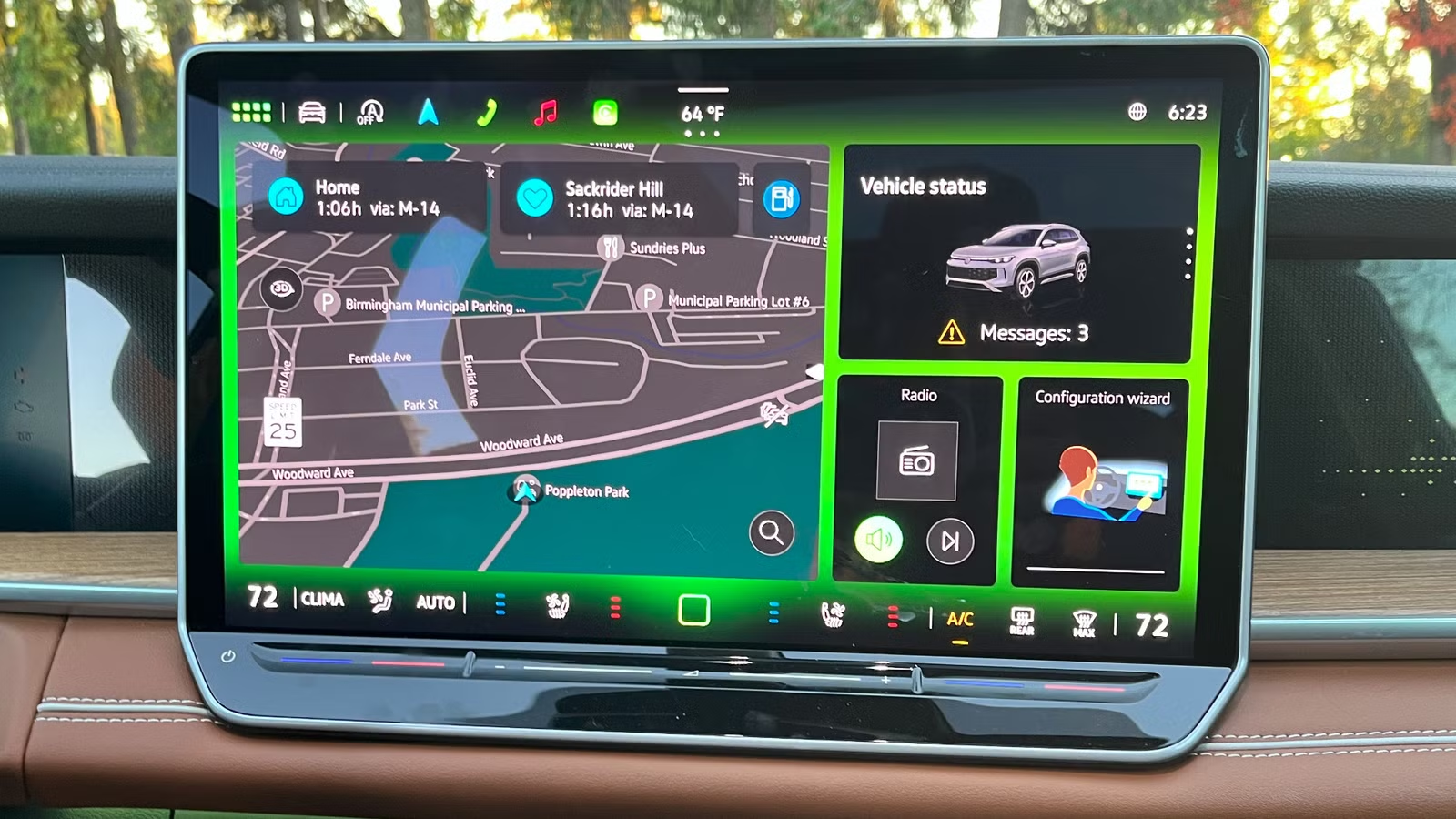
There has been an uproar over the past week from the nerdier side of the internet, but the question of access to data is one that affects everyone. Essentially, it seems Volkswagen Group has quietly disabled the CarNet API (Application Programming Interface) for its We Connect service that allows users to control and read the data from its vehicles through independent software.
What exactly does this mean? Essentially, users were able to have granular control over their data and actions, like when and how their cars were charged at home, compared to the basic features in the Volkswagen app. Now, that’s all suddenly shut down.
Subscription Vs. Private Control
Volkswagen ID. BuzzIan Wright/CarBuzz/Valnet
The biggest use cases were through the popular open-source home automation software, Home Assistant, and the open-source EV charging and energy management system openWB. But on May 27, 2026, it appears every third-party client using the Volkswagen Group cloud service began failing to connect, while the official Volkswagen brand’s smartphone apps continued to authenticate normally.
Through the Volkswagen Group’s branded apps, including Audi, Škoda, and Cupra, owners can access some useful controls with a paid subscription, but independent developers have created far more useful features in their software.
Through the API Volkswagen has left open for a few years, owners could dig in a little deeper and control things like making sure their electric car would charge only on rooftop solar surplus energy or when electricity prices are at their lowest, get notifications when charging starts, finishes, or fails, and even re-heat or cool the cabin using weather, calendar or location triggers. For fans of full-home automation, they could even use their car’s proximity to home to set off automations and control functions with voice commands. It’s not something everyone used, but those who used it… really used it.
The Reply From Skoda
Skoda Vision O Concept WagonSkoda
CarBuzz reached out to Volkswagen for a comment on the situation, but thus far the automaker has declined to comment. The only official reply so far came through the Volkswagen brand Skoda in Europe, shared on a Skoda owner Facebook page, which essentially says it now has “a formal framework for third-party access to vehicle data.” Essentially, a third-party app can license data from all included brands under a unified legal framework – which sounds like a paid B2B (Business To Business) solution, freezing out consumers.
Related
VW’s Most Mediocre Vehicle Is Dying So Gas SUVs Can Thrive
The ID.4 is going out of production so that Volkswagen can free up manufacturing capacity in Chattanooga for the Atlas three-row SUV.
After realizing car owners were not pleased, Skoda went on to say: “We understand how important smart-home integrations, such as Home Assistant, are for many of you. We are currently working on how to introduce the upcoming changes in a way that better reflects these needs. As part of this, we are exploring a solution that would allow selected basic smart-home functionalities to remain available in a secure way, while ensuring data protection, security and system stability.”
What’s notable there is the phrase “selected basic smart-home functionalities” and the use of “data protection, security and system stability.” Such phrases can often be highbrow ways of tech companies wanting to limit consumers’ abilities with their software. Could VW be moving in this direction?
CarBuzz Insight – Why This Matters
Volkswagen Software Defined VehicleVolkswagen
There are several reasons why this is concerning, and we’ll be watching to see how it plays out. While people using the API for more complex use cases are a small percentage of customers, they are the ones that embraced automakers like Volkswagen moving their business towards the tech industry.
Tech-savvy enthusiasts are the early adopters and champions of how software-defined cars can benefit people, and on the cutting edge of some of the things software-defined vehicles can open up – like integrating with a home’s unique energy system and automation system. And they are not the people brands like Volkswagen should cut off in order to force subscription models to withhold data from the owners of the cars they bought, then sell their data from that car’s usage to third-party companies.
From a public relations point-of-view, Volkswagen is stepping on its own toes. Like a lot of automakers, it has appealed to the tech crowd with its tech-forward vehicles, and tech people want control of their own data, hardware, and software. Pulling the big-tech corporation move of locking access behind paywalls then still not providing the advanced functions people are looking for is not a good look. And taking access away after it has been available is an even worse look.
Related
Automakers Are Struggling To Get People To Pay For Connected Services
A new study from S&P Global reveals that most new car owners are still wary of paying for new connected services and software.
At the base level, people have bought vehicles from a Volkswagen-owned brand so they can integrate them into tech-forward homes, and if they don’t work anymore as expected, they won’t be buying another or be telling their friends how great their car is. Hopefully, Volkswagen and its brands are realizing this with the pushback and addressing the issue seriously. It has the opportunity here to become the go-to automaker for tech enthusiasts, of which there are many of us.
Sources: Louis Rossman (YouTube) / ConsumerRights / VWIDtalk / GitHub / Volkswagen / BornCity
