

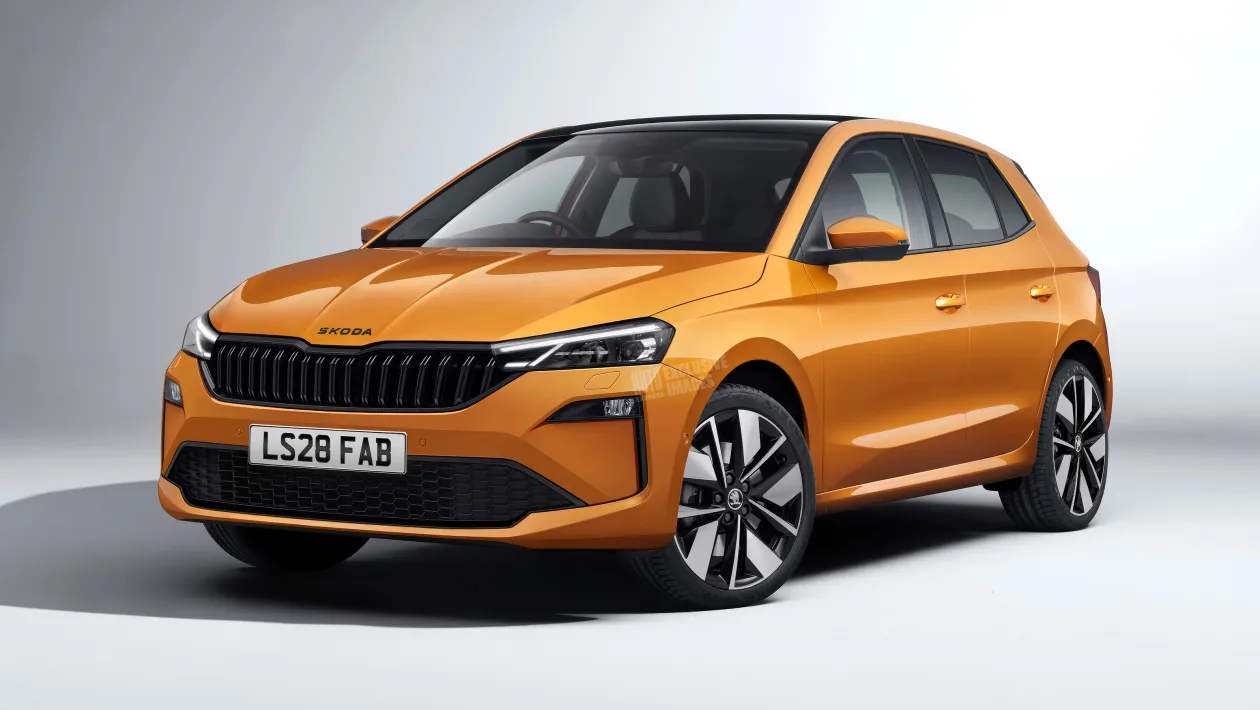
Being less complex naturally makes a mild-hybrid less expensive, too, which was one of key reasons Skoda chose this type of powertrain for its entry-level models.
“The mild-hybrid gives us the possibility on the lower end to make a step into this technology,” according to Neft. “It’s also very much demanded in southern European countries like Italy and Spain, where you sometimes even need it in order to be able to drive into cities and so on.”
Advertisement – Article continues below
He added that while there might not be a huge increase in the Fabia’s official fuel economy, with the supermini already able to return well over 50mpg without any hybrid help, drivers should notice the difference on their daily commute and when driving in cities.
How much time does the Fabia have?
We asked the development boss how many extra years this new hybrid tech and other upgrades could give the Fabia and its cousins. While he couldn’t give us an exact figure, he was very clear that Skoda will continue to update those cars and their MQB-A0 platform for as long as possible. Their future really depends on upcoming legislation.
“We try to keep each door open,” Neft said when talking about how the uncertainty over emissions regulations in Europe is hampering some brands’ ability to make decisions on the future of their combustion cars.
Skoda’s sales and marketing chief, Martin Jahn, gave us a similar answer earlier this year: “With some design uplifts and with some technological improvements, such as hybridisation, we can keep the MQB going for quite some time.
