

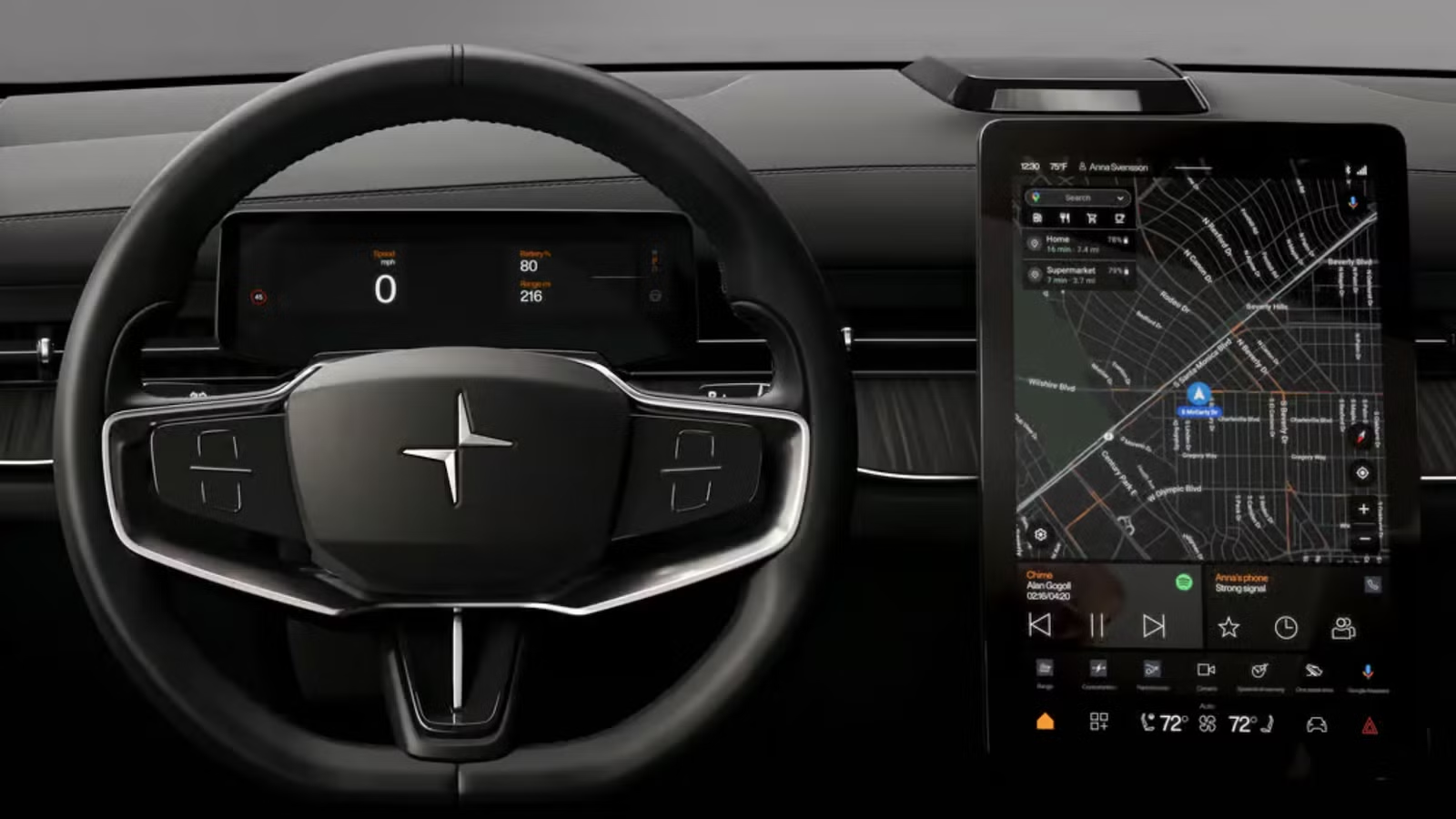
The last decade or so of automotive interior design has had two main trends, both of which are closely related. Automakers have been shifting to bigger and bigger screens for handling more controls and information, and reducing the number of physical buttons and knobs to absolute minimums. In some cases, those physical controls have been practically eliminated. We seem to be reaching a turning point, though, where customers are fed up with the new controls schemes and are complaining. The latest to respond with a reversal seems to be Polestar.
2027 Polestar 5Polestar
Apparently Polestar Has Received Complaints
Autocar interviewed the CEO of the electric performance brand, Michael Lohscheller, and among the topics brought up were Polestar’s current cabin controls. He revealed that buyers want their buttons back, saying, “Customers are very outspoken about that.” The current Polestar lineup is, indeed, deficient in physical controls. The Polestar 4 and 3 rely on the screen for virtually all functions with the exception of a volume dial in the center console. The Polestar 4 at least has physical buttons on the steering wheel, but the 3 doesn’t even have that, with touch-sensitive buttons instead. The soon-to-launch Polestar 5 has the same basic layout of 3.
2027 Polestar 5Polestar
Lohscheller went on to say that future Polestar products would have revised control schemes with the controls customers crave. Autocar reported that one of the first changes will be to add conventional buttons to the steering wheel of the Polestar 3. Odds are, though, that more comprehensive changes such as center stack buttons and knobs for sound and climate adjustment will have to wait for more thorough redesigns. Buttons can’t just be added with software updates, after all.
Polestar 2 teaser showing the car behind frosted glass.Polestar
So, the soonest we would expect to see significantly revised Polestar interiors would be with some of its other new models, such as the completely redesigned 2, and the little 7 crossover. The 2 is expected to launch next year, potentially with a reveal this year, and the 7 is slated for 2028. However, whether these will feature more physical controls will likely depend on how far along those models were in the design process before Polestar decided to change course on controls.
2028 Polestar 7 TeaserPolestar
Polestar Is Far From The Only Company Backtracking On Touch Controls
Customers aren’t the only people complaining about having to use screens and touch buttons, so have critics, including us. Those complaints haven’t been exclusive to Polestar, either. Other companies that have leaned too hard on these controls include Volkswagen, which also made the mistake of introducing such controls a few years ago alongside unresponsive infotainment systems.
Related
Buttons Are ‘Non-Negotiable For Me’: VW CEO Is Changing His Cars For The Better
Futuristic sliders showed up in the all-electric ID.4 and ID. Buzz, but consumer response has been less than forgiving. Change is coming.
VW has made strides in improving the infotainment, and not long ago, the automaker’s CEO admitted to losing customers and that buttons for the future would be a “non-negotiable” feature going forward. The new ID. Polo is one of the first VW products to show the fruits of that policy change, as it has a bank of real buttons at the base of the center stack, and the steering wheel is filled with even more.
Related
Everyone But America Is Mandating Buttons In Cars
But the US doesn’t have to deal with stop-start anymore, so yay?
Hyundai and its family of automakers have been better than some automakers with retaining physical buttons, and apparently that will continue. Just a couple of years ago, Hyundai’s head of design, SsangYup Lee, made it clear that he feels real buttons are critical for safely operating functions in a car. The Chinese government seems to agree with his assessment, as it’s looking to pass legislation requiring more physical switchgear. Chinese automakers in particular have embraced screens and touch buttons, so the legislation could turn things around. The European Union and Australia also have plans for pushing physical buttons, but by penalizing cars with digital buttons in safety ratings. Regardless of the methods, we’re glad to see the trend of touch screens and pads may finally be at an end.
Source: Autocar
