

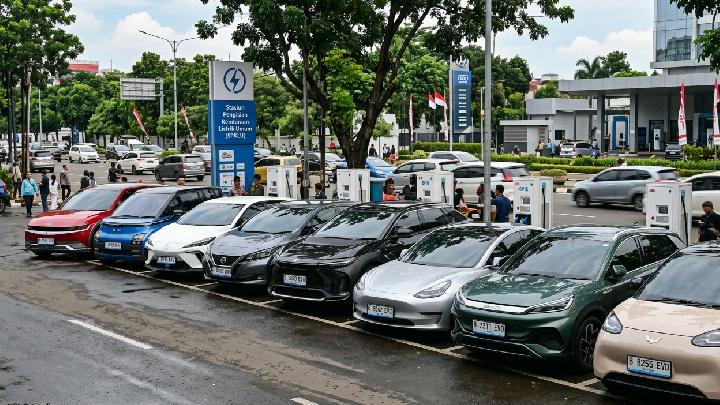
TEMPO.CO, Jakarta – An electric car suddenly breaking down and its tires locking in the middle of the road has emerged as a pressing concern. A recent tragedy involving an electric taxi, which became immobilized at a level crossing in East Bekasi on April 27, 2026, resulted in a fatal train collision that killed 16 Commuter Line passengers.
Kharisma Bani Adam, Head of the Energy System Engineering Program at Telkom University in Bandung, explains that an EV can shut down and its parking brake may activate for various technical reasons.
The Do’s of Handling EV Breakdowns
Bani advises that if a vehicle stalls in a relatively safe location, the driver may attempt to jump-start the low-voltage 12V battery to provide temporary power.
“This effort is intended to reactivate the electronic systems and dashboard display, allowing the parking brake to be released so the car can be shifted into neutral,” Bani stated on Wednesday, April 29, 2026.
He noted that electric cars should ideally be equipped with an Emergency Release system to manually unlock the wheels. This feature is vital for emergencies, such as stalling on railway tracks.
“[Do] the Emergency Release if possible, but if the situation is highly urgent, abandoning the vehicle is, of course, the most logical thing to do,” he added.
Beyond the level crossings, Bani urges drivers to remain calm if their EV breaks down on the road. If circumstances permit, he suggests steering the car toward the roadside. Bani warns that while the steering wheel will feel heavier once the electric power steering (EPS) deactivates, the vehicle can still be moved.
The next immediate step is to deploy a safety triangle. If the failure stems from the 12V battery, the driver may then attempt a jump-start.
Another option is to contact a technician or the manufacturer’s emergency roadside service. If towing is required, Bani recommends using a flatbed truck.
The Don’ts of Handling EV Breakdowns
Bani cautioned against touching the high-voltage cables, which are identified by their bright orange casing. He emphasized that the car should not be pushed forcefully, as doing so while the wheels are locked or the transmission is not in neutral can cause severe damage to the inverter.
Sriyono, a lecturer in Automotive Engineering Education at the Universitas Pendidikan Indonesia (UPI) in Bandung, echoed these sentiments. He stressed that a stalled EV must not be towed haphazardly.
“The handling method differs significantly from fuel vehicles with manual transmissions, particularly if the drive wheels remain in contact with the pavement,” Sriyono explained.
He recommended that stalled electric cars be transported on a flatbed truck rather than being dragged or pulled by a rope like a conventional towing. “Improper towing can jeopardize the electric motor, inverter, transmission, high-voltage system, and the electronic parking mechanism,” he stressed on Thursday, April 30, 2026.
Read: What to Know About ‘Fail-Safe’ System for Electric Vehicles
Click here to get the latest news updates from Tempo on Google News
