

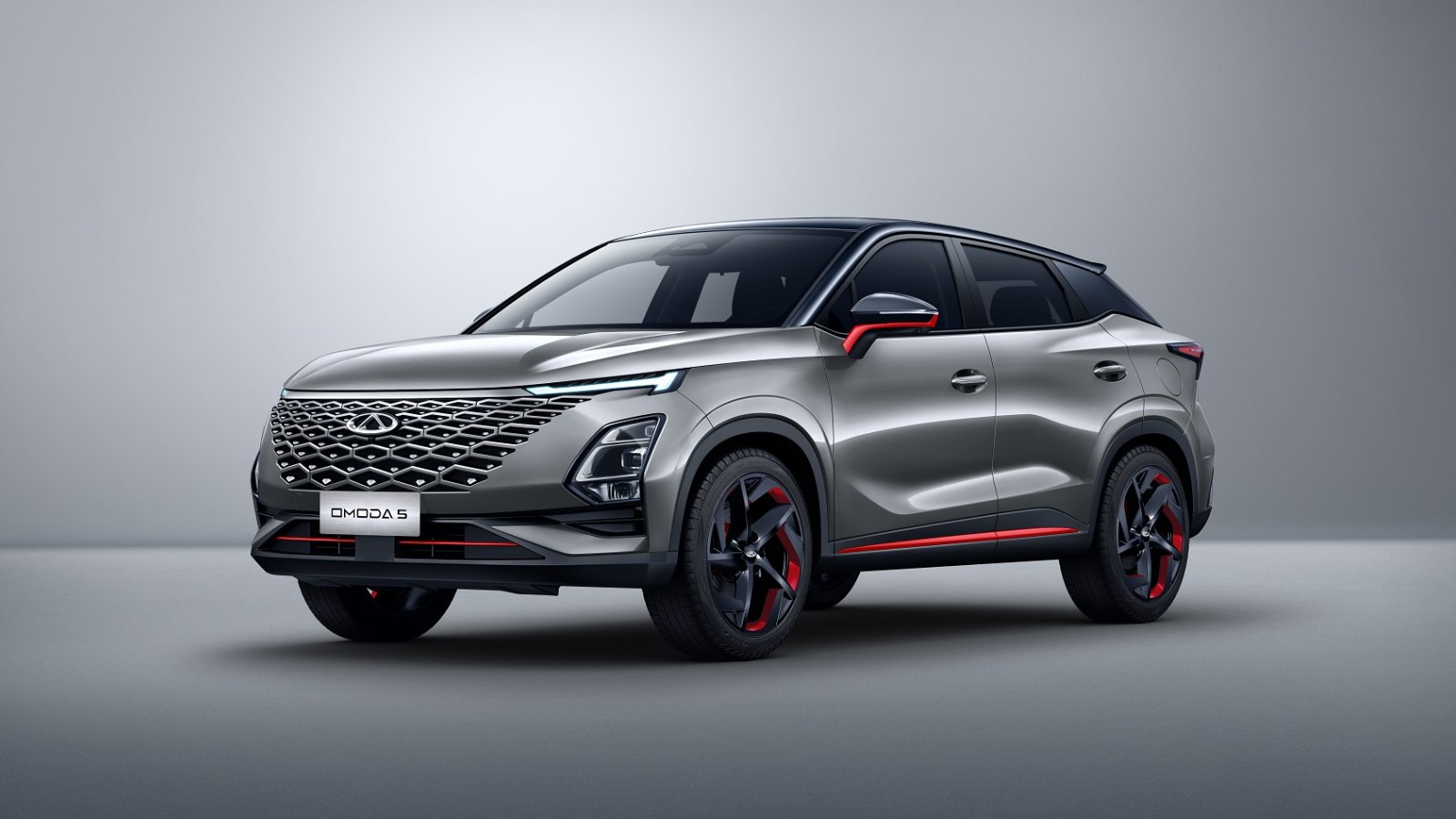
An Omoda 5 SUV pictured on the brand’s website. Credit: Omoda.
- A 2023 Omoda 5 lost its rear axle while being driven in Malaysia last week. Chery said welds on the rear axle trailing arms may lack sufficient strength.
- Chery has launched checks on Omoda 5 vehicles from the same production batch in China and other markets.
Chery Auto (HKEX: 9973) is recalling 8,878 Omoda 5 SUVs in Malaysia over potentially defective rear axle welds, after an axle detached from a vehicle while it was being driven, prompting the local regulator to suspend new registrations of the model.
The incident involved a 2023 Omoda 5 in Malaysia and caused no injuries, Chery said in a statement on Sunday.
The company said it immediately launched an investigation and has been in close contact with regulators, including Malaysia’s Road Transport Department (JPJ).
The investigation found that some welds on the rear axle trailing arms of vehicles in the affected batch may lack sufficient strength, creating a risk of weld rupture under extreme conditions. Chery said models using this design had already been discontinued.
Chery’s Malaysian subsidiary has launched a recall in coordination with JPJ to inspect the components and replace them free of charge where necessary.
Chery also said it had launched precautionary checks on Omoda 5 vehicles from the same production batch in China and other relevant markets. The company said it would disclose the findings promptly.
An Omoda 5 lost its rear axle and wheels while being driven in Johor Bahru, in the Malaysian state of Johor, on October 6, raising concerns about the model’s safety, according to local media reports.
A Chery Omoda 5 experienced a rear wheel detachment while driving in Malaysia on October 6. Image from Weibo.
JPJ announced on October 11 that it was immediately suspending the Omoda 5’s Vehicle Type Approval (VTA) and new registrations until a technical investigation is completed and the safety risks are confirmed to have been adequately addressed.
JPJ instructed Chery Malaysia to identify all potentially affected vehicles using part numbers, production batches and vehicle identification numbers (VINs). The agency will also conduct technical audits of the Omoda 5’s production and assembly line and rear axle component supplier.
Chery Malaysia said the recall covers the C and H variants of the Omoda 5, but did not specify the production years of the affected vehicles.
The company stressed that the recall does not affect models currently on sale. The Omoda 5 has been discontinued in Malaysia and was replaced by the Chery O5 in September 2025. The older Omoda 5 used a torsion beam rear suspension, while the O5 uses a multi-link independent rear suspension.
This is the Omoda 5’s second recall in Malaysia over rear axle problems. In April 2024, an Omoda 5’s rear axle suddenly detached while the vehicle was being driven, prompting Chery to recall 600 vehicles for inspection.
The investigation at the time attributed the problem to improperly calibrated rear axle welding equipment. It ultimately identified 60 vehicles produced on August 15, 2023, that required rear axle replacement. Chery Malaysia has yet to say whether the latest incident involves the same defect.
The Omoda 5 went on sale in China in 2022, but sales were weak, with monthly volumes failing to exceed 1,000 vehicles from 2023 onward. It was subsequently withdrawn from the domestic market and is now primarily sold overseas.
Chery established Omoda in 2021 as an overseas brand targeting young consumers globally. Together with Jaecoo, launched in 2022, it forms the O&J brands. The 2 brands announced in April this year that their combined cumulative global sales had surpassed 1 million vehicles.
Chery is considering bringing Omoda and Jaecoo to China to bolster its domestic sales, which remain under pressure, Chinese technology news outlet Leiphone reported last month.
Overseas markets are the main driver of Chery’s growth. Chery Group sold 292,308 vehicles in September, up 4.2% from a year earlier, according to data compiled by CnEVPost. Exports accounted for 207,814 vehicles, setting a monthly record for a Chinese automaker.
The 2 overseas brands would target China’s premium market, with marketing teams being assembled.
