

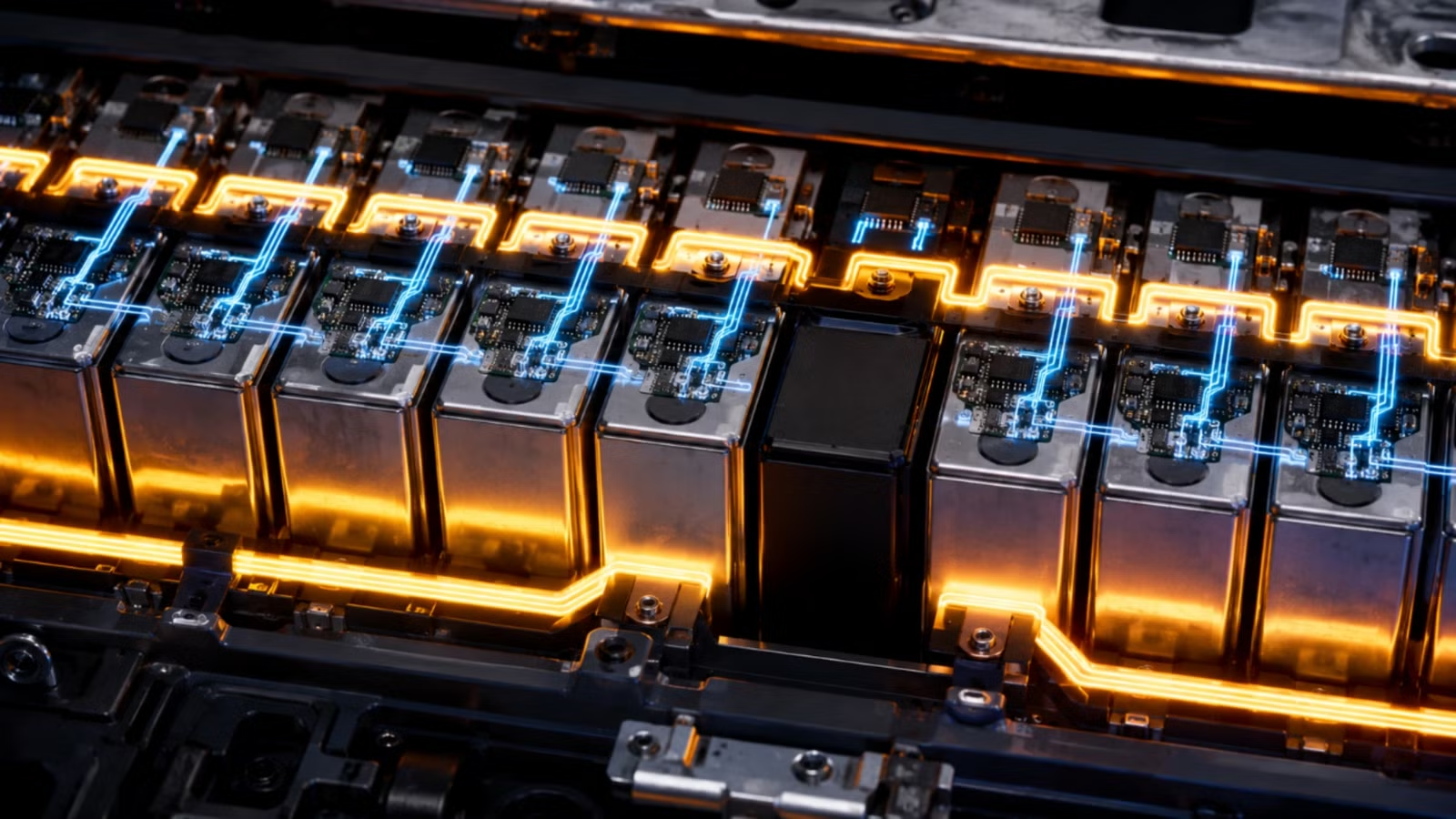
A chain is only as strong as its weakest link, and this couldn’t be more true when it comes to EV batteries. One weak cell can hamper a battery’s entire capacity even if the ones around it are still in perfect health, thus shortening its overall lifespan besides limiting range and performance.
But what if there was a way to bypass these problematic cells and make the most of those that work just fine? Well, researchers at the Chalmers University of Technology in Sweden have conducted a study with that exact question in mind, and their findings could have a major impact on how batteries are engineered in the future.
A Sort Of EV Spin On Natural Selection
A harsh but true law of nature says the weak get left behind, so the bright minds at Chalmers wanted to see what happens when you take that principle and apply it to battery cells. They came up with prototypes that can bypass spent cells through what they call “smart battery architecture,” essentially a way of reconfiguring the links between these elements as and when required.
Cells can be controlled individually or in banks depending on how sophisticated the technology gets, and its complexity will have to take cost competitiveness into account. Either way, something like this could make a notable difference in terms of battery life, while also scoring bonus points on the sustainability scale thanks to less wasted material.
What Would This Mean For Your Everyday EV In Practice?
2027 Rivian R3 front three quarter in silverRivian
According to the study, a battery’s lifespan could theoretically be extended by as much as 20% with the most complex version of this technology in use. But even with a less intricate application, researchers use the example of an electric vehicle driven 12,000 kilometers (7,500 miles) annually with an 80-kWh battery to hypothesize what real-world benefits we might be looking at.
Under the assumption that a typical battery will have to be replaced after 10 years, bypassing weaker cells could add about 14 months and 14,000 km (8,700 miles) to its longevity. That may not seem like such a colossal difference at first, but zoom out to glance at the bigger picture and you may see how these gains compound at scale.
CarBuzz Insight – Why This Matters:
Tesla Model Y Powershare Home Power Battery Backup CloseupTesla
Whereas the positive impact on individual car owners would be somewhat modest but certainly nice to have, the benefits for companies running entire fleets could scale rapidly. And, besides that, the technology is still very much in the experimental phase at the moment, so there’s a decent bit of room for it to be perfected over time.
It’s a promising development for the EV segment even in these early stages, and one can only imagine where we might be a few years from now. Innovation as a whole is moving fast when it comes to electric vehicles, so we may see some form of cell deactivation technology implemented in production cars sooner than we expect. And together with other breakthroughs down the road, it could make today’s batteries obsolete in no time.
Source: Chalmers University of Technology
