

Automotive
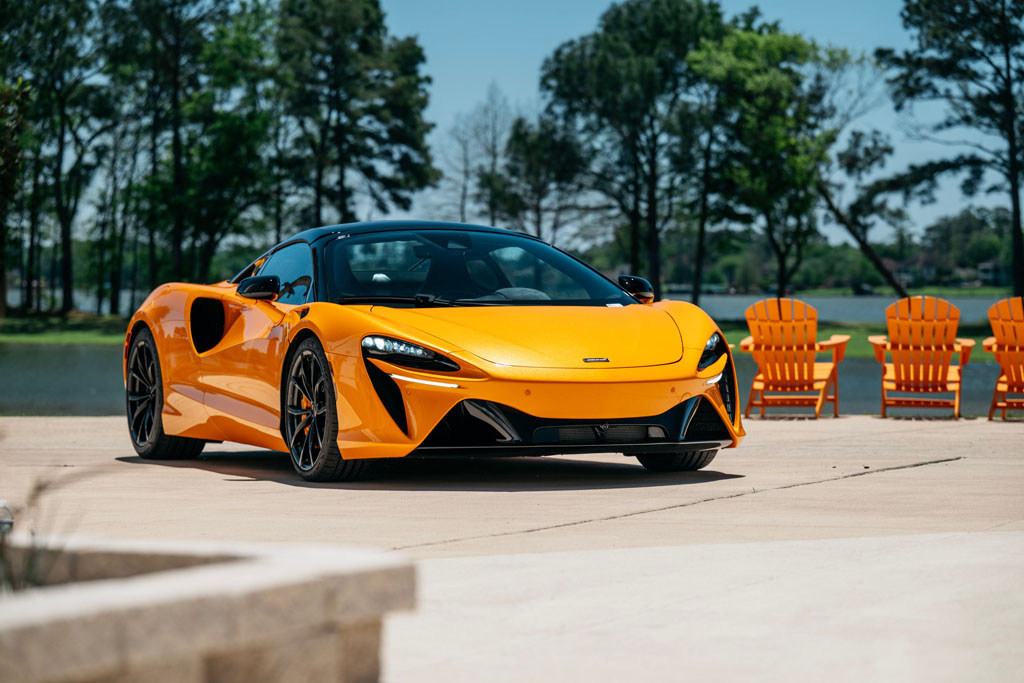
The McLaren Artura may be approaching the end of a surprisingly short run. A new report claims McLaren plans to discontinue its hybrid supercar in 2028, which would give the Artura roughly six years on the market after customer deliveries finally began in 2022. McLaren has not officially announced the model’s departure, so there is still some uncertainty surrounding the timing, but the move would fit with a much larger reshuffling of the company’s lineup that is already underway.
The Artura was always an important car for McLaren, even if its arrival was anything but smooth. It introduced the company’s new carbon-fiber architecture and paired a twin-turbocharged 3.0-liter V6 with an electric motor for a combined 671 horsepower. More importantly, it represented McLaren’s first step toward making hybrid technology a central part of its regular production lineup rather than something reserved for limited-production halo cars. Unfortunately, production delays and quality concerns complicated the launch, eventually prompting McLaren to temporarily slow and halt deliveries while problems were addressed.
Former McLaren CEO Michael Leiters was unusually candid about those early issues, acknowledging that the Artura had reached a point where more development work was needed before production could continue at full pace. McLaren subsequently improved the car, and later versions benefited from additional power, software updates, and the arrival of the Artura Spider. In its current form, the Artura is a much more polished machine than the troubled early examples might suggest, which makes the possibility of a relatively early retirement somewhat bittersweet.
There is, however, a logical reason McLaren might be ready to move on. Reports indicate that a new hybrid coupe, known internally as P34, is being prepared for a 2027 launch. The upcoming model is expected to use another electrified twin-turbo V6 powertrain but could produce more than 800 horsepower, giving it a significant performance advantage over the Artura. If that happens, McLaren could find itself with two hybrid mid-engine cars occupying increasingly similar territory, making the Artura’s departure less of an outright cancellation and more of a generational handoff.
That handoff would come during one of the biggest product transformations in McLaren’s modern history. CEO Nick Collins has been signaling a broader lineup that moves beyond the company’s traditional collection of two-seat mid-engine supercars. McLaren is preparing its first performance SUV for around 2028, while other reports point toward a front-engine grand touring model and additional specialty cars. The company is also investing heavily in expanded UK engineering and manufacturing operations as it prepares for this wider portfolio.
If the Artura does disappear in 2028, its legacy will probably be more important than its relatively short production run suggests. It brought McLaren into a new era of hybrid performance, introduced technology that should influence the next generation of cars from Woking, and gave the company plenty of lessons about launching an entirely new platform. The Artura may not have had the easiest beginning, but much of what comes next from McLaren could end up owing something to the groundwork it established.
Lloyd Tobias is a seasoned automotive journalist and passionate enthusiast with over 15 years of experience immersed in the world of cars. Whether it’s exploring the latest advancements in automotive technology or keeping a close pulse on breaking industry news, Lloyd brings a sharp perspective and a deep appreciation for all things automotive. His writing blends technical insight with real-world enthusiasm, making his contributions both informative and engaging for readers who share his love for the drive. When he’s not behind the keyboard or under the hood, Lloyd enjoys test driving the newest models and staying ahead of the curve in an ever-evolving automotive landscape.
