

The Drive 🤝 your inbox. Every weekday
The Daily Brief wraps up the biggest stories and our exclusive reporting on the auto industry and car culture.
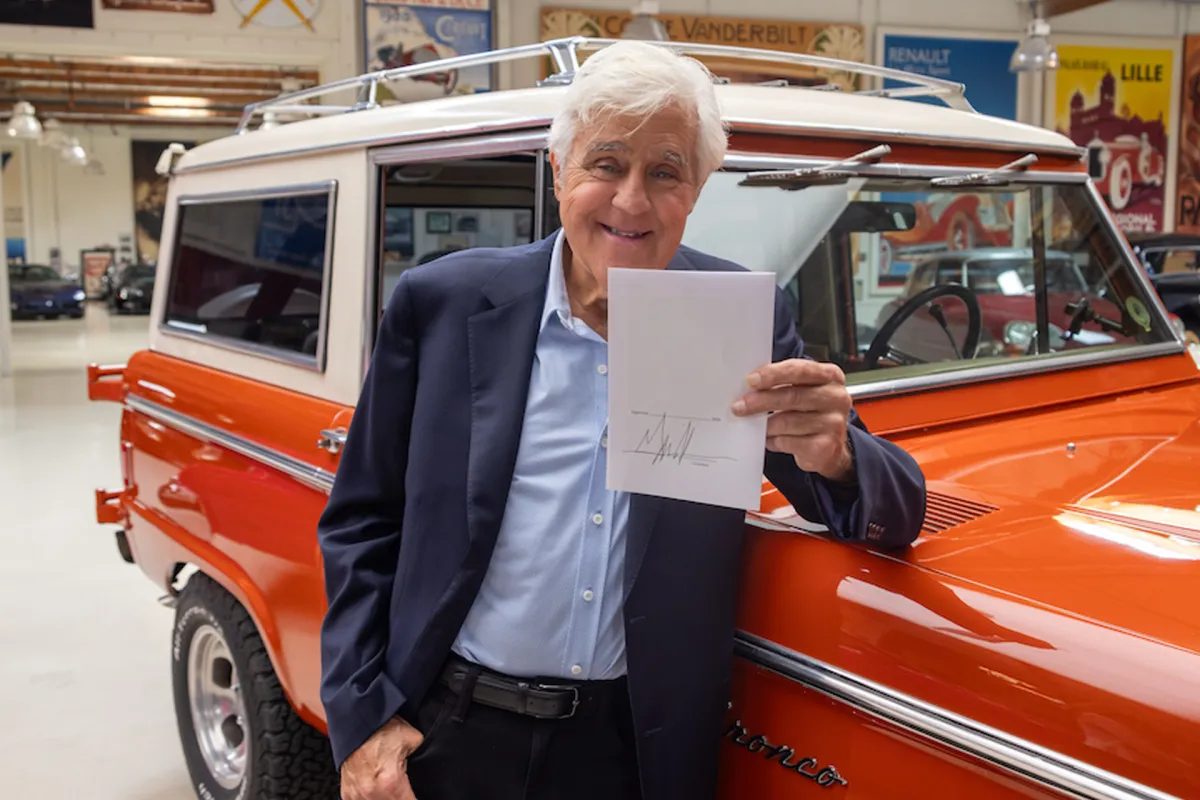
California Senate Bill 1392, known as “Leno’s Law” after the car-loving comedian’s endorsement, was designed to ease emissions restrictions on classic cars without allowing for egregious pollution in the Golden State. As of today, Governor Gavin Newsom has signed it. Before you go celebrating, though, know that nothing actually changes right away—the exemption doesn’t start phasing in until January 1, 2028. When it does, it’ll give some old-car owners in CA a bit of breathing room to keep their vehicles on the road, though it’s not a license to roll coal or anything like that.
Leno’s Law, as presented by the governor’s office, is this: A “narrow smog-check exemption for qualifying collectors cars from the 1976 through 1985 model years that are insured as collector vehicles or driven less than 1,000 miles per year.”
CA, arguably the nation’s most car-obsessed state, has a very strange regulatory setup when it comes to automobile registration. There’s no real annual safety inspection required at all, but strict smog-testing rules—cars need to pass regular emissions checks if they want to stay road legal. That is, unless the car is a 1975 model year or older—those are exempt from such testing. The point of Leno’s Law was to create space for slightly less-old cars to get smog exemptions, too. That was accomplished, but with a lot of caveats.
You can see the full bill on LegiScan, but I’ll pull the new collector-car specifics for you with some context below.
Critically, “collector cars” were added to the list of vehicles exempt from smog testing. But just because your car’s old doesn’t automatically make it eligible. CA specifically defines a collector car by these criteria:
- Is at least 35 model years old.
- Is used primarily in shows, parades, charitable functions, and historical exhibitions for display, maintenance, and preservation, and is not used as the owner’s primary mode of transportation.
- Is either insured as a collector motor vehicle, or determined to be driven fewer than 1,000 miles per calendar year.
- It also has to actually comply with the exhaust emissions standards for its class and model year, and pass a functional inspection of the fuel cap plus a visual inspection for liquid fuel leaks.
That insurance-or-mileage bit is worth flagging, because it’s a loosening from earlier drafts (and from the state’s existing collector accommodation): you no longer strictly need classic-car insurance if you can show the car covers fewer than 1,000 miles a year.
Here’s the catch that trips people up, though: being 35 years old is necessary but not sufficient. The exemption is also gated by a rolling model-year cutoff, and that cutoff—not the 35-year line—is what actually determines whether your car gets a pass. It phases in like this:
- January 1, 2028: collector vehicles manufactured before the 1981 model year (so 1980 and older)
- January 1, 2029: before the 1982 model year
- January 1, 2030: before the 1983 model year
- January 1, 2031: before the 1984 model year
- January 1, 2032: before the 1985 model year
- January 1, 2033: before the 1986 model year, where it stops
Note the “before” in each line—”before the 1981 model year” means 1980 and older, not 1981 and older. And since the whole thing caps at pre-1986 in 2033, a lot of ’80s metal is still going to be left out in the cold.
My buddy David Tracy (who lives in CA these days) over at The Autopian got a nugget of context from Mike Frankovich, the man behind a Facebook group called Californians for Classic Car Smog Exemptions: “It was a long process … I’ve been working on this for almost eight years. For years I’ve been told, ‘You’re never going to get any progress, you’re never going to get a bill through.’” Frankovich shared that there were five bills around this topic. Recently, a version introduced by Senator Shannon Grove essentially got deprioritized in CA’s government until it expired. But this version, officially introduced by Senators Dave Cortese and Shannon Grove (both honored by SEMA last year for their efforts in this space), finally got the governor’s signature.
Tracy’s rejoicing, and it will help some old-car owners keep their cars legally registered—eventually—but the restrictions on what qualifies are pretty strict. The 1,000-mile annual limit is, well, you’re certainly not going to be making any real road trips on that. And while the mileage route means classic-car insurance isn’t strictly mandatory anymore, that insurance is still the simplest path for a lot of owners—and it ain’t easy to get. Classic car insurance, like from Hagerty or Grundy, is inexpensive, but there are a lot of stipulations around where you can park and what you can do with the vehicle. When I tried to get Hagerty insurance on my Scout, I was declined because the truck lived in a shared garage.
So, yeah, it’s cool to see a small provision being made for newer classic cars, but this is a pretty small step toward maintaining drivability for old cars—and one that won’t do a thing until 2028.
The best routes to driving a classic car in California are still either buy something ’75 or older, or have a mechanic who’s willing to properly maintain ancient emissions equipment (and that mechanic is probably going to be you).
Got a tip? Drop us a note at tips@thedrive.com.
Add The Drive as a preferred source on Google to see more of our reporting.
Automotive journalist since 2013, Andrew primarily coordinates features, sponsored content, and multi-departmental initiatives at The Drive.
