

A naked bike’s riding position feels great in the city, but take it out on the highway, and it starts falling apart soon enough with the wind blast. A proper sport-tourer should be the solution, but it’s a heavy beast, so a quick change of direction on a tight, twisty road quickly turns it into a chore. Each of these bikes is built to do one job supremely well, and that’s their strength.
But a mixed job, especially for a one-bike garage, isn’t ideal for either, as there will be compromises. A crossover is the smart buy and a true solution. It borrows a naked’s slightly unhinged power delivery and a tourer’s tall ergos and wind protection, fusing them into one chassis that shrugs off a commute just as easily as it rewards a weekend spent chasing apexes.
Triumph Knows The Crossover Game All Too Well
2014 Triumph Tiger Sport in actionTriumph
Triumph tried this exact formula back in 2013 in the Tiger Sport 1050, by wrapping a 1,050cc triple borrowed from the Speed Triple, and plonking it into the Tiger’s twin-spar aluminum main frame, with a heavily redesigned sub-frame and swingarm. The company pitched it for riders at the time, who were torn between the Speed Triple’s edge and the Tiger’s versatility and comfort.
2014 Triumph Tiger Sport with color-matched panniersTriumph
It’s an idea that works really well for a vast number of riders who don’t want a garage full of bikes for different purposes. An everyday performance bike is a great idea but is always a gamble in executing multiple roles well if your riding varies from day-to-day. A crossover becomes the right platform by borrowing the right half from each parent category. The naked half supplies a torquey engine tune for all the fun of canyon carving plus the mundane daily commutes, while the ADV-tourer half supplies wind protection, a chassis tall enough to see over traffic, and payload-carrying ability.
Triumph
Executed well, this combination pays off by replacing two specialized motorcycles with one that’s actually good at both jobs, all while the maintenance bill, the insurance costs, and the garage space all shrink to match. With the 660cc triple reinvented for the Trident, a middleweight entrant was the ideal solution to bring back the name.
The Triumph Tiger Sport 660 Is The Fun And Accessible Daily Performer
2026 Triumph Tiger Sport 660Triumph Motorcycles
The $10,445 Triumph Tiger Sport 660 is competitively positioned in the category, and has brought back the Tiger Sport name since 2022. Built on the Trident 660’s platform, Triumph has now handed it a substantially reworked engine for 2026. The result still does the job and the badge justice, with a sporty enough chassis to be genuinely fun, and being comfortable enough that a rider never has to think twice about a long day in the saddle, be it a commute or a weekend run.
Three Cylinders And Three Throttle Bodies Change The Whole Powerband
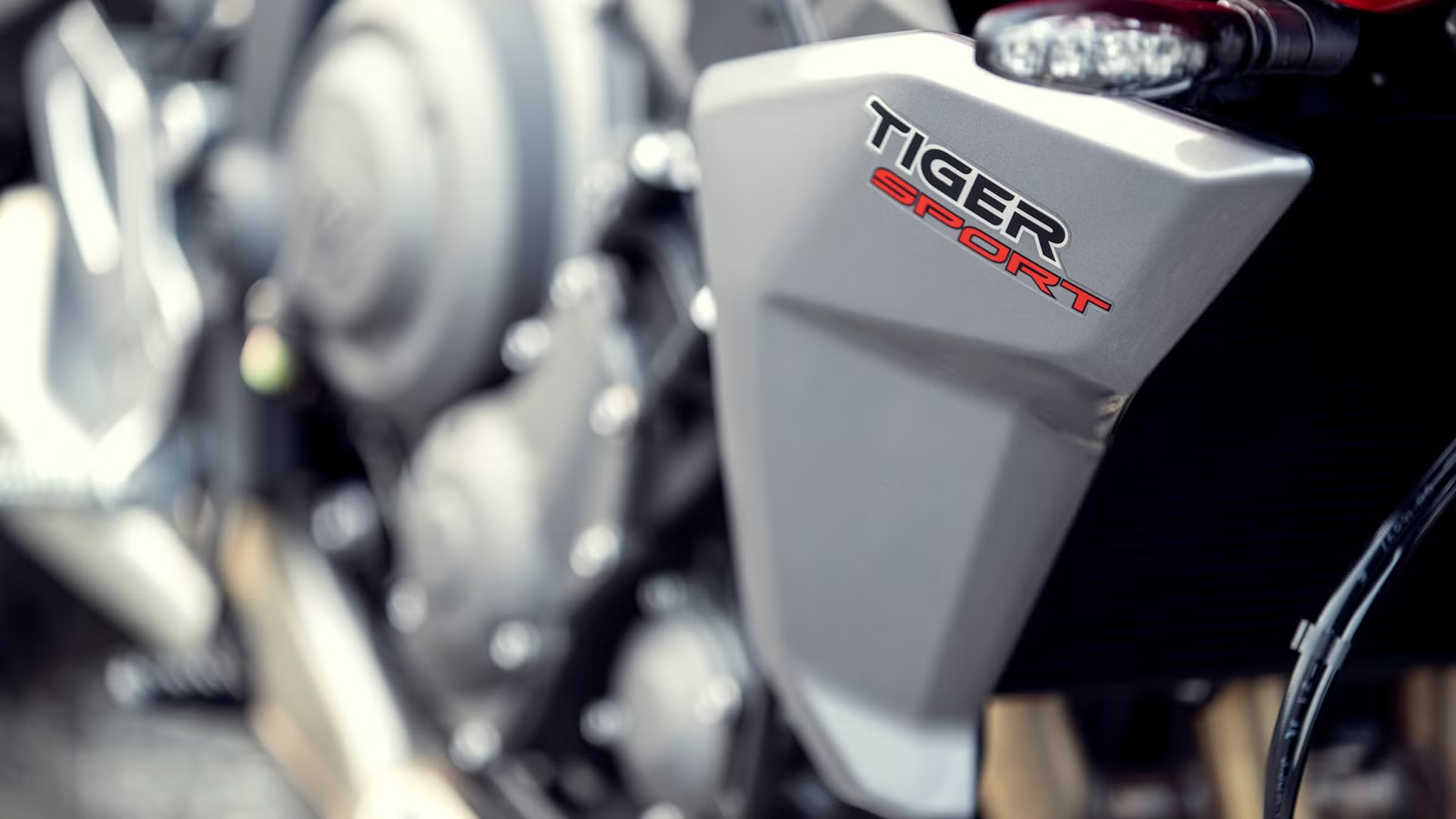
Close-up shot of a 2026 Triumph Tiger Sport 660 fuel tank designTriumph Motorcycles
In a category dominated by parallel-twins, Triumph’s in-line three-cylinder stands out from the crowd both in its performance as well as its aural signature. For 2026, Triumph engine updates swapped the single throttle body for three individual 44mm units, paired with a larger front-mounted airbox, a revised cylinder head with bigger exhaust valves, and a new engine tune.
Triumph Motorcycles
These changes have boosted the peak output to 95 hp at 11,250 rpm and 50 lb-ft at 8,250 rpm, with the redline raised 20 percent to 12,650 rpm. Triumph says that 80 percent of that torque stays on tap from nearly 3,000 rpm to redline. This means that the engine pulls cleanly off idle in traffic and still has lots left in reserve towards the upper-mid range of the powerband to easily cruise on the Tiger Sport 660 on the open road without running out of breath. Fuel economy improves too, from 52.3 mpg on the outgoing engine to a claimed 57.6 mpg for 2026.
Daily Practicality In The Ergonomics And Electronics
2026 Triumph Tiger Sport 660 seat designTriumph Motorcycles
At 32.9 inches, the Tiger Sport 660’s comfortable seat sits on the taller side for a middleweight, but the upside is legroom that doesn’t cramp up taller riders, as this is still a compact motorcycle. Triumph offers an accessory low seat that drops the seat height to 31.9 inches. The windscreen is manually adjustable and tool-less, while being tall enough at its top setting to keep highway buffeting off a rider’s chest.
Close-up of the 2026 Triumph Tiger Sport 660 instrument clusterTriumph Motorcycles
A six-axis IMU feeds switchable traction control modes in the form of Sport, Road, and Rain that retune the throttle response to match the conditions. The Tiger Sport 660 also offers cruise control, and all of it is accessible via a color TFT and LCD combo display. Triumph backs the bike with a respectable 10,000-mile service interval and a two-year, unlimited-mileage warranty to make ownership all the easier, and is among the more generous terms in the class.
2026 Triumph Tiger Sport 660 loaded with touring accessoriesTriumph Motorcycles
There are even accessory panniers that add just over 15 gallons of combined storage, with a top box good for another 13 gallons or so. Ample storage to load up the track leathers and other belongings for a proper road-to-track weekend run. The convenience of easily removing the luggage at the track or once you’re back home makes switching personalities between performance and commuter modes a breeze.
Weekend Performance From The Chassis And Brakes
Triumph Motorcycles
At 465 pounds wet, the Tiger Sport 660 is light enough that a 23.1-degree rake paired with a 55.8-inch wheelbase offers enjoyable agility, keeping the front end quick to turn in. Showa suspension does the rest of the work, using a 41mm upside-down separate-function fork and a rear monoshock that each offer 5.9 inches of travel. The shock gets a remote hydraulic preload adjuster for 2026, so dialing in extra sag for a passenger or loaded panniers is effortless.
Triumph Motorcycles
Twin 310mm discs up front, gripped by two-piston Nissin calipers, and a single 255mm disc at the rear handles stopping duty, assisted with cornering ABS. Michelin’s sport-touring Road 5 tires wrap the 17-inch cast wheels at both ends. Triumph equips the Tiger Sport 660 with a bidirectional quickshifter as standard, and paired with the slip-and-assist clutch, it means a rider can bang through the gearbox without upsetting the chassis.
Triumph Also Offers The More Powerful Tiger Sport 800
Triumph
The Tiger Sport 660 is an excellent motorcycle in its segment, but it’s also tuned for accessible daily performance. With its inline-triple engine making 95 horsepower, the Tiger Sport 660 is still too much for a beginner and just right for an intermediate rider. However, experienced riders may find that power output is not enough for the open road. Apart from power, experienced riders may also find the 660’s kit a little too basic, namely the 2-piston Nissin calipers and non-adjustable suspension.
Triumph
For riders seeking more performance, Triumph offers the Tiger Sport 800, starting at $12,845. The larger Tiger Sport fixes those issues, starting with its 798cc inline-triple engine, which makes nearly 20 more ponies, keeping you entertained longer and helping you feel more relaxed at highway speeds. The Showa suspension is now adjustable as well, and the braking comes from radial-mount calipers up front. This does come at a weight penalty of around 6.6 pounds and negligible fuel economy loss, but for the right kind of rider, that shouldn’t be a dealbreaker.
Triumph
If long-distance adventures are your thing, you can also upgrade to the Tiger Sport 800 Tour that takes things up a notch. Starting at $14,695, this model adds long-distance comfort and practicality, thanks to its 28-gallon luggage carrying capacity between the top box and side cases. Then there are handguards, heated grips, a tire-pressure monitoring system, and a center stand, making it a more ideal long-distance companion. Apart from these changes, the larger Tiger Sport 800 retains the dual-purpose personality of its smaller sibling.
The Versys, The NC750X, And Suzuki’s V-Strom Want The Same Buyer
Kawasaki Versys 650Kawasaki
At $10,399, the Kawasaki Versys 650 LT ABS is the closest in price, though its 649cc parallel-twin and saddlebag-included trim structure trades outright character for turnkey touring readiness. The Honda NC750X starts lower at $9,499, but it’s sold exclusively with Honda’s DCT automatic gearbox in the US, convenient, but it does rob away the engagement you’d crave on a canyon run. There’s also the V-Strom 800 in the same price ballpark, but it has a 19-inch wheel, so it’s a bit more ADV-esque.
2026 Triumph Tiger Sport 660 headlamp assembly close-upTriumph Motorcycles
So, the Tiger Sport 660 is still the only inline-triple in the class, with its distinct intake howl and power delivery that really stands out from the crowd of parallel-twins. Sure, it isn’t the cheapest of the four, but it’s the only one that pairs genuine sport-bike character with real touring ability, making it the ideal daily warrior and for fun weekend shenanigans rather than being biased toward only one over the other.
Source: Triumph
