

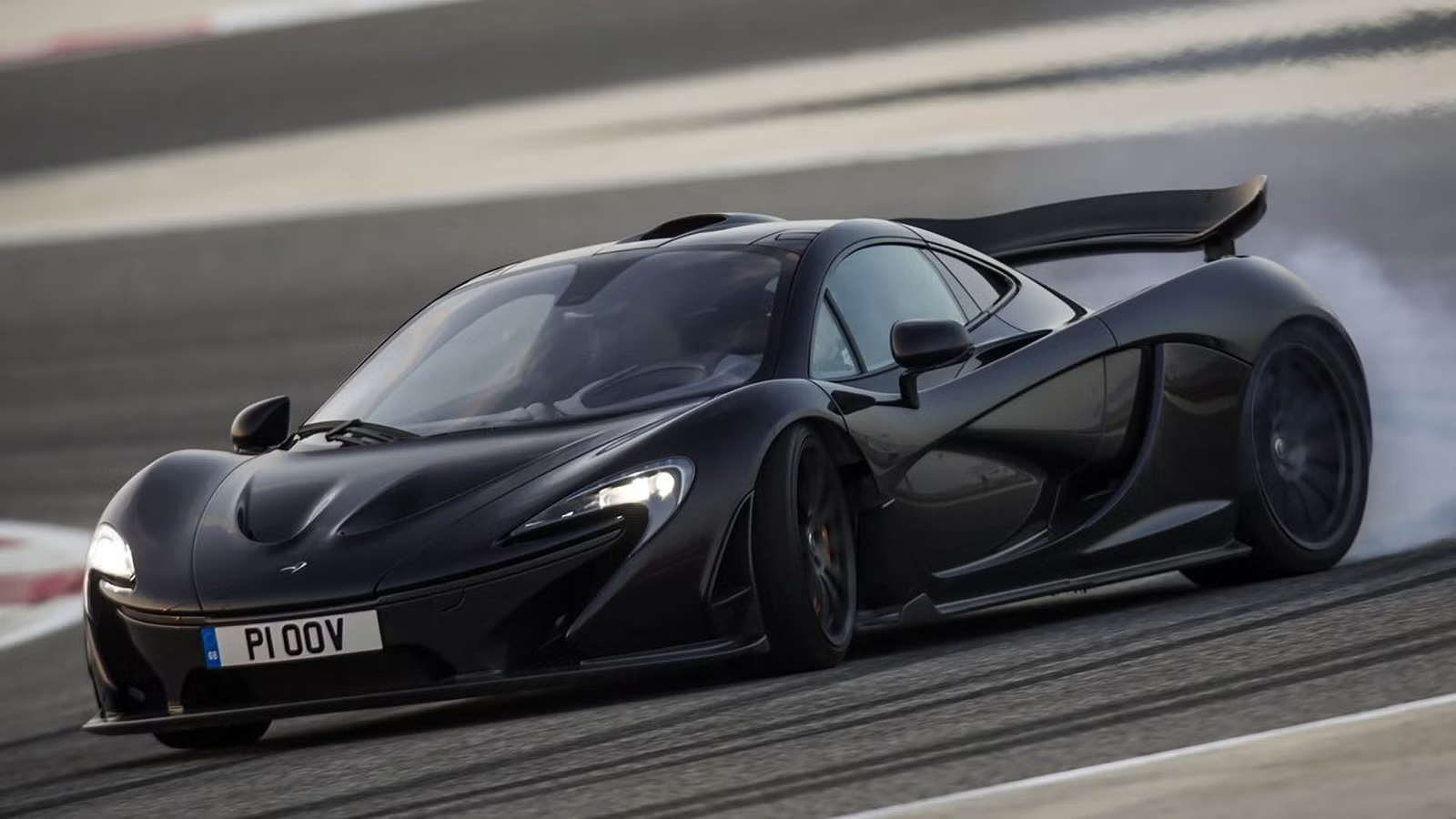
When the McLaren P1 went into production in 2013, it landed as the spiritual successor to the legendary McLaren F1, and showed us the future of performance cars is hybrid technology. It’s still a stunning piece of Formula 1-derived engineering, making over 900 horsepower from its 3.8-liter twin-turbo V8 and electric motor setup.
However, battery technology has dramatically improved since its release, and P1 owners have been seeking a replacement. McLaren has obliged, but an aftermarket company thinks it can do better.
Less Weight, More Performance
V Engineering McLaren P1 batteryV Engineering
In 2022, McLaren made a new battery with enhanced energy density for the P1, all while weighing 56 kilograms (123.5 pounds) less than the original 106-kg (233.7 lb) unit. The new battery enables the hypercar to hit 186 mph from a standstill 0.4 seconds quicker, reducing the sprint to just 16.1 seconds. More importantly, less weight in the chassis helps to improve handling. Now, here in 2026, V Engineering, an independent McLaren engineering center in the UK, has an alternative solution it calls the Project Continuum Hybrid Battery Program.
Developed in collaboration with engineers involved in the original McLaren P1 program, V Engineering’s Project Continuum program uses latest-generation cells and an advanced cooling solution. The result promised is more energy storage (12.4 kWh over the standard 4.72 kWh), more EV range, a weight reduction of 23 kg (50.7 lbs), and plug-and-play installation.
Modern Motorsport Tech In A Modern Classic
V Engineering McLaren P1 batteryV Engineering
According to V Engineering, the battery unit is a proven, high-performance 21700 lithium battery module engineered to FIA Formula E requirements. The plug-and-play aspect means it is compatible with the P1’s existing electrical architecture.
CarBuzz reached out to V Engineering, curious about the benefits offered by the new battery.
“Our simulation work shows a clear performance benefit, particularly in sustained high-performance driving,” a spokesperson told us. “The key advantage is not peak power, but endurance. The increase in available capacity provides significantly more energy to support the hybrid system. In simulated track use, this allows the electric motor to contribute for longer before energy depletion becomes a limiting factor, improving performance consistency over multiple laps rather than just short bursts.
V Engineering is still in the process of physical validation but hinted that lap times will be released. Customer installations are slated to start in the spring of 2027. However, the price is a staggering £160,000, which equals $215,950 at current exchange rates.
CarBuzz Insight – Why This Matters
In 2013, the McLaren P1 arrived on the hypercar scene. With 903 hp and trick aerodynamic systems, the P1 proved to be, well, like a racing car… edgy, and very challenging when driven near the limits.McLaren
Despite battery technology moving at a remarkable pace over the past decade, this is a reminder that the McLaren P1 would still be considered a spectacular car if it were released today. If the V Engineering battery delivers on its promises, it demonstrates that hybrid performance vehicles will be able to remain relevant as battery technology continues to improve.
However, it can also be argued that the battery in a hybrid vehicle is effectively disposable, and as performance cars are not typically produced in high volume, battery replacement and upgrades are not going to be cheap. Still, when we look at the original MSRP of the McLaren P1, it was a $1,150,000 car. Adjusted for inflation, that would be just over $1,620,000 in 2026 and only around 400 examples of road-going and track-only P1s were built. That makes a $215,950 investment in an upgraded battery look more than reasonable.
