

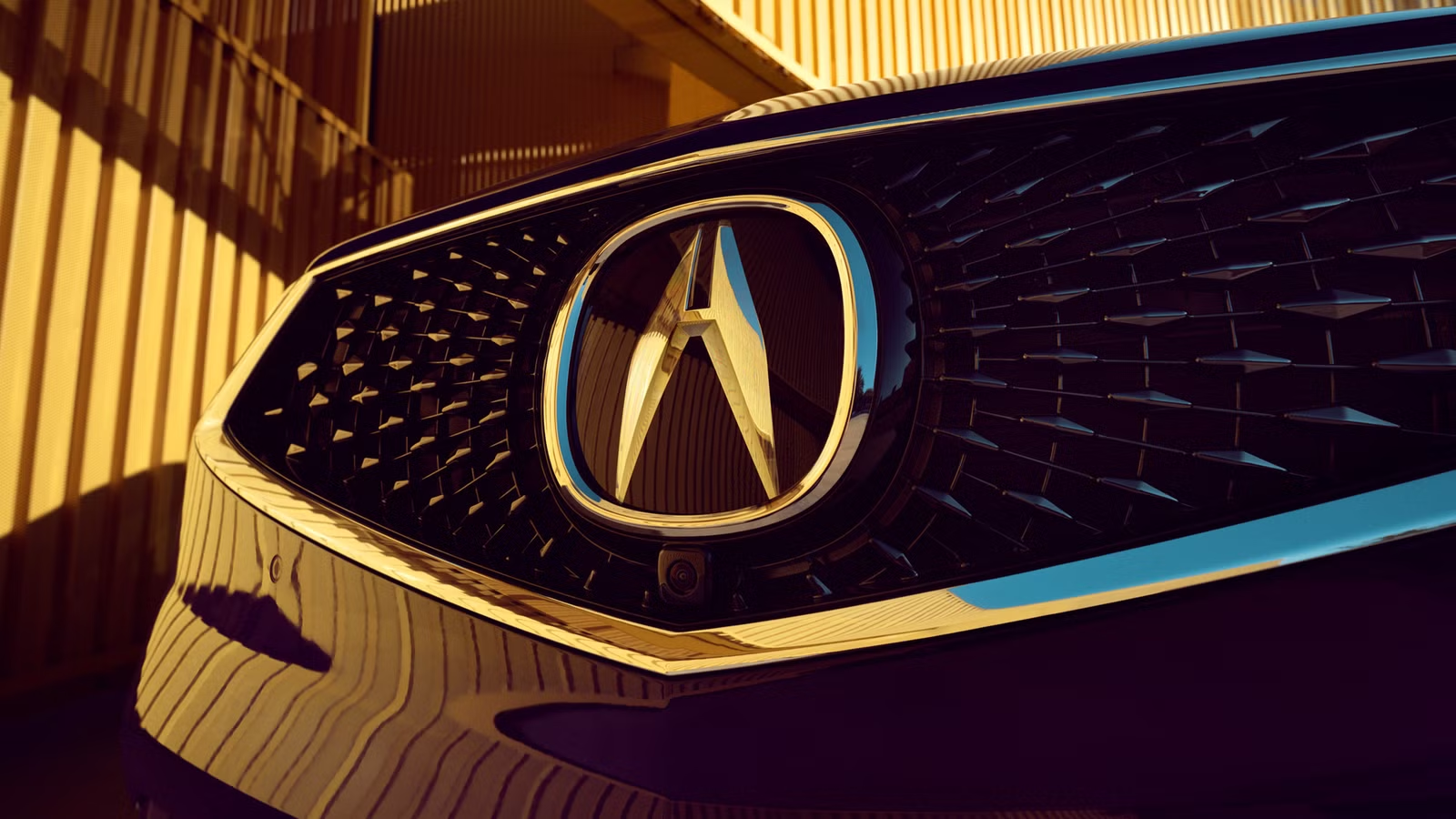
Acura’s current lineup delivers sharp handling, solid quality, and plenty of value – but it hasn’t done enough to reignite demand. Despite offering some of the most well-rounded vehicles in the premium segment, the brand’s sales remain well below the levels it achieved a decade ago. Acura hopes to change that with its next-generation lineup, which will lean on a new design language to deliver bolder styling and a stronger identity, and the brand has teased that new design language in the run up to a concept reveal.
Acura Teases A More Dramatic Future
Teaser For Acura Design Concept Debuting During 2026 Monterey Car WeekAcura
Acura will use the backdrop of Monterey Car Week, which kicks off today in California, to preview its next design language with a striking concept vehicle, much as it did a decade ago with the Acura Precision Concept that debuted at the 2016 Detroit Auto Show. That show car set the tone for Acura’s current styling direction, and a teaser image of the new design concept released today shows the brand is once again preparing a dramatic shift in its styling.
The teaser reveals the rear of the concept and showcases distinct arrow-shaped taillights paired with vertical third-brake-light elements, details more commonly associated with exotic supercars than mainstream luxury vehicles. Acura has yet to release additional information, but the brand has already shown how this new design language will evolve for future production models.
Next RDX Likely First Recipient
Acura Hybrid SUV Prototype (2)Honda
What you see in the teaser may not be entirely new, however. Honda provided an early look at its future plans in May when itunveiled a pair of vehiclesit described as prototypes. One was a sleek sedan wearing a Honda badge, while the other was an SUV carrying Acura branding. Because both were presented as prototypes rather than concepts, there’s a strong chance they’ll reach showrooms largely intact, with only minor design changes, if any. Crucially, the Acura SUV prototype features taillights with the same arrow-shaped motif visible in the newly released teaser image.
While it’s still unclear whether the sedan previews the next Civic or Accord, the SUV is widely expected to foreshadow the next-generation RDX, a model Acura first teased in January. Production of the current third-generation RDX ended in May, yet despite already teasing its successor, Acura has indicated that the new model remains a couple of years away from launch.
Acura Hybrid SUV PrototypeHonda
That unusually long gap may be linked to Honda and Acura’s decision earlier this year to cancel several planned electric vehicles. Among them was the Acura RSX SUV, which was shown in Monterey last year and had been scheduled to start production now. The Acura ZDX SUV, essentially a GM rebadge, has also been dropped. Like many automakers reassessing aggressive EV strategies amid softer-than-expected demand, Honda and Acura are now shifting resources toward new models still packing internal-combustion engines.
Hybrids, Not EVs, Will Drive Acura’s Next Chapter
Slide From Honda Electrification Strategy – May 20, 2025Honda
Instead of doubling down on EVs, Honda and Acura will lean more heavily on hybrids in an effort to reduce emissions, as shown in the slide above from a presentation Honda made last year announcing itspivot back to hybrid technology. For Acura, that strategy will include the next-generation RDX, which has already been confirmed to arrive with a version of Honda’s two-motor hybrid powertrain.
Honda said during the presentation that it plans to launch up to 15 new hybrid models globally by 2030, spanning both the Honda and Acura brands. For North America, some of those hybrids will feature powertrains optimized for larger vehicles, delivering strong performance and high towing capability, according to the automaker.
CarBuzz Insights – Why This Matters
Acura’s future depends heavily on getting its next generation of vehicles right. The US remains the automaker’s most important market by a wide margin, accounting for the vast majority of its global sales, yet deliveries totaled only about 133,400 vehicles last year, or roughly 30,000 fewer than a decade earlier. That decline, combined with the time and resources spent pursuing EV programs that never reached production, leaves little room for another misstep.
The good news is that Acura appears to be aligning its strategy with current market realities. A bolder design language should help future models stand out in an increasingly crowded premium segment, while a renewed focus on hybrids plays to growing consumer demand for efficiency without the compromises some buyers still associate with EVs. Hybrids also require significantly less investment than EVs, which should also provide a welcome boost to Honda’s profitability.
