

Credit: Firefly
- All three of Nio Inc’s brands will share the same swap network once fifth-gen sites go live.
- An executive hinted that the Nio brand’s average selling price in July held steady from June.
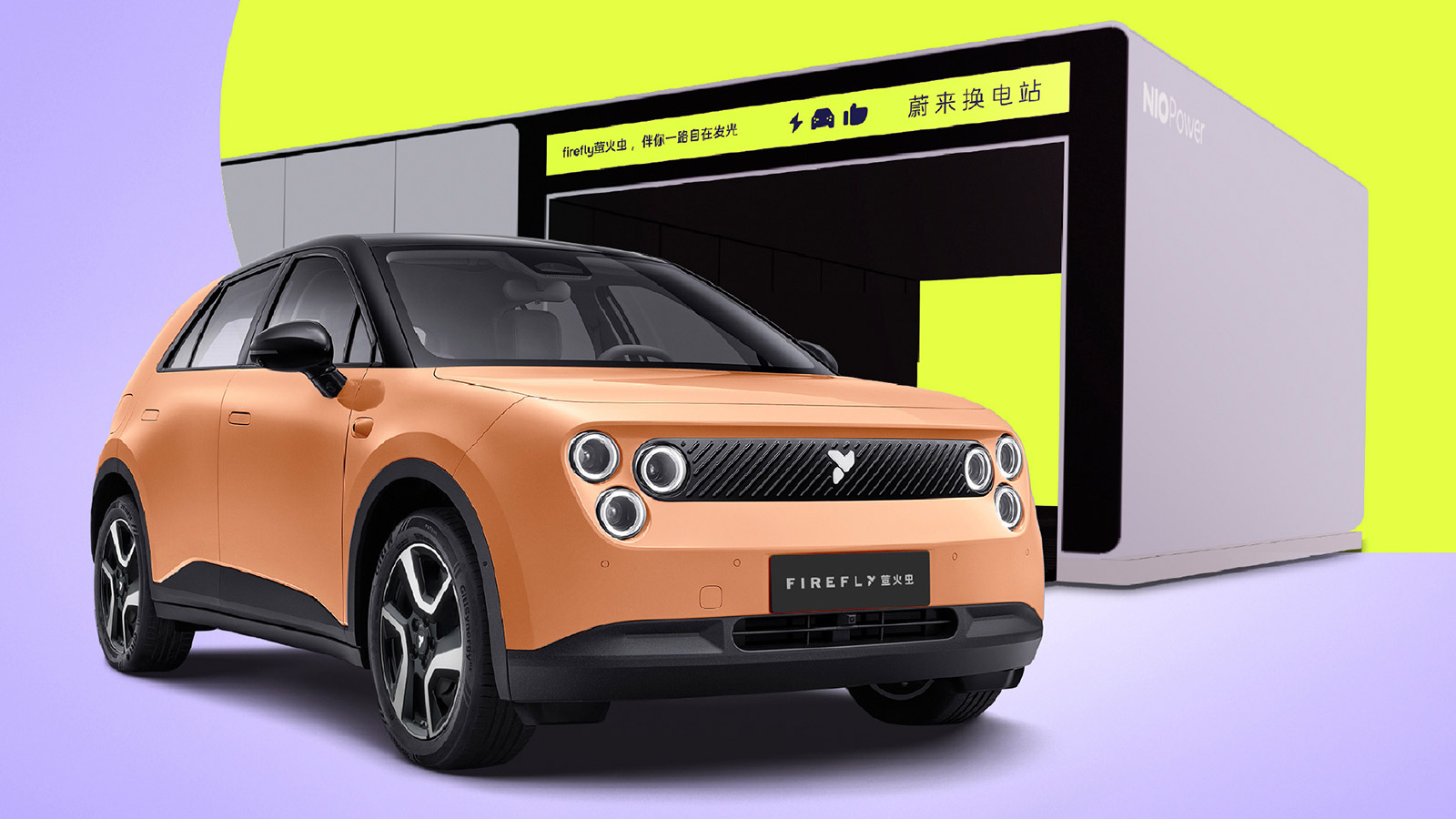
Nio Inc (NYSE: NIO) is about to put its first fifth-generation battery swap station into operation, and the site will also be its 4,000th in China.
Ma Lin, vice president of branding and communications at the electric vehicle (EV) maker, revealed the timeline on Weibo on Saturday, saying the first fifth-gen swap station to enter service will land in Quanzhou, Fujian province, in early August.
Ma launched a guessing game, offering 20,000 Nio Credits — worth 2,000 yuan ($295) — to each of the first three users who correctly guess the date it goes live.
The fifth-gen station is a key upgrade to Nio’s swap system. It uses a completely rebuilt underlying architecture that can accommodate a wider range of vehicle wheelbases.
That means the flagship SUV (sport utility vehicle) ES9, which is 5.3 meters long, and the Firefly EV, at just 4.003 meters, can share the same swap mechanism.
Firefly models previously couldn’t use Nio’s existing swap stations because their wheelbase was too short. Once fifth-gen sites go live, Nio Inc’s three brands — Nio, Onvo and Firefly — will share a single swap network.
Firefly began internal testing at fifth-gen pioneer stations in late June in six cities: Shanghai, Beijing, Hefei, Guangzhou, Chengdu and Kunshan. Nio previously said large-scale deployment would formally begin in the third quarter.
Nio currently operates 3,992 swap stations in China, including 1,048 along highways. The company has cumulatively provided 119 million swap services, according to real-time data on its charging map.
Nio has maintained its target of adding more than 1,000 swap stations in China this year. Meeting that goal increasingly depends on partnerships, as the company slowed its own build-out over the past two years to control capital spending.
Nio added 679 swap stations in 2024 and 681 in 2025, according to data compiled by CnEVPost. In June, Nio Power signed an agreement with Zhongan Energy to jointly build 500 swap stations within a year.
In the same Weibo post, Ma also invited users to guess the Nio brand’s average selling price for July. He hinted that the figure wasn’t much different from the previous month.
That suggests the Nio brand’s price positioning remains at a high level. Ma said in July that the brand’s average selling price in June was 443,000 yuan.
The main driver behind the higher prices is the new flagship SUV ES9. The model starts at 498,000 yuan including the battery pack, while another large SUV, the ES8, starts at 406,800 yuan with the battery.
The two high-margin models account for a large share of total sales, improving Nio’s overall financial outlook.
Nio Inc delivered 227,057 vehicles in the first seven months of the year, up 67.98% year-on-year.
($1 = 6.7894 yuan)
