

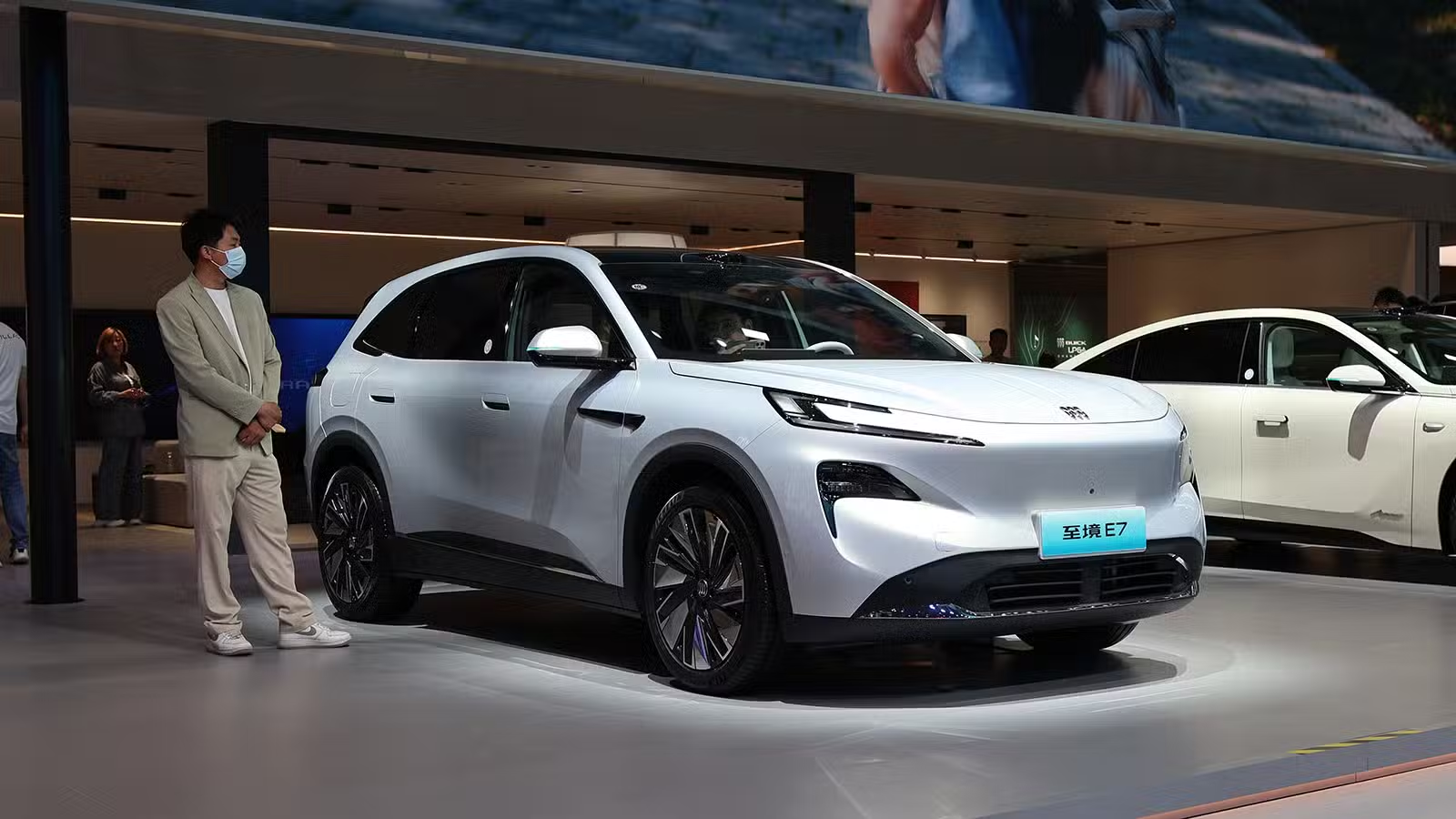
A Buick Electra E7 SUV on display at the Beijing Auto Show in April 2026. Credit: CnEVPost
- China’s NEV retail sales totaled 103,000 from July 1 to 5, with a penetration rate of 60.5%.
- Overall passenger car retail sales fell 15% from a year earlier amid the World Cup, hot weather and consumers’ wait-and-see sentiment.
Sales of new energy vehicles (NEVs) in China continued to decline in the first week of July, as multiple negative factors converged.
Retail sales of passenger NEVs in China totaled 103,000 from July 1 to 5, down 9% from the same period last July and down 6% from the same period a month earlier, according to a weekly report released by the China Passenger Car Association (CPCA) on Friday.
China’s retail sales of passenger NEVs have reached 4.81 million so far this year, down 14% from the same period last year.
Despite weaker sales, NEVs continued to dominate China’s passenger car market, with retail penetration reaching 60.5% in the first week of July.
Wholesale sales of passenger NEVs totaled 83,000 from July 1 to 5, down 20% from a year earlier and 15% from the comparable period last month.
China’s wholesale sales of passenger NEVs have reached 6.87 million so far this year, up 5% from the same period last year.
NEV penetration in manufacturers’ wholesale sales stood at 65.5% during the period, remaining above the retail penetration rate.
Overall retail sales in China’s passenger car market totaled 169,000 from July 1 to 5, down 15% from a year earlier but up 4% from the comparable period last month.
China’s cumulative passenger car retail sales have reached 8.87 million so far this year, down 20% from a year earlier.
Average daily passenger car retail sales stood at 34,000 in the first week of July.
July is traditionally a slow season for auto retail, with overall consumer demand remaining weak, the CPCA said in its report.
The World Cup and intense summer heat sharply reduced showroom traffic, while the absence of holiday-driven spending and strong wait-and-see sentiment among consumers also weighed on demand, the CPCA said.
The prolonged price war in the first half brought forward demand, while discounts offered by automakers and dealers became routine. That further encouraged consumers to delay purchases and suppressed retail transactions.
NEVs have shown significantly greater resilience than conventional vehicles, supported by product upgrades, government policies and their value-for-money appeal, helping to continue offsetting the sharp decline in gasoline car retail sales, the CPCA said.
China produced 90,000 conventional fuel light vehicles in the first week of July, down 42% from the same period last year but up 17% from the comparable period last month.
Combined production of hybrid and plug-in hybrid vehicles totaled 78,000 in the first week of July, up 15% from a year earlier and 59% from the comparable period last month.
Chinese passenger car manufacturers posted overall wholesale sales of 127,000 vehicles from July 1 to 5, a sharp decline of 35% from a year earlier and down 13% from the comparable period last month.
China’s cumulative passenger car wholesale sales have reached 12.67 million so far this year, down 6% from the same period last year.
Average daily wholesale sales by Chinese passenger car manufacturers stood at 25,000 in the first week of July.
Automakers’ push to meet half-year sales targets in June pulled demand forward, while a high comparison base from the same period last year also weighed heavily on the latest wholesale figures, the CPCA said.
Weak consumer demand and elevated channel inventories also damped dealers’ willingness to replenish stock, prompting most brands to curb production and reduce volumes.
The continued roll-out of vehicle trade-in programs and local car purchase subsidies, along with robust auto exports, provided some support for wholesale sales.
Nio’s retail sales jumped 62.6% year-on-year in June, ranking 8th in China’s NEV market.
