

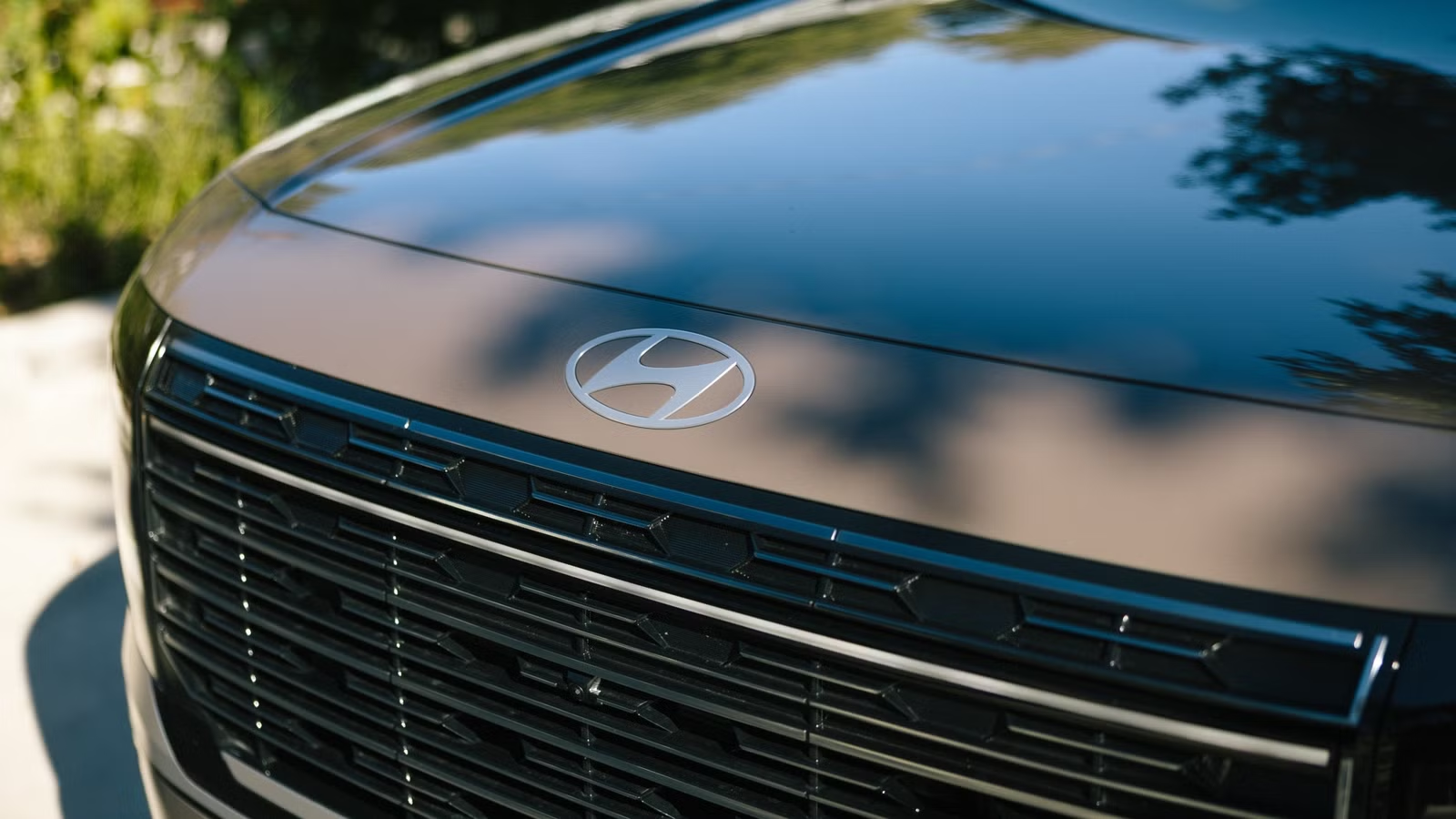
Just a few years ago, Hyundai Motor Group was betting big on battery-electric vehicles as the quickest path to cutting emissions. But like much of the industry, the automaker has run headlong into softer-than-expected EV demand, prompting it to scale back some of its electric ambitions. That shift has already been felt in the US, where Hyundai has discontinued the Ioniq 6 electric sedan after a short run.
Now Hyundai appears to be taking a page from Toyota’s playbook. Rather than relying solely on EVs to lower fleet emissions, the company is rapidly expanding its hybrid portfolio and could eventually replace every mainstream model powered exclusively by an internal-combustion engine with a hybrid alternative. It’s a strategy Toyota has already started employing in the US, where its top-sellers like the Camry and RAV4 have already gone down the hybrid-only route.
Toyota’s Hybrid Playbook Hard To Ignore
2025 Hyundai Elantra Hybrid badgeHyundai
In an interview with CarExpert published this week, Hyundai Australia Chief Operating Officer Gavin Donaldson described an eventual lineup made up entirely of hybrids and EVs as “inevitable.” He also pointed to Toyota’s success with the strategy, suggesting Hyundai is paying close attention to how its Japanese rival has used hybridization to reduce emissions without asking mainstream buyers to make the leap to fully electric vehicles.
“I think Toyota has done exceptionally well with how they’ve been able to transition everything to hybrid, and it’s been very successful for them,”
– Gavin Donaldson, Chief Operating Officer, Hyundai Australia
If Hyundai does phase out ICE-only models, it’s unlikely to happen overnight. Instead, the company would probably follow Toyota’s blueprint by targeting markets where hybrid demand is already strongest. Donaldson oversees Hyundai’s Australian business, where nearly one in every two vehicles sold is now a hybrid, and demand continues to climb, he said.
Related
Toyota Is The Undisputed King Of Hybrids. Here’s Why That’s A Problem Now
As hybrids gain popularity and proliferate Toyota’s lineup, the automaker is struggling with nameplate confusion and too many model variants.
The US is shaping up much the same way. Of the record 901,686 vehicles Hyundai sold here during 2025, roughly 30% were electrified models, with hybrids accounting for the bulk of those sales. Hybrid deliveries also jumped 36% year over year, giving Hyundai another reason to expand the technology across its mainstream lineup.
That doesn’t mean Hyundai is about to swing too far in the direction of hybrids, however. Speaking with CarBuzz earlier this year, Hyundai North America Senior Vice President of Product Planning and Mobility Strategy Olabisi Boyle said the automaker has no interest in chasing industry fads, stressing that product planning has to look decades ahead rather than reacting to short-term policy shifts or swings in consumer demand.
Next-Generation Hybrids On The Way
Hyundai Motor Group P1+P2 Hybrid System
Hyundai
Hyundai already offers hybrid versions of key models including the Elantra, Sonata, Tucson, Santa Fe, and Palisade, but the lineup is only set to grow. The automaker is developing additional hybrid variants, including series plug-in hybrids that use a gasoline engine solely as a generator to charge the battery powering the electric drive system. Hyundai is also fast-tracking hybrid powertrains for its Genesis luxury brand after previously prioritizing EVs, with the first expected to be a hybrid version of the GV80 arriving later this year, followed by EREV versions, too.
Related
Revealed: New Hyundai Elantra Is A Giant Leap Into The Future
A new generation of the Hyundai Elantra is due for the 2027 model year, and this is our first look at the bold new design.
Those future models will benefit from Hyundai’s next-generation hybrid technology, which debuted in the 2026 Palisade. The new P1+P2 system pairs two electric motors, one acting as a starter-generator and engine assist motor, the other handling propulsion and regenerative braking, to deliver better performance and efficiency than the company’s current hybrid setup. Hyundai says the system improves fuel economy by roughly 45% compared with a similar ICE-only powertrain.
CarBuzz Insight – Why This Matters:
Rather than chasing EV sales targets or putting all of its eggs in one basket, Hyundai appears to be focusing on what buyers are actually asking for. Hybrids have emerged as the sweet spot for many consumers, offering better fuel economy without the compromises some shoppers still associate with vehicles powered solely by a battery. By expanding its hybrid lineup while continuing to invest in EVs and even conventional gasoline models where it makes sense, Hyundai is giving itself the flexibility to adapt as demand evolves instead of betting everything on a single technology.
That also doesn’t have to mean the end of enthusiast cars. Hyundai’s N division is already working on high-performance hybrid powertrains, with the first application expected to arrive in a next-generation i20 N hot hatch. If that plan comes to fruition, Hyundai’s hybrid push could deliver not only lower emissions and better efficiency, but also a new chapter for the brand’s performance cars.
Sources: CarExpert
