

If you listen to the hype, you’d think artificial intelligence is the be-all and end-all. Every week brings another prediction that AI will replace workers at a pace that will make the Industrial Revolution look modest by comparison. And while there’s no doubt AI is already reshaping the workplace, some industries far more than others, there are still plenty of jobs where the human touch simply can’t be replaced, at least not yet.
Ford learned that lesson the hard way. After introducing greater automation into parts of its quality control process for everything from the Ford Mustang sports car to the Ford F-150 pickup truck, the automaker ran into problems that ultimately cost it billions of dollars. Its solution was (un)surprisingly old-school: bring back experienced engineers to add some human oversight. The move has played a key role in Ford’s recent quality turnaround, helping the company transform its latest vehicles into segment leaders.
Quality Comeback Started With People, Not AI
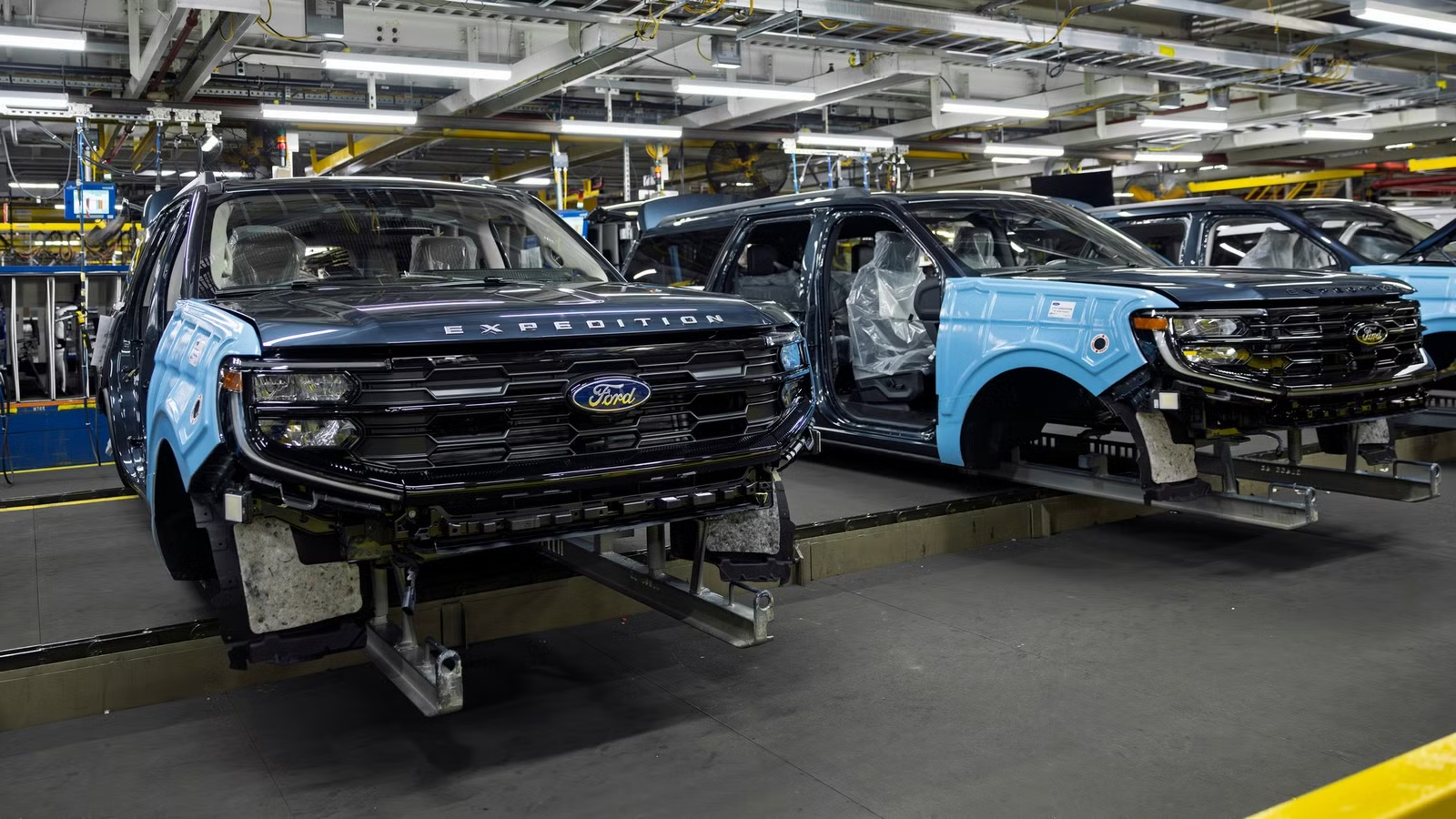
Ford Expedition ProductionFord
Bloomberg reported last week that Ford hired around 350 veteran engineers during the past three years, many of them former staff or engineers from suppliers, to help address its quality shortcomings. It worked, spectacularly.
Among mainstream brands, Ford climbed from a below-average 15th place in the 2023 JD Power Initial Quality Study to first in the 2026 rankings, edging out longtime leaders Toyota and Honda. Overall, only premium brands Porsche and Genesis ranked higher. The annual study surveys thousands of new-vehicle owners about the problems they experience during their first 90 days of ownership.
The Engineers AI Couldn’t Replace
2025 Ford F-150. F-Series. AssemblyFord
At the center of the problem were automated quality systems that often identified issues only after they had already surfaced. Problems that slipped through were driving ballooning warranty claims and recall costs, both of which have fallen as Ford’s quality has improved – helping the automaker move toward its goal of cutting $1 billion in costs this year.
Related
Ford Performing Daily Engine Teardowns To Solve Its Recall Woes
By testing and tearing down more engines than ever, Ford is trying to find even the smallest issues before they turn into big, expensive problems.
Veteran engineers took the opposite approach. Rather than waiting for problems to emerge, they identified potential failure points, often before a part ever reached the factory floor. Ford has since integrated that early troubleshooting process alongside its automation tools, while also using the engineers’ experience to better train both its AI models and younger staff.
“Mistakenly, we thought that by just introducing artificial intelligence and ingesting the design requirements that we had, that that would produce a high-quality product. We recognized that for us to enhance some of our automation and machine learning and artificial intelligence tools, we needed to ensure that they were trained by the most experienced individuals.”
– Charles Poon, Ford Vice President of Vehicle Hardware Engineering
Related
New Ford Patent Could Solve Its Quality Problems. Or Make Them Worse
Self-driving vehicles would test themselves while driving to a loading dock.
Also key to Ford’s quality improvements was closer collaboration between the vehicle engineering, manufacturing, supply chain, and quality teams, which became fragmented over the years, especially after the pandemic where more remote work was introduced. The teams now operate under the new central organization known as Product Creation and Industrialization, which allows them to better coordinate across the entire ecosystem of a vehicle, from its software to its individual suppliers to its final manufacture on the factory floor.
CarBuzz Insight – Why This Matters
Super Duty pickup trucks on the factory line.Ford
Ford’s quality issues haven’t appeared overnight. They’ve been a screaming alarm bell for years. The automaker has issued more vehicle recalls than any other manufacturer in the US every year since 2020, and in 2025 it set an unwanted industry record with 153 recalls. Unsurprisingly, the relentless stream of recalls has taken a toll on Ford’s reputation – even if the recalls were a pre-emptive move to fix the quality issues. The company has already seen its US sales fall by 9% in the first quarter of 2026, and it’s on track to post an even steeper decline for the first half of the year.
The pace of recalls hasn’t slowed in 2026, but recalls are a lagging indicator. Many of the vehicles being called back today were designed and engineered years ago, long before Ford overhauled its quality processes, meaning with the quality improvements the number of recalls as well as warranty related costs should go down. So far, the evidence points in that direction.
At a broader level, Ford’s experience highlights a lesson that extends well beyond the auto industry. AI can be an incredibly powerful tool, but it’s often at its best when it amplifies human expertise rather than trying to replace it.
Sources: Bloomberg, JD Power
