

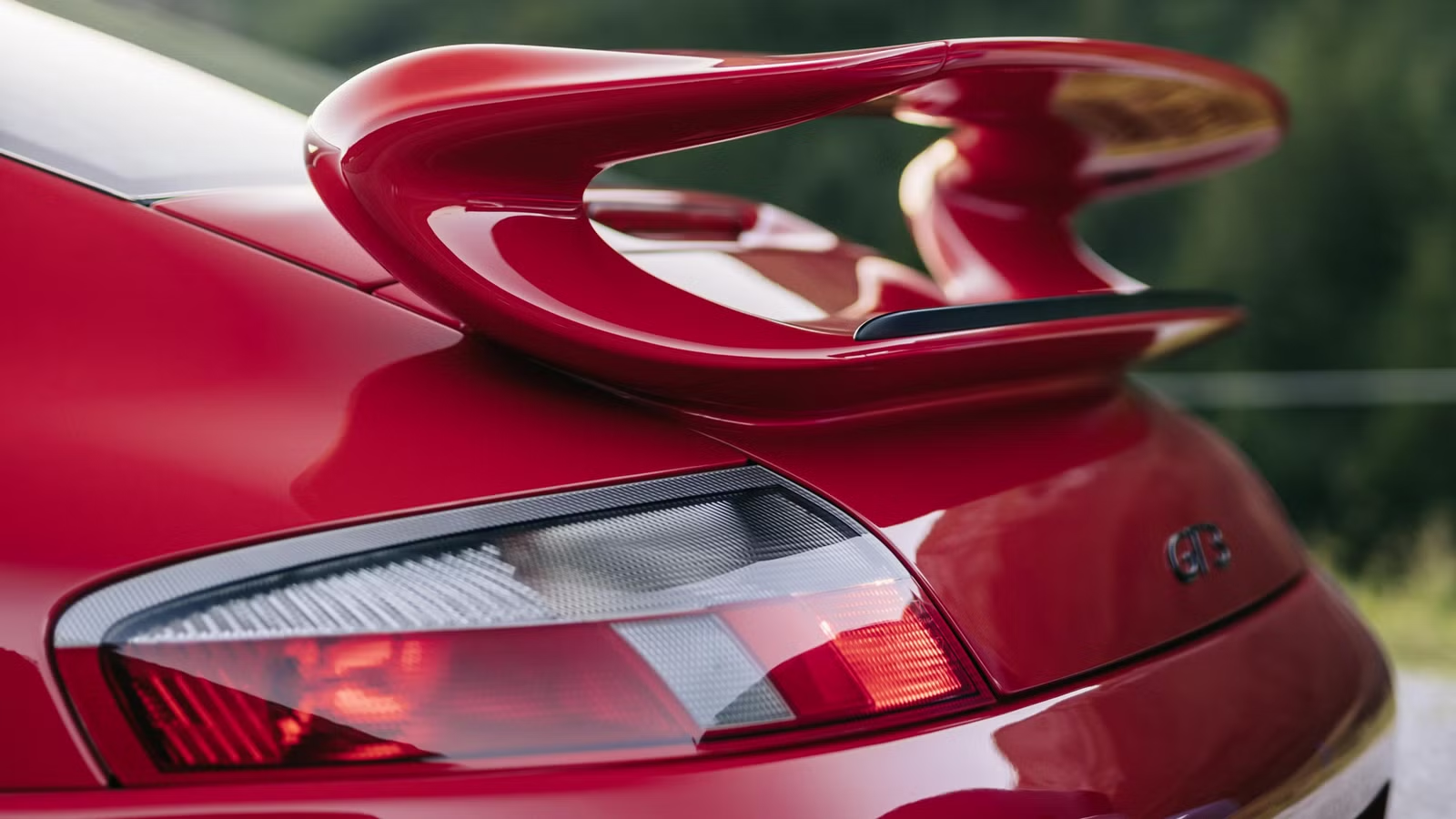
Porsche 911 GT3s once felt like pure unobtanium, with demand so intense that finding one at any reasonable price seemed impossible. Buyers happily paid premiums, only to watch values climb even higher, transforming these track-focused machines into collectors’ pieces rather than the enthusiast cars they were meant to be.
That’s finally starting to change, especially for the earliest GT3s. Values for the 996 generation, the cheapest for the GT3, have begun to come back to earth. They’re still far from cheap, but for enthusiasts priced out by the meteoric rise of recent years, the market is finally beginning to swing back in their favor.
The First Of The GT3s
1999-2005 Porsche 911 GT3 996 Front 3/4, RedPorsche
The GT3 badge has become Porsche’s ultimate stamp of driver credibility, representing the purest expression of the 911 formula with track-derived engineering, razor-sharp handling, and a naturally aspirated 3.6-liter flat-six at its heart. Its roots stretch back to the 1973 911 Carrera RS homologation special, but the 996-generation 911 GT3 was the first to wear the now-iconic name. In doing so, it revived and modernized the lightweight, driver-first philosophy of the original Carrera RS after the more turbo-focused 993 era, creating a template every GT3 has followed since.
Porsche unveiled the 996 GT3 at the 1999 Geneva Motor Show, and it wasted little time proving its credentials. Factory test driver and rally legend Walter Röhrl hustled the car around the Nürburgring in 7:56.33, making it the first production car to break the eight-minute barrier. That headline-grabbing lap instantly cemented the GT3’s reputation, and it remains an impressive achievement today, considering the flat-six produced just 355 horsepower – enough for zero to 60 mph in under five seconds and a top speed of 190 mph.
A Slow-Burn Rather Than An Instant Success
1996-2005 Porsche 911 GT3 (996)Porsche
Americans had to wait another four years before getting their first taste of the GT3, when an updated 996.2 version arrived on these shores. Sold for the 2004 and 2005 model years and with a six-speed manual only, the 996 GT3 brought a stouter 375 hp, but it wasn’t the instant hit you might expect. The car’s hardcore personality proved a little too focused for many 911 buyers, especially at a time when comfort and everyday usability mattered more. It also seemed underpowered next to the 415-hp 911 Turbo.
The GT3 also arrived during a difficult period for the 911. Porsche’s switch from air cooling to water cooling in the 996 generation, along with the controversial “fried egg” headlights, left many enthusiasts cold. Mechanical concerns didn’t help the 996 either, most notably the potential failure of the engine’s intermediate shaft (IMS) bearing.
However, the GT3 largely avoided that issue thanks to its motorsport-derived Mezger engine, which used a different design than the standard 996 flat-six. Ironically, these factors kept GT3 values in check for years. In the 2000s, it wasn’t unusual to see examples sitting on dealer lots, and prices only began surging in the years after the pandemic.
How Much To Pay Today
1996-2005 Porsche 911 996 GT3 from above in redPorsche
Expect to pay between $110,000 and $160,000 for a solid 996 GT3 today, depending on mileage, condition, and history. Clean examples with documented maintenance now trade in the $130,000 range on popular enthusiast auction websites like Bring A Trailer, while pristine, low-mile cars still reach as high as roughly $170,000 – which is entering the territory of its 997 GT3 successor. Classic.com, which details prices across multiple auction venues, reflects a similar softening. Compare that to the peak two to three years ago, when top examples regularly hammered for $180,000 and even as high as $220,000.
The market has clearly cooled, handing buyers real negotiating power they lacked during the frenzy. This pullback makes perfect sense. Porsche has increased production volumes for the current 992 GT3 far more than previous generations, easing prices on the newest models and removing some of the upward pressure on older ones. At the same time, the broader collector car market has normalized after the pandemic boom, while buyers have grown wiser about maintenance realities on 20-year-old cars. Add in higher interest rates and less speculative money chasing limited-production 911s, and the 996 GT3 has finally returned to a price that has largely sent the flippers looking elsewhere.
Close
Enthusiasts on a stricter budget may want to look at the996 911 Turbo, which regularly trades in the $70,000 to $100,000 range. Depending on your driving style, it may even be the better buy. The high-rev nature of the GT3 coupled with its stiffer ride demands commitment to unlock its brilliance, while the Turbo serves up comfortable, jet-like performance whenever you put your foot down.
!!!MODEL TAG!!! Listing Carousel 2005 Porsche 911 GT3
996 Porsche 911 GT3 Reliability
1996-2005 Porsche 911 GT3 (996) Engine BayPorsche
The 996 GT3 enjoys a reputation as one of the toughest modern 911s, thanks largely to its legendary Mezger flat-six. Derived from Porsche’s GT1 racing program rather than the standard Carrera engine, the Mezger is renowned for shrugging off track days and high mileage with little drama when properly maintained.
While reliability data specific to the GT3 is hard to come by, CarComplaints reports remarkably few issues for the 911 in general for the 2004 and 2005 model years, while RepairPal rates the Porsche brand as a whole slightly below average for reliability due to higher costs for maintenance and repairs.
The good news is that the infamous intermediate shaft (IMS) bearing failure common to many 996 911 models is largely non-existent in the GT3. That’s because the GT3’s Mezger engine uses a different crankcase and intermediate shaft design than in other 996 911s. Instead, buyers should focus on signs of heavy track use, accident repairs, worn clutches and suspension bushings, and neglected cooling-system maintenance. A comprehensive service history is worth paying a premium for, and a pre-purchase inspection by a Porsche specialist is money well spent before signing on the dotted line. Budgeting for any mishaps down the road is also vital.
Why The GT3 Is So Praised By Enthusiasts
1996-2005 Porsche 911 996 GT3 from the rear in red drivingPorsche
Behind the wheel, the 996 GT3 reminds you why the badge became legendary. The Mezger flat-six loves to rev, the hydraulic steering delivers feedback few electronic-assisted systems can match, and the six-speed manual demands your full attention. Better yet, there’s very little standing between you and the road. No adaptive dampers, no rear-wheel steering, and no drive-mode menus to second-guess your inputs – just a lightweight chassis, naturally aspirated power, and wonderfully honest mechanicals that make every mile feel earned.
That purity also means the GT3 isn’t for everyone. It rides firmly, has a noisy cabin, and makes few concessions to comfort. It also asks you to work for its performance in a way newer sports cars simply don’t. As mentioned earlier, the Turbo may actually be the better fit if your idea of fun is effortless speed, especially on the highway. Its twin-turbo flat-six delivers huge torque almost everywhere in the rev range, making it devastatingly quick without demanding the same level of focus from the driver.
2003 Porsche 911 Turbo 996 exteriorPorsche
For anyone who can stretch the budget, the 997 GT3 is even more rewarding. Porsche refined the formula with the successor model, adding more power, sharper aerodynamics, and a more polished chassis without diluting the car’s analog character. It also marked the end of an era. The 997 was the final GT3 to use the Mezger engine, bowing out in spectacular fashion with the 2011 GT3 RS 4.0. Limited to just 600 examples worldwide, the 4.0 has since become one of the most coveted modern Porsches, with values now comfortably in seven-figure territory.
The GT3 That Started It All Is Having A Comeback
1996-2005 Porsche 911 GT3 (996)Porsche
The 996 911 GT3 may never be a bargain, but its recent price correction brings Porsche’s original GT3 closer to the enthusiasts who appreciate it most. With a legendary engine, a manual gearbox, and a level of driver involvement newer cars struggle to match, it remains one of the purest 911s of recent decades – and now might finally be the time to chase one.
Sources: Porsche, Bring A Trailer, Classic.com, CarComplaints, RepairPal
