

Slate Auto’s $24,950 electric pickup doesn’t have a built-in radio. The door handles are recessed. The windows crank by hand. And in the first two hours preorders opened, 10,000 buyers put down nonrefundable deposits — with 180,000 informal reservations stacking up behind them.
That response isn’t a fluke. It’s a market correcting itself. While the EV industry has spent years piling on screens, air suspension, and over-the-air updates, a significant slice of truck buyers has been quietly waiting for something else entirely: a capable electric pickup they can actually afford.
A Truck Built Around What It Doesn’t Have
Slate Auto
The Slate pickup strips the formula down to its load-bearing elements. The base model rides on a gray body with no factory paint option — color comes via wraps, available in more than 100 choices. That single decision alone sidesteps the hundreds of millions of dollars a traditional paint shop requires, and the savings flow directly to the sticker price.
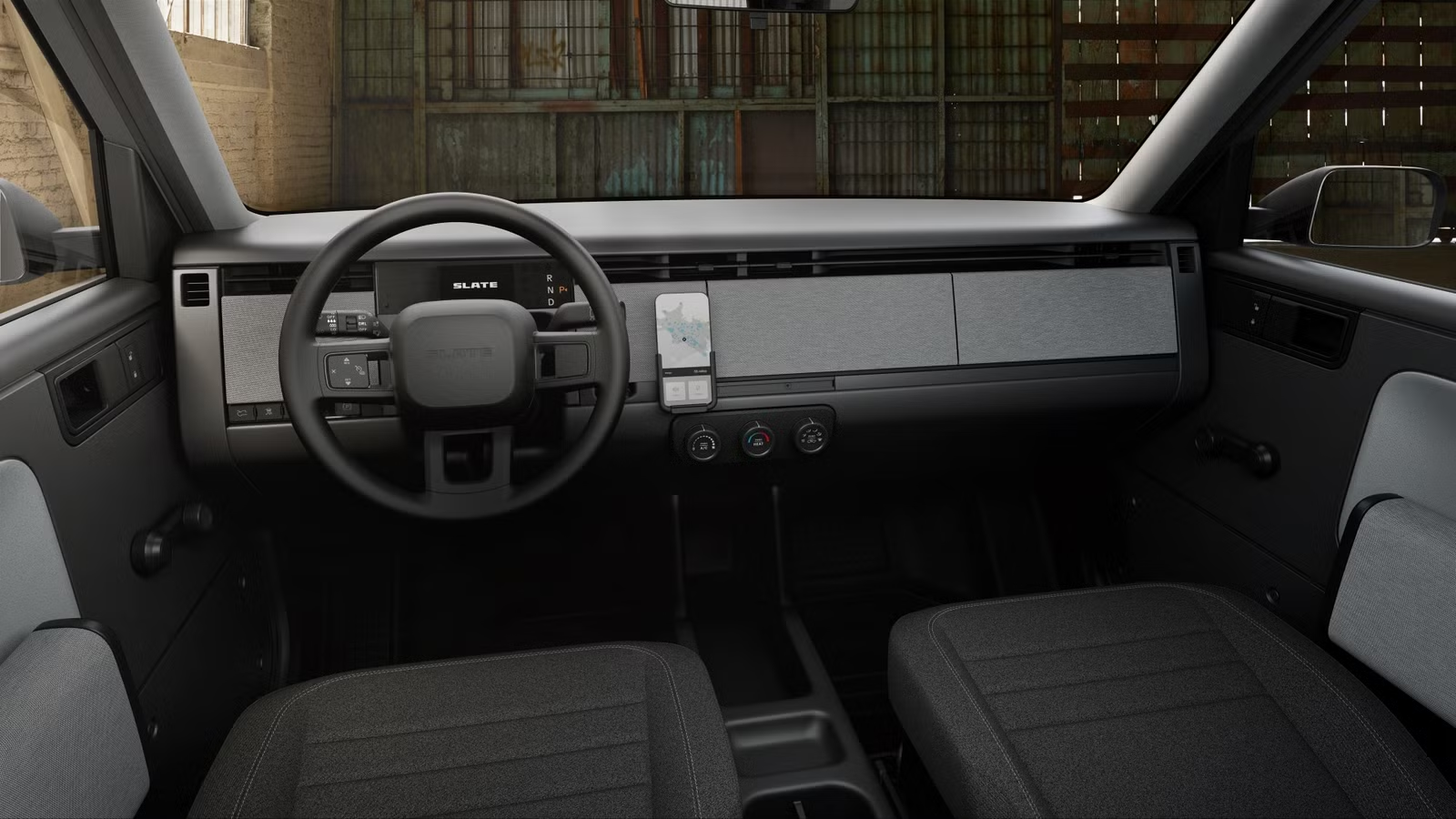
Inside, there’s a small driver display, simple temperature dials, and no speakers. The exposed screws and bolts aren’t a styling choice — they’re an invitation. Slate designed the truck so owners can swap parts, make repairs, and add accessories without specialist tools or dealer visits. Roof racks, storage boxes, Bluetooth speakers, and even a five-seat SUV conversion package are all available as bolt-on additions. The base truck is intentionally incomplete, and that’s the point.
The mechanical spec is practical rather than impressive on paper: 205 miles of range, a 0–60 time of around eight seconds, a five-foot bed, and a 1,500-pound payload rating. Nothing there competes with a Rivian R1T on performance. But for a buyer who needs to haul materials, commute daily, and not think too hard about charging math, those numbers are enough.
Pricing That Changes the Conversation
Slate Auto
At $24,950, the Slate sits at or below the starting price of several compact gas-powered trucks — a comparison that reframes the EV value equation entirely. Entry-level versions of the Ford Maverick and Hyundai Santa Cruz have hovered in similar territory, but both carry the ongoing costs of gasoline and conventional drivetrain maintenance. Electric vehicles eliminate oil changes and reduce brake wear through regenerative braking, so the Slate’s operating costs over time are likely to undercut gas alternatives even if the upfront prices are close.
The EVs it most directly challenges on mission — the Cybertruck and the R1T — start well above $60,000. Those trucks are genuinely impressive machines, but they’ve defined the electric pickup category as a premium product. Slate is arguing that definition was never inevitable; it was just the only option available.
What 180,000 Reservations Actually Signal
Reservation numbers are easy to be skeptical about — plenty of announced EVs have accumulated waitlists that never converted to sales. But the structure of Slate’s early demand is worth examining. The 10,000 nonrefundable deposits placed in the first two hours carry real financial commitment. Informal reservations can reflect curiosity; a nonrefundable deposit reflects intent.
Slate was cofounded by Jeff Wilke, who previously served as a senior executive at Amazon, alongside manufacturing executive Miles Arnone and investor William Barker. The Amazon background is relevant context: Wilke spent years thinking about how to deliver products at scale to price-sensitive buyers. The Slate truck reads like a product built by someone who understands that the mass market isn’t waiting for more features — it’s waiting for a lower number on the window sticker.
If Slate can execute on that price at volume, the reservation milestone stops being a curiosity and starts being a leading indicator of where EV growth actually comes from next.
The manual windows aren’t a cost-cutting oversight someone forgot to fix before launch. They’re a signal — one that 180,000 people have already responded to. The next phase of EV adoption may not look like a Cybertruck. It may look a lot more like this.
