

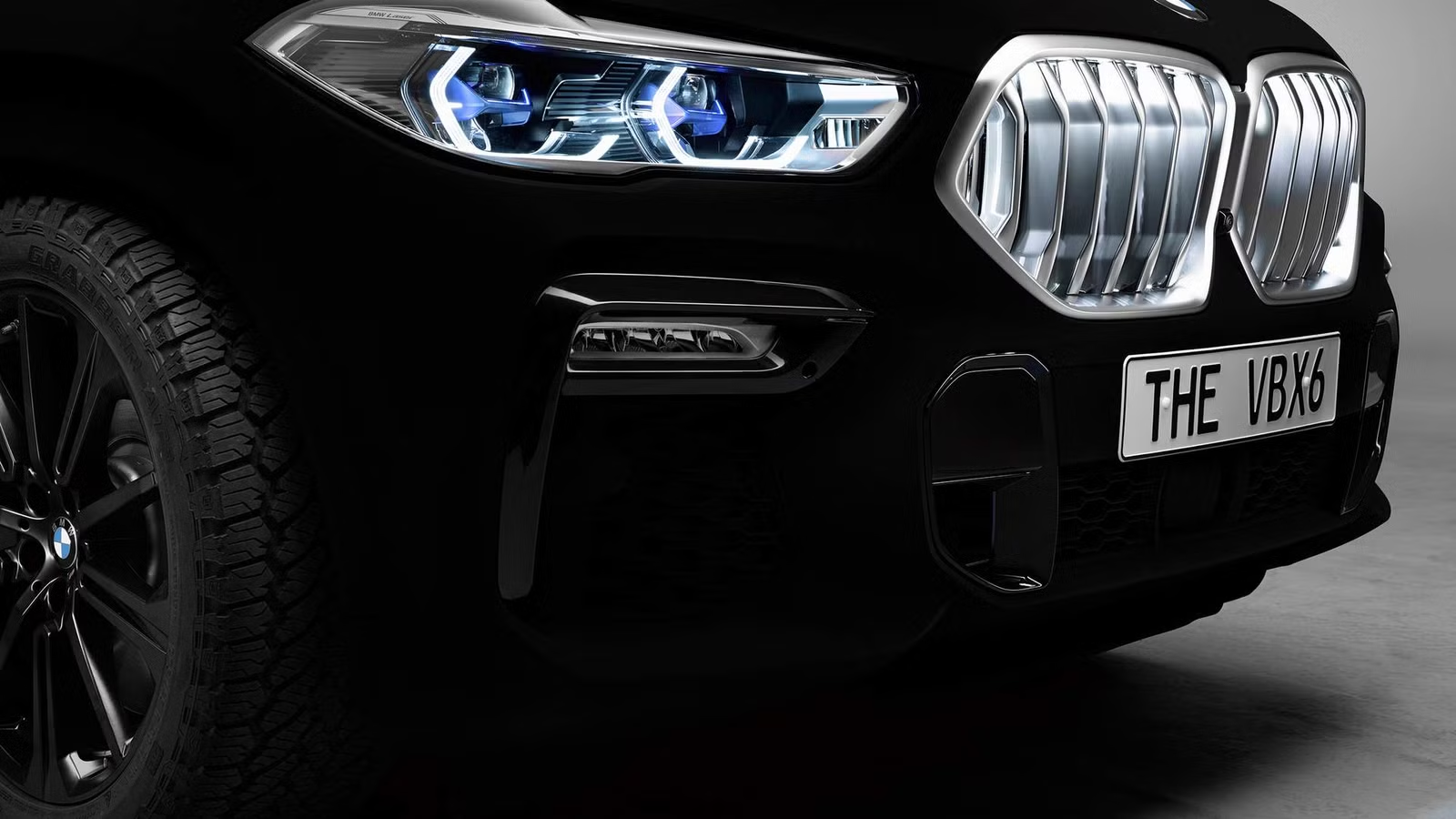
Seven years ago, BMW revealed the blackest car imaginable. The BMW X6 SUV was finished in a special pigment called Vantablack that absorbs 99.97% of the light that hits it. The pigment is used for scientific research and by the military because it is almost completely invisible at night, but it can’t really withstand daily use on cars.
Now, researchers in China have found a way to paint a vehicle with something that’s nearly as dark, but better suited to the life of a car. It can also be made at scale, but this begs the question: do you really want to drive a car that looks two-dimensional in real life and disappears at night?
Carbon Nanotubes Can Do Everything
BMW Vantablack X6 conceptBMW
Vantablack’s incredible pigments are made from carbon nanotubes. The nanotubes absorb nearly all visible light, and initial versions of it were actually grown using vapor deposition instead of being mixed or made.
This new idea uses a mix of nanoscale carbon black and carbon nanotubes. Both are more common than the Vantablack nanotubes, making it easier to source and supply. According to the researchers, the carbon black and nanotubes work together, with the carbon black settling on top of and inside the tubes.
Instead of reflecting light back at the viewer, the new pigment scatters it across the multiple surfaces of the carbon black particles. There are microscopic peaks and valleys in the finish, and the right mix of carbon black and nanotubes can result in absorbing more than 99.90% of the light that hits it. Technically speaking, the new formula isn’t quite as effective, but it’s still eerily black.
Related
Automotive Noir: Your Guide To Murdered-Out Cars
Explore the aesthetics of an all-black ride.
The original Vantablack finish was fragile, hence why it’s not well-suited for cars. This new invention isn’t. It can handle 95% humidity at 104°F. In another test, panels coated in the finish were submerged in water for 10 days without visible deterioration of the finish. Have fun buffing out any scratches, though. They’ll likely show up from space on your otherwise invisibly black car.
More Durable, More Conventional Than Previous Efforts
BMW Vantablack X6 conceptBMW
This bit of research focused on creating the paint in a more conventional way and being able to make enough of the ultra-black coating for automotive use. It found that it has much better adhesion, which the study calls “a decisive factor” for using any finish on actual production vehicles.
While the researchers tested the finish in hot and humid conditions and underwater, they did not examine long-term automotive durability. That would include scratch and abrasion resistance as well as longer-term UV resistance and its ability to remain ultra-black.
Related
Hyundai’s Latest Patent Is Bad News For Car Detailers
A self-healing paint coating could make minor scratches a thing of the past.
How much of an improvement is this over more traditional ultra-black coatings? The paper, published in Matter & Light, suggests that carbon black alone is capable of absorbing 99.8% of light. So the nanotubes and the extra surface area they provide are only cutting about 0.05%. But when you’re trying to create a finish that’s blacker than an abandoned mine, then what seems like a tiny amount can really matter.
CarBuzz Insight – Why This Matters:
BMW Vantablack X6 conceptBMW
A certain type of car buyer has a need to be different. It’s why custom paint shops and vinyl wraps exist, and it’s why there are machine-polished Tesla Cybertrucks on the road. Ultra-black finishes are ironically incredible for making a vehicle stand out in the daytime, hiding all of the 3D elements of the design. They’re more of a problem at night, when a car disappears into the blackness like a moose on a lonely highway.
Source: Matter & Light, H/T: Carscoops
