

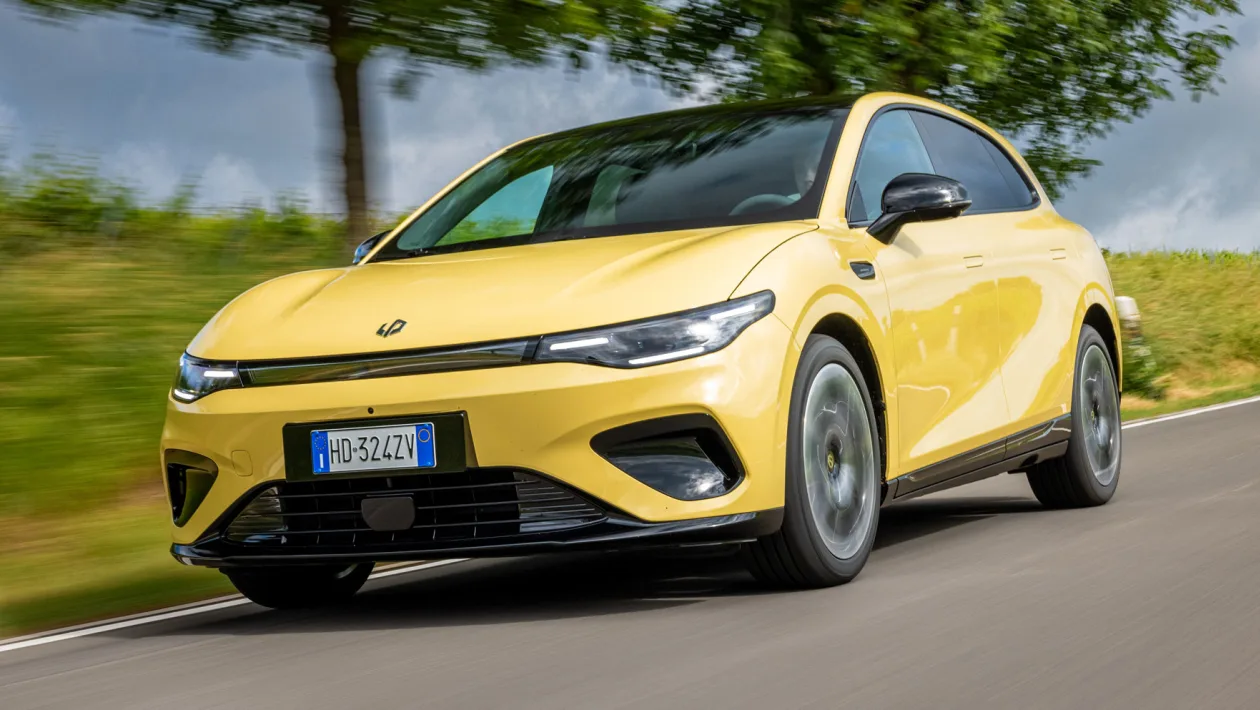
The B05 falls slightly behind the competition in terms of boot space. At just 345 litres, it’s around 50 litres smaller than most rivals – a common problem with Chinese cars. The boot aperture is helpfully wide, though, and the rear seats feature a 60:40 split that boosts capacity to 1,400 litres.
On paper, the Leapmotor seems like an appealing package thanks to a reasonable weight by electric car standards, plus its rear-wheel-drive layout, decent power output and a suspension set-up that includes a multi-link rear end. In reality, the driving experience is less engaging than it could be, though it’s a competent car in terms of ride comfort and handling.
Advertisement – Article continues below
The 19-inch wheels are standard on the B05 and shod with premium-brand tyres, which is a positive, though they do generate a fair bit of road noise on poorly paved surfaces. That aside, the suspension is well judged with bumps generally getting soaked up easily without unsettling the car. It doesn’t roll much in bends, either, thanks in part to the battery lowering the car’s centre of gravity.
Performance is adequate, but even in the Sport setting, we found the B05 didn’t feel as brisk as it could, so keener drivers may want to look elsewhere. That is a bit of a shame because its rear-drive set-up should make it more agile, especially when exiting corners. The power delivery is linear, and the lack of any sharpness from the accelerator does at least contribute to the efficiency. Officially, it is rated at 3.9 miles/kWh, yet we frequently saw figures above that when driving in urban conditions.
