

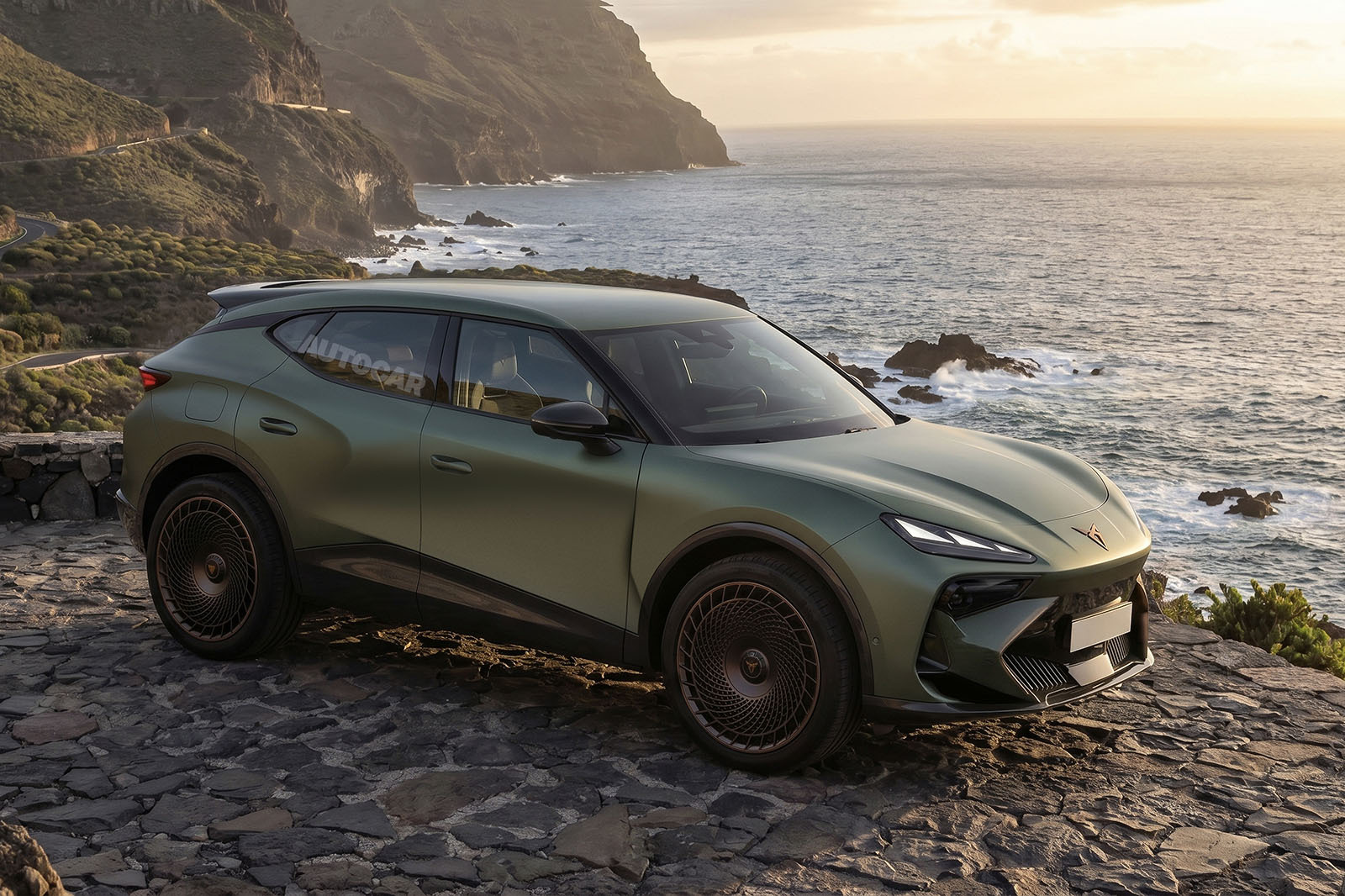
Cupra will put its radical Tindaya sports SUV concept into production in the coming years as a new flagship EV which will go toe to toe with the BMW iX3 and Volvo EX60.
The Tindaya was revealed at the Munich motor show last year as a futuristic, rakish SUV that previewed the next evolution of Cupra’s design language and emphasised the brand’s focus on driver engagement, while hinting at a potential new range-topping model to sit above the Tavascan and Terramar.
Cupra had previously not confirmed plans to put the 4.72m-long Tindaya into showrooms, instead touting the show car as primarily a technology and design showcase, but now Seat-Cupra CEO Markus Haupt has revealed to Autocar that designers and engineers are working on the final car ahead of a launch in the coming years.
“It looks fantastic – why should we not build the Tindaya?” he said. “We are indeed looking at our plans for when we could build the Tindaya, but it’s something I can promise: this car will see the streets in some years.”
The new model, sitting above the Tavascan and Formentor crossovers, will give Cupra an entrant into Europe’s crucial premium SUV segment, which is currently dominated by the likes of the Audi Q5, BMW X3 and Mercedes GLC – and rapidly electrifying as those cars and many of their main rivals receive new electric sibling models based on advanced EV architectures.
Based on the prices of Cupra’s current models, the Tindaya is expected to be priced at around the £60,000 mark, which will line it up neatly against the German stalwarts’ new EVs, as well as the likes of the Genesis GV70 and Lexus RZ.
However, while the Tindaya will still use the VW Group’s new SSP platform for EVs – due to be used first by Audi – it may go without the radical 489bhp range-extender powertrain that was said to propel the concept.
Asked about the viability of offering REx power, Haupt said: “All this discussion is changing by the day, very fast. It will be, of course, on a new platform of the group – this is decided already.
“But which powertrains will we have in the end? It’s a decision we have not taken now, and we want to stay flexible as long as possible, because when the car hits the streets, we need to ensure that it has the right powertrains for our markets, for our customers.”
