

BMW’s 5 Series cars are undoubtedly some of the best in the business, with many enthusiasts pointing to the E39 generation as particularly inspiring. The V8 versions of those cars, in turn, are some of the best of the best, such as the 4.4-liter example in the E39-generation 540i.
But cars fitted with those engines came with an unexpected disadvantage. They used recirculating-ball steering systems, whereas six-cylinder versions of the E39s had a more traditional rack-and-pinion setup. As it turns out, that wasn’t a matter of choice on the part of BMW engineers but rather came down to an unusual packaging problem.
The Six-Cylinder E39 Got A Front End The V8s Couldn’t Use
1997 BMW 528i E39 generation with a six-cylinder engineBMW
A lot of aluminum went into the development of the E39 but, intriguingly, its application differed between the six- and eight-cylinder cars. The six-cylinder 528i used an aluminum front carrier, along with rack-and-pinion steering, but the eight-cylinder 540is had something quite different. They had a steel front carrier and recirculating ball steering box, which was similar to the layout that came out of the E38 7 Series. BMW continued to use aluminum components throughout much of the suspension for the V8 models but opted for steel when it came to the carrier and the steering system attached to it.
Many theorists will argue that a steering rack provides a better driving experience and that the steering box is not as responsive. BMW’s own service information highlighted the rack’s quick response, its lower weight, and a variable gearing system that also became quicker as the steering moved away from center. This means that, even though this generation’s V8 cars sat above the six-cylinder vehicles in the pecking order, the latter group was getting the more modern steering solution.
BMW’s V8 Created The Packaging Problem
1997 BMW 540i E39 generation with V8 engineBMW
Contemporary reports offer a reason for the choice of steering system. Apparently, the bulk of the 4.4-liter V8 made it far more difficult for designers to fit the E39 cars with an aluminum front suspension arrangement. This led BMW to use a version of the E38 740i’s steel carrier layout, bringing the recirculating ball steering across at the same time.
In some respects, the V8 was too big for the engine bay, and this, at least in part, forced BMW engineers to make compromises. It prevented them from using the same rack-and-pinion layout that they were able to use for the six-cylinder E39s. The steering rack also mounted directly to the aluminum carrier in that particular application, but the V8 architecture called for a steering gearbox with a different linkage arrangement.
Enthusiasts were therefore faced with an interesting choice.They could choose the 528i with its inline-six engine producing 190 hp and get the preferred rack-and-pinion steering system.Or they could opt for the 540i’s 4.4-liter M62 V8, which generated 282 hp, but came with the dreaded box.
The 540i Proved There Was A Trade-Off, Not A Disaster
1997 BMW 540i, E39 generationBMW
Some might look at the choice between the steering box with its recirculating-ball approach and the rack-and-pinion alternative and conclude that the latter would always be better. But the situation here was more complicated. One reviewer noted that the recirculating-ball steering was a notable downside for the 540i, but also noted that the V8 setup offered great isolation from bumps and road shock. And perhaps that isolation was not all bad. The steering box passed less road shock through to the driver than a rack-and-pinion system, and that could be desirable for a fast luxury sedan designed to cover long distances comfortably.
Other testers were not especially impressed with the new rack aboard the 528i either. It may have been precise, but to some it lacked feel and was not universally considered perfect simply by virtue of its design.
Even The M5 Couldn’t Escape Recirculating Ball Steering
2000 BMW M5, E39 generation V8 engineBMW
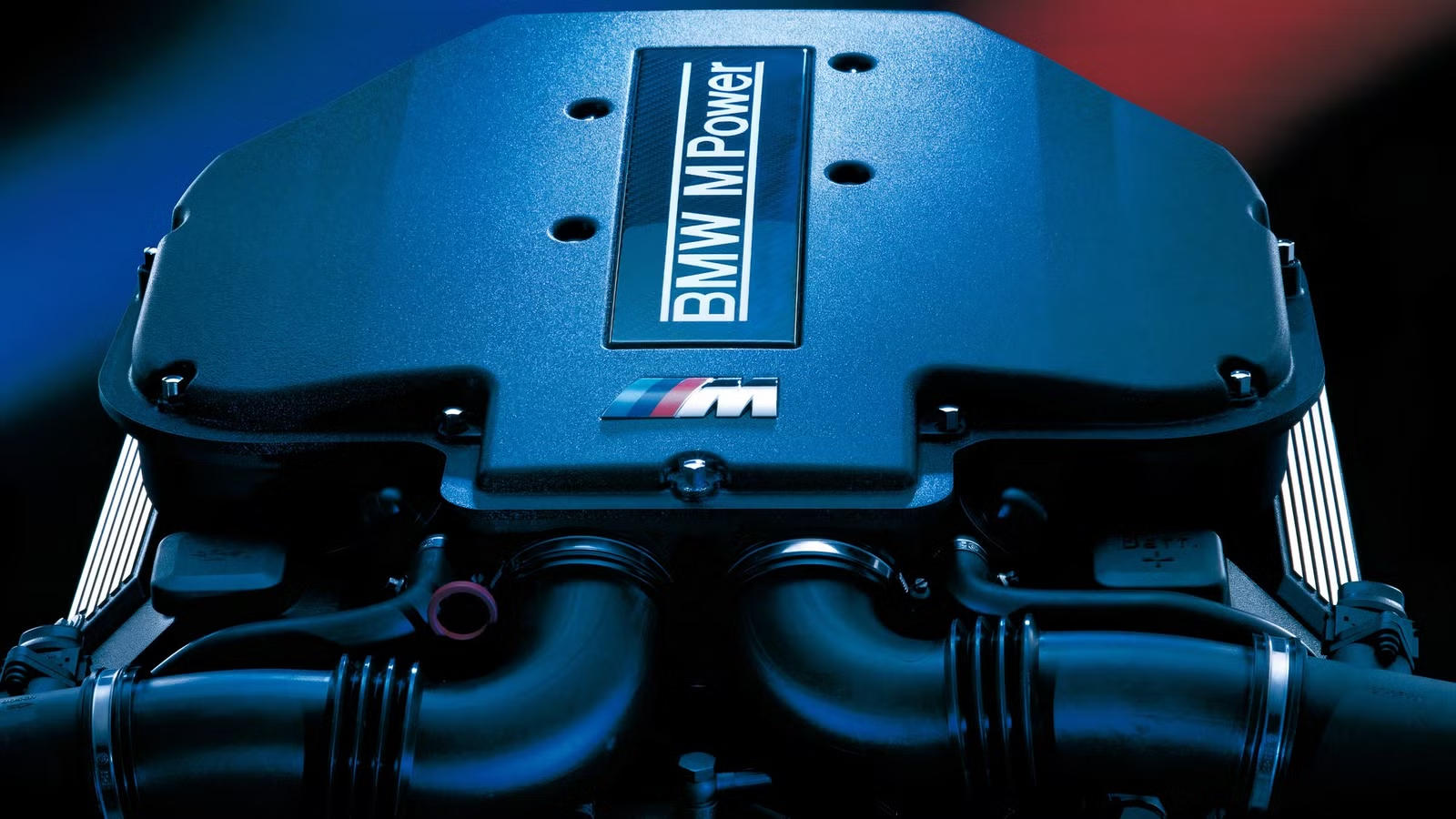
In 2000, the US version of the E39 M5 debuted with a memorable engine: the 4.9-liter S62 V8. It produced 394 hp and 369 lb-ft of torque and used a six-speed manual transmission to drive the rear wheels. But while that engine was quite universally praised, the M5 still came with recirculating-ball steering.
Faced with this challenge, BMW M engineers tried to improve matters by tightening the steering ratio to 14.7:1, compared to 17.9:1 for the standard 540i. According to BMW information, this made the M5’s steering system 18% quicker. Designers also added M Servotronic assistance (activated via a console-mounted Sport button) to vary assistance based on vehicle speed, with a specific calibration towards a firmer road feel.
So BMW M appears to have understood the drawbacks of the 5 Series steering system. It also knew, however, that it couldn’t just replace the box with a rack due to the limitations imposed by the V8 architecture. While the underlying recirculating-ball layout remained, BMW M did what it could to improve its performance.
BMW Fixed The Ratio, But It Couldn’t Completely Fix The Feel
2000 BMW M5, E39 generation side viewBMW
BMW M appears to have been quite successful with its work on the M5’s steering system, and over the years few people have described the E39 M5 as a poor driver’s car. Instead, they’ve confirmed that it had a capable chassis and accurate steering, and some consider this particular car one of the most celebrated performance sedans ever produced.
Reviewers did still poke holes in the steering system when it came to the overall feel. One called the recirculating ball system one of the car’s dynamic weaknesses, saying it was short on meaningful communication. And while the steering may have turned out to be accurate, it may not have helped with that all-important connection between the driver and the road surface.
There is nothing to suggest that the steering rack from other 5 Series vehicles would have been a perfect solution aboard the V8 cars either. After all, some testers had mixed opinions about the rack aboard the E39-generation 528is. But nevertheless, BMW was forced to take a specific engineering path when coming up with the steering system for the eight-cylinder vehicles. BMW M engineers managed to substantially improve the performance of the steering box, but it was still missing some of the communication available from a good rack-and-pinion system.
It’s ironic that the engines in the 540i and the M5 were so spectacular, while also being the source of performance compromises. After all, the engines themselves were the reason those cars couldn’t use the steering architecture BMW had originally wanted to use and had actually fitted to vehicles lower in the range. The E39 M5’s V8 was therefore responsible for both notable strengths and notable weaknesses when it came to the character of those vehicles. The engine could clearly deliver the power, torque, and personality to help make the car legendary, but it was also responsible for a packaging problem that those six-cylinder E39s never encountered.
Base Trim Engine
3.0L Turbo Inline-6 Gas
Base Trim Transmission
6-Speed Manual
Base Trim Drivetrain
All-Wheel Drive
Base Trim Horsepower
300 hp
Base Trim Torque
300 lb-ft @ 1400-5000 rpm
Fuel Economy
16/23 MPG
Segment
Midsize Luxury Sedan
Sources: BMW.
