

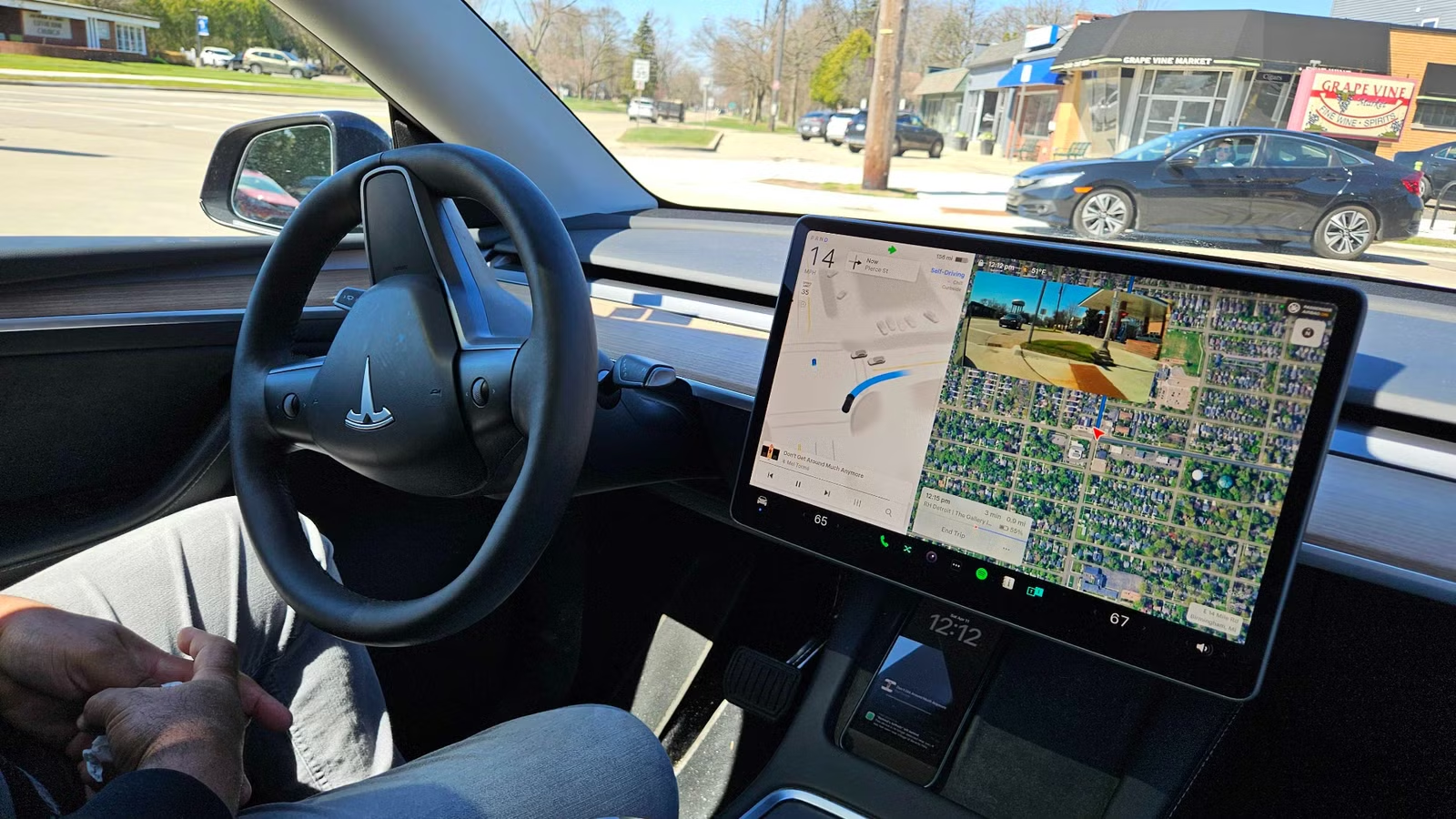
While Tesla’s Full Self-Driving (FSD) is one of the most advanced driver-assistance systems on the road, it is not a full self-driving system. Tesla has been more than aware for years that calling it Full Self-Driving is problematic, it hasn’t swerved until now. Now, Tesla has rebranded the driver assistance system as “Tesla Assisted Driving” across regional European websites, as it looks for EU-wide approval of the system.
It’s likely no coincidence as several European regulators have expressed concern about the FSD name being misleading.
It’s Still Called “Full Self-Driving (Supervised)” In The US
2025 Tesla Model X interior self-driving autonomous drivingTesla
So far, at least, the name change is starting to spread throughout Europe, but Tesla doesn’t seem concerned about US regulators and the name remains here. According to Reuters, though, several European regulators have said the FSD name is misleading because the system requires constant supervision and drivers remain legally responsible. Apparently, putting the word “supervised” in brackets wasn’t enough.
Italian government internal correspondence witnessed by Reuters shows that the thought process was that the name “Full Self-Driving”, along with Tesla’s promotional material, “could lead users to believe that the vehicle is equipped with unsupervised automatic driving functions attributable to higher levels of automation, particularly SAE Level 3.”
Not all countries are fussy about the FSD name. Eight EU countries already allow the system, and Slovakia is expected to join the list shortly, making it nine.
Is The “Full Self-Driving” Name A Big Problem?
North America-spec 2027 Tesla Model Y L side viewTesla
In the wider picture, an EU-wide vote has been pushed from October to at least December, with countries like France conducting additional testing. With the software system already out there and decisions on their way, it’s likely Tesla has just removed the FSD name and made it more accurately descriptive so it can’t be an issue. It’s simply part of a campaign to win approval for FSD in Europe, in which Tesla is also encouraging owners and supporters to lobby national regulators for faster approvals.
It appears to have started with Germany, where Tesla offered to change the name. Subsequently, the German transport minister, Steffen Bilger said he would push for system approval. In a statement, Bilger said that he’s advocating for prompt EU approval after discussing numerous technical details, as well as liability issues, with Tesla.
According to another Reuters report, Tesla has pushed regulators directly to reduce the depth of safety reviews, submitted its own research making bold crash-reduction claims, and used social media to mobilize Tesla enthusiasts to demand quicker action. However, seven traffic-safety researchers who examined Tesla’s methodology for Reuters say the research is built on faulty company safety research that can’t support the company’s safety claims to officials or the public.
CarBuzz Insight – Why This Matters
2024 Tesla Cybercab side angle in gold while parkedTesla
While Tesla has been painting safety regulators as feckless bureaucrats blocking its life-saving technology, there’s a reason rubber-stamping technology takes time. As we know, in the US there has been a consistent stream of collisions with FSD involved, which has led to criticism of Tesla being reckless with its development and deployment.
For Tesla, getting its system into widespread use across Europe is incredibly important, and would start paving the way to its robotaxi service jumping across the pond. It would also dramatically increase the amount of data Tesla can access to improve its autonomous systems.
Ultimately, Tesla needs to regain market share amid growing competition from Chinese electric-vehicle makers in Europe, and being able to offer its driver-assistance system could only help in the short term. The rename is relatively minor, but it does make it significantly less misleading.
Source: Reuters
