

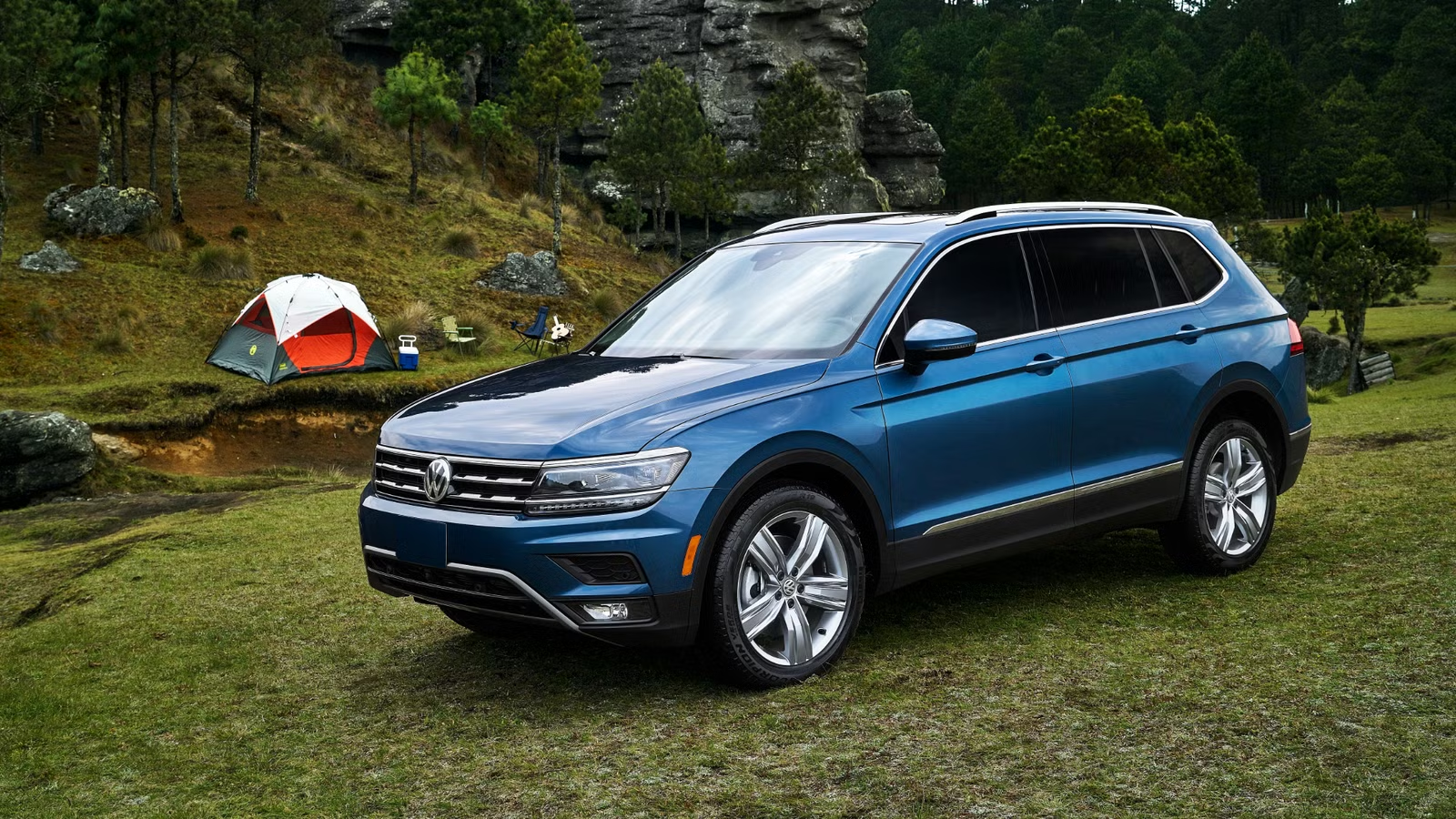
The Volkswagen Group is recalling nearly four million cars and SUVs, spread across several of its brands. Remarkably, the problem with the affected models, which includes the popular Tiguan, Atlas and other models sold in the US, is all due to one single bolt.
But if it fails, it could lead to steering problems that might not be immediate, but could still be a big deal.
Recall Affects VW, Audi, Seat, and Skoda, Going Back To 2013
2018 Volkswagen AtlasVolkswagen
The recall first surfaced in Germany, where safety regulator KBA published it late last week. Spread across multiple recalls, the KBA documents show 2.16 million Volkswagens, including the Golf, Tiguan, and Touran, as well as 700,000 Audi Q3 SUVs and models from Seat and Skoda, the group’s lower-cost brands sold in Europe and other markets.
Volkswagen USA confirmed to CarBuzz that the US recall involves the 2018-2019 VW Atlas and the 2018 Tiguan as well as the 2019-2021 Audi Q3. The total number of vehicles affected is 208,724 units out of the nearly four million worldwide.
The problem is a bolt that connects the steering rack to the subframe. According to VW, corrosion may lead to a fracture of the bolt head. There are two bolts holding the steering rack to the subframe, so it’s not a catastrophic failure.
However, if the driver keeps driving their vehicle, the other mounting can fatigue, fracture, and break. If it breaks, then it could lead to a loss of steering capability.
According to documents filed with the NHTSA, the fracture is most likely to happen during parking and low-speed maneuvering. VW said that steering loads are higher there than at high speeds.
How Will VW Fix It?
2019 Volkswagen TiguanVolkswagen
The fix is about as obvious as you can get: a new bolt. Volkswagen and Audi will install a replacement fastener with “a highly corrosion-resistant polymer coating.” This bolt will look different and will be more durable over time. Still, it’s one bolt that’s costing VW a lot of money right now.
Volkswagen first learned of a bolt failure in late 2024, outside of the North American region. Analysis and testing focused on the corrosion and how moisture could get into the system. By the end of 2025, VW had only received three field reports of a problem, and all three were outside of North America.
VW’s safety team identified that the failure wouldn’t necessarily be obvious to the driver. Based on the investigations and testing, VW and Audi decided to launch the recall.
Volkswagen and Audi told the NHTSA that they were not aware of any crashes, fires, injuries, or warranty claims in North America. Letters will go out to owners on November 10. Owners of the affected vehicles can check their VIN on their brand’s website or on the NHTSA’s recall database.
The international recall affects vehicles from 2013-2024. Around half were vehicles sold in Germany.
CarBuzz Insight – Why This Matters:
2016-2018 Audi Q3Audi
A corroded bolt hidden in the steering rack can be hard to spot on an inspection, but it is a very big deal. It doesn’t impact steering control, but the second mounting point can slowly fatigue until it breaks. If the second mount breaks, the vehicle could lose steering control completely.
Sources: Volkswagen, KBA
