

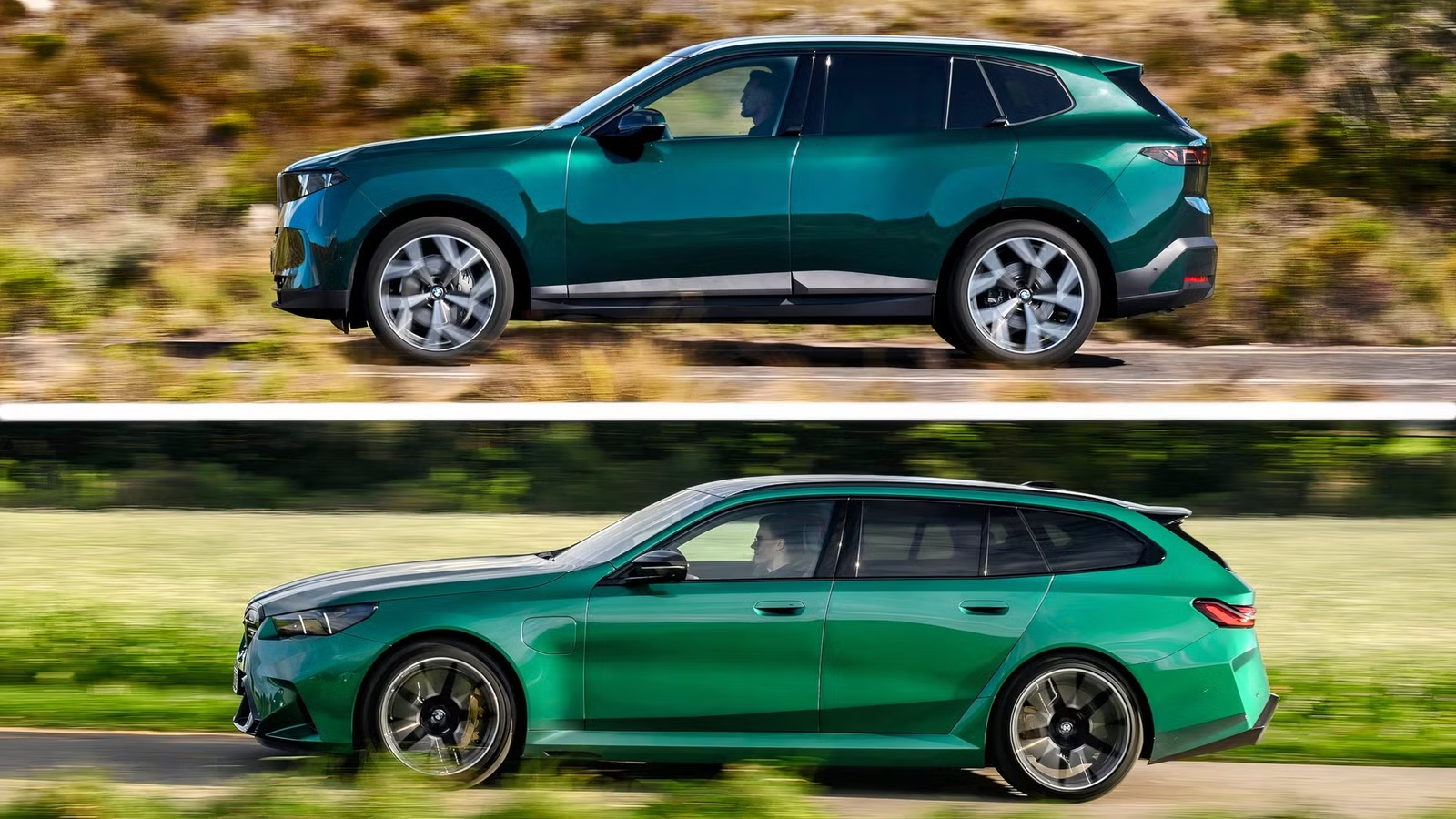
The wagon-versus-SUV debate refuses to die — and honestly, that’s a good thing. As SUVs continue to dominate showrooms and driveways, a quietly passionate contingent of drivers keeps making the case for the humble station wagon. So which side has the stronger argument? We dug into the numbers to find out, using real-world examples like the Volvo V60 versus the Volvo XC60, a Volkswagen Golf Wagon versus the Volkswagen Tiguan, and the Subaru Outback versus the Subaru Ascent.
Shoppers in this universe tend to fall into one of two categories. The first is the wagon enthusiast, who likely wants little to do with driving an SUV. Your writer is in this category. The other group of shoppers is wagon-averse, often because of their appearance, form factor, and a stereotype of being boring. If you’ve found yourself somewhere on the fence in this argument, read on for a logical look at the key benefits of choosing a wagon. Some math and examples should help guide you towards the best purchase decision for your dollars.
We are using a few specific examples from the second-hand market to illustrate the list below, and readers can compare the data themselves in the table at the end of the article.
Easy To Access Cargo And Cabin
Some drivers prefer the taller ride height of an SUV over the typically lower-to-the-ground stance of a wagon, but that extra height can come with a few functional drawbacks. First, the SUV’s floor is generally higher off the ground, which means occupants have to step up further when entering and exiting the cabin. Keep this in mind if you have mobility-challenged passengers in your life. For some occupants — particularly those recovering from knee or hip replacement surgery — a few inches of ride height can make a very significant difference to comfort and safety while boarding and exiting, especially in slippery winter conditions.
Keep the kids in mind, too. The taller the floor, the higher they have to climb to get in. Door handles and the cargo area are also higher off the ground. If you’ve got one (or several) dogs, a wagon typically allows a considerably lower jump for them to enter and exit the cabin.
Using our trio of examples from above, a Volvo V60 Wagon’s cargo floor sits a full 6.5 inches closer to the ground than the comparable XC60 SUV. The Subaru Outback’s rear storage space is nearly four inches lower than the Ascent’s, and the VW Golf Wagon’s luggage space is more than three inches lower than the Tiguan’s.
The Longer Roof Is A Gift For Flexibility
The longer roof and squared-off shape common to wagons help maximize cargo capacity, whereas the SUV’s commonly sloping rear roofline works against it. Case in point: the Volvo V60 wagon has 17% more cargo space behind its second-row seat than the XC60 SUV. That’s an outlier. Based on our trio of examples, the SUV models average about 19% more volume behind the second row, though the gap narrows to less than a 10% average advantage with rear seating rows folded. Therefore, choosing a wagon over a comparable SUV typically comes with only a slight compromise in cargo volume, especially when all rear seating is folded away.
The numbers only tell part of the story, however. The longer roof typical of the station wagon means drivers usually get a cargo area that maintains full height along more of its length. That’s a fancy way of saying the luggage space is more like a box. Boxes aren’t as pretty as wedges, but they can do wonders for flexibility. When your cargo area is shaped like a box, it’s easier to pack tall, lengthy items — such as dog kennels or flat-pack furniture — into the rear.
The Drive Is More Car-Like
This is a matter of preference. Some drivers like the high-riding, more commanding feel of an SUV. They enjoy the elevated driving position and ground clearance to enhance confidence and comfort on the road. Other drivers prefer to sit lower to the ground, placed lower within the vehicle’s cockpit for a drive that’s decidedly anti-SUV.
Note that some wagons are lifted, including the Subaru Outback Wilderness and Audi A4 Allroad, adding a few extra inches of clearance for drivers who prefer it. Think of them as a compromise between an SUV and an estate.
Among our trio, you would find an especially car-like ride in the V60 and Golf Wagon, while the Outback rides a bit taller and feels more SUV-like. You would likely find it easier to see in all directions outside the wagon, with the taller glass spread more evenly around the exterior.
Reaching The Roof Gives You Superpowers
SUVs and wagons both offer long roofs that owners can use for hauling gear. Before loading up the top, consider the cargo you need to haul and where you’re carrying it.
A key benefit of the station wagon is its considerably lower roof height. The Outback’s roof is 5.5 inches lower than the Ascent’s. The Golf Wagon’s roof is 8 inches lower than the Tiguan’s. The V60 Wagon’s roof is 8.5 inches lower than the XC60’s. Being able to reach the roof of your vehicle is a genuine advantage for cyclists, boarders, kayakers, or anyone wanting to quickly load and offload gear from a roof-mounted carrier or cargo box without needing a second person and a stepladder. Unlike hitch-mounted cargo carriers, roof-mounted solutions don’t interfere with access to your tailgate.
The measurements in the table below are for illustrative purposes. Some specs have been converted and rounded. Measurement procedures for cargo volumes vary by market and model year.
Selected Specifications
2022 Volvo XC60
2022 Volvo V60
2022 Subaru Ascent
2022 Subaru Outback
2021 VW Tiguan (2-Row)
2021 VW Golf Wagon
Body Style
SUV
Wagon
SUV
Wagon
SUV
Wagon
Overall Length
185.4 in.
187.4 in
196.8 in.
191.3 in.
185.1 in.
182.4 in.
Roof Height
65.1 in.
56.6 in.
71.6 in.
66.1 in.
66.3in.
58.3 in.
Ground Clearance
8.3 in.
5.6 in.
8.7 in.
8.7 in.
7.9 in.
5.5 in.
Cargo Floor Length Behind Row 2
37.8 in.
40.7 in.
47.6 in.
42.0 in.
38.5in.
41.6 in.
Cargo Floor Length Behind Row 1
68.7 in.
71.7 in.
82.5 in.
75.0 in.
68.7 in.
72.1 in.
Cargo Capacity (5 Seats In Use)
21.6 cu.-ft
25.5. cu-ft
47.5 cu-ft (3rd row folded)
32.5 cu.-ft
37.6 cu.-ft
30.4 cu.-ft
Cargo Capacity (Maximum)
63.3 cu.-ft
60.5 cu.-ft
86.0 cu.-ft
75.7 cu.-ft
73.5 cu.-ft
66.5 cu-ft
Cargo Liftover Height
30.6 in.
24.1 in.
32.0 in.
28.4 in.
28.2 in.
24.8 in.
You Might Save Money On Gas
Buying a wagon might save a few bucks on gas. Wagons tend to be lower, more aerodynamic, and lighter than their SUV counterparts, while often sharing similar engines. This can translate into meaningful fuel savings. According to the EPA, the Tiguan in our comparison drinks $1,750 worth of gas annually in its front-drive configuration. The Golf Wagon uses about $1,400. The Ascent’s annual gas bill is $2,000, the Outback’s is $1,500 with the base engine, or $1,700 with the turbo engine. The XC60 with the B5 engine is $2,250, and the V60 is about the same. It’s a modest perk, but choosing a wagon over a comparable SUV can easily save a few hundred dollars a year on fuel costs.
You Can Get Three Pedals If You Like
If you enjoy rowing your own gears, the wagon may be the ideal choice for you. Modern SUVs with manual transmissions are genuinely hard to find — if you’re shopping brand new, you’ve got just two choices. On the other hand, second-hand shoppers can seek out manual-equipped wagons like the Volkswagen Golf SportWagen Alltrack (discontinued in 2019), Subaru Outback (manual transmission discontinued in 2014), or the manual-equipped BMW 3-Series Wagon.
Sources: Subaru, Volvo, Volkswagen
