

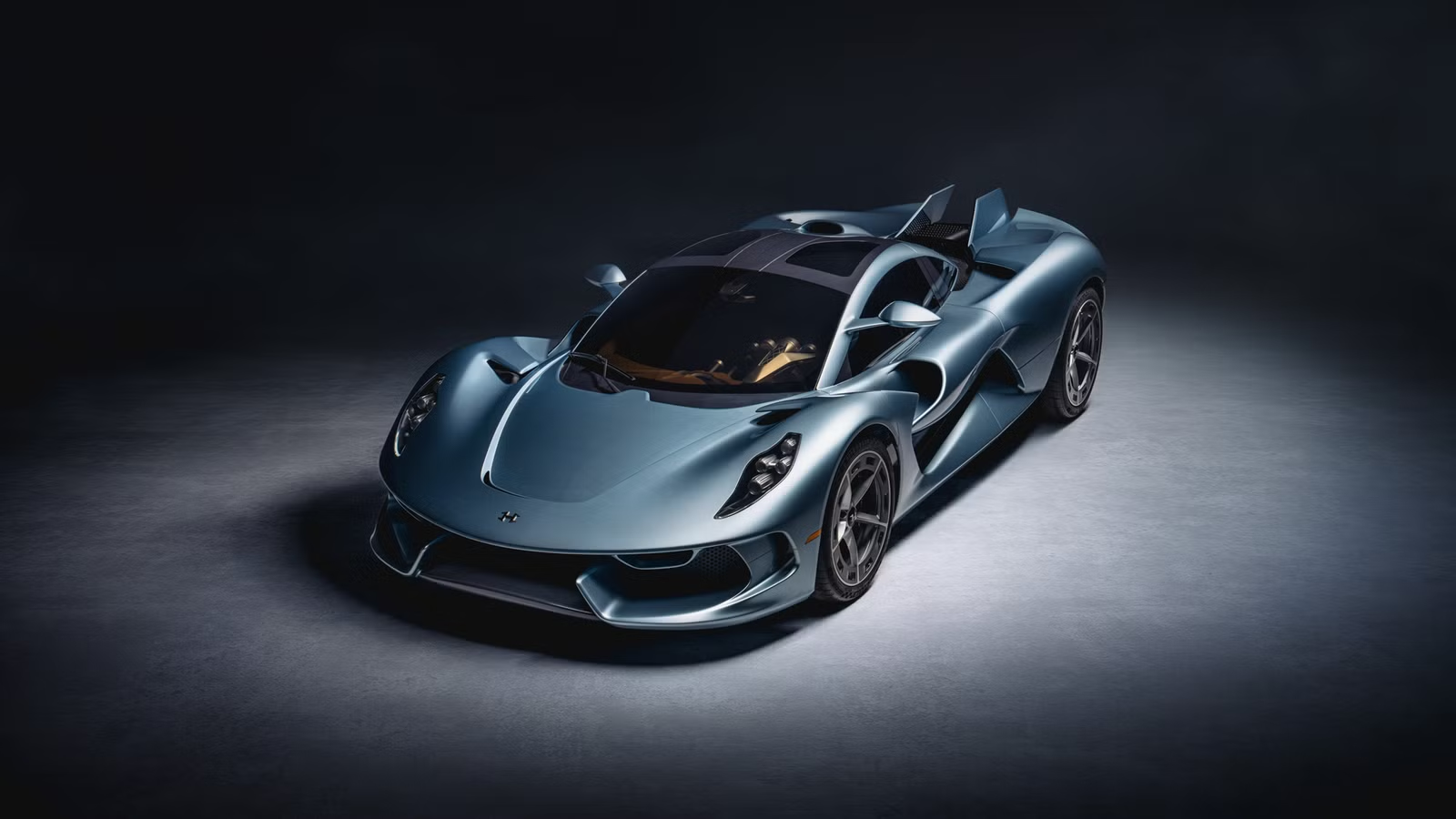
Hennessey has never been shy about chasing numbers, but its third hypercar deliberately walks away from the scoreboard. The Blackbird, revealed ahead of its August 14 public debut at The Quail, is a naturally aspirated, manual-transmission touring hypercar built around feel rather than figures.
Named for and shaped by the Lockheed SR-71, it pairs an all-new V8 developed with Ilmor Engineering to a six-speed gated manual and rear-wheel drive. Inside, there are no screens, no digital displays, and no steering-wheel buttons — just a large central tachometer, a physical ignition key, and an exposed shift linkage. Hennessey engineered it to cover long distances in comfort, with gullwing doors, adaptive suspension, and real luggage space. Only 71 will be built, and more than two-thirds are already spoken for.
Related
The $2.5M Hennessey Blackbird Has No Screens, No Hybrid, No Apologies
Hennessey’s third hypercar runs a 6.2L naturally aspirated V8, six-speed gated manual, and zero screens. Just 71 examples at $2.5M each — and most are already gone.
24
The Blackbird’s interior is designed for maximum man-machine connection, rejecting the screen-led complexity that defines most modern hypercars in favor of physical interfaces and a cabin intended to feel special for decades rather than dated in five years.
23
A large analog central tachometer serves as the cabin’s focal point. In a high-revving, naturally aspirated, manual-transmission car, engine speed matters emotionally as much as technically — so Hennessey gave it visual priority over everything else.
22
The six-speed gated manual sits at the center of the experience, with its exposed shift linkage on full display. Paired with a physical ignition key, simplified controls, and a steering wheel free of buttons, it keeps attention on the act of driving.
21
Connectivity hasn’t been abandoned, just hidden. Premium speakers handle audio, while navigation, Apple CarPlay, and Android Auto run through the driver’s own device, held securely in a bespoke Hennessey holster — functionality without an infotainment screen.
20
Aviation cues carry through the cabin. A dash-mounted whiskey compass comes standard, with an optional timepiece available, while the broader cockpit architecture prioritizes visibility, clarity, and permanence.
19
The most deliberate detail sits at the center of the dash: a subtle, leather-shrouded representation of the SR-71, with dual feature rails extending back into the cabin like the afterburner plume produced during takeoff.
18
Practicality supports the touring brief. Beyond the front trunk that swallows two full-size carry-on bags and the rear luggage pods, there’s additional in-cabin storage, four cup holders, and a valet tray integrated into the dash.
17
Hennessey started the Blackbird’s design with desirability rather than downforce. The brief was to create one of the most beautiful drivers’ cars of the modern era — a car owners want to look at almost as much as they want to drive.
16
The Lockheed SR-71 provided the defining inspiration, and Hennessey owns the registered Blackbird® trademark for high-performance vehicles. The aircraft informed the car’s long stance, directional confidence, disciplined surfacing, and signature lines rather than serving as a surface-level visual reference.
15
The crisp body-side chine line is the car’s defining detail. Echoing the SR-71’s tightly pinched meeting of upper and lower surfaces, it becomes the primary hard line, giving tension to the flowing bodywork around it.
