

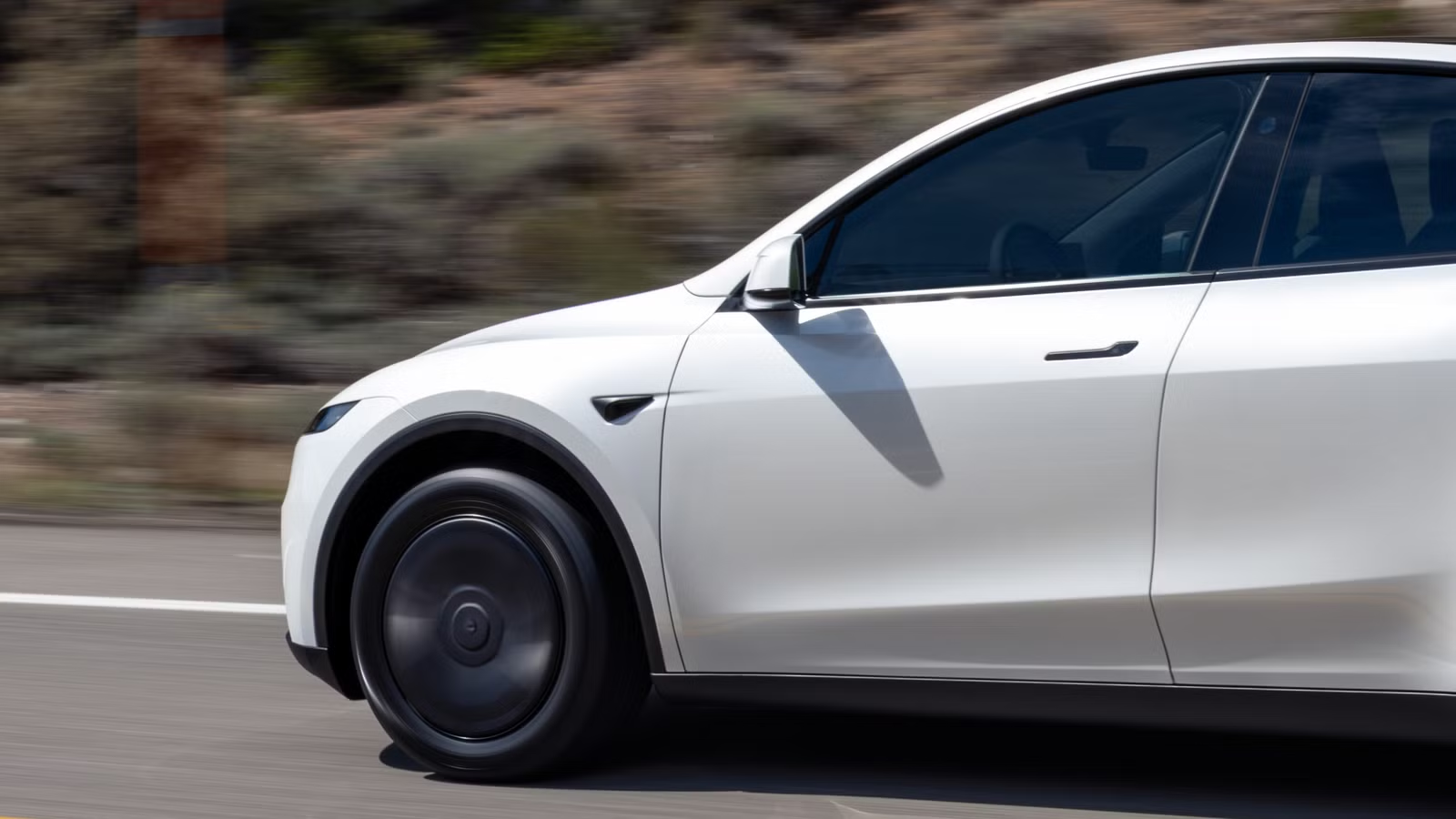
It seems absurd that, here in 2026, we need safety regulations for door handles, but here we are. Vehicles designed with flush, electrically operated door handles have trapped people inside cars after the vehicles lost power, and there have been injuries and deaths as a result. As a result, US auto safety regulators will begin developing new requirements to ensure drivers and passengers can safely exit their vehicles in the event of a power loss — for example, during a crash.
This Was Easily Avoidable
2025 Tesla Cybertruck Long Range AWD front 3/4 angleTesla
A Bloomberg investigation into Tesla alone logged 15 deaths in a dozen incidents in which occupants or rescuers were unable to open the doors of Tesla models that had crashed and caught fire. Bloomberg also reported in 2025 that Tesla CEO Elon Musk insisted the cars have electric doors even after potential safety concerns were raised internally. It doesn’t take a huge leap of logic to realize that door-opening mechanisms that rely on electric power to function will fail when there is a loss of power.
Tesla isn’t the only culprit, but it is the highest profile automotive brand at fault. Rivian is already addressing the issue of emergency interior release mechanisms being difficult to locate. Both automakers are tech-heavy brands, and it was a Silicon Valley engineer who submitted a petition to the National Highway Traffic Safety Administration (NHTSA) in November 2025, requesting new federal safety standards to address the safety risks.
New Rules Are Under Consideration, But How Long Will It Take?
The NHTSA has now granted the petition and will begin the rulemaking process. “NHTSA will gather additional information and data, and solicit public comments, to determine if a rulemaking for a new safety standard is appropriate under the requirements of the Vehicle Safety Act,” said Michael Brooks, executive director of the Center for Auto Safety.
However, rulemaking is the first step to creating or modifying Federal Motor Vehicle Safety Standards. “I wouldn’t expect to see a final compliance date for manufacturers before 2030 even if the rulemaking proceeds swiftly,” Brooks pointed out. The problem is that the organization needs to decide whether to impose new requirements based on the information developed during the rulemaking process. If so, automakers as a whole have a long history of pushing back against new safety mandates when they create additional costs.
CarBuzz Insight – Why This Matters:
Rivian door hackReddit/Bifferer
It’s easy to complain that there are too many rules and regulations in almost every industry. However, this is entirely an own goal created by automakers that have ignored the obvious safety implications of electric door handles in the name of aesthetics and marginal aerodynamic gains. It was also entirely predictable that regulators would take notice. In fact, to put it bluntly, we told you so.
Tesla said it was working on new door handles that are easier to use in a “panic situation,” and Rivian is redesigning its door mechanisms for the brand’s next-generation SUVs and trucks. For the interior, Rivian owners have gone as far as making modifications, so passengers can find the internal mechanical release.
It is hard to give these automakers much credit, though. These changes follow a lawsuit against Tesla following the death of three students from smoke inhalation in a Cybertruck. They designed an obvious flaw into an already reliable system, and changing interior access does not fix the problem of flush exterior electric-only door handles being inoperable by first responders.
Source: Bloomberg
