

Most of you reading this will remember the major automotive news that came out of theEU last December. Back then, the Brussels-based governing body unveiled a plan to revise its mandate on tailpipe emissions from all passenger cars sold after 2035, reducing the emissions-free requirement from 100% to just 90%. Because of this, the door has been opened to things like e-fuels, biofuel, and other low-carbon options in the future, rather than a straight and complete transition to something like electric cars.
Now, though, there’s hope that the European engine can continue on, albeit with some tweaks, well past the original expiration date. That means the big boys, like the inline-six and V8 engines, have been given a new lease on life. While the move from a complete cut to a 90% reduction in tailpipe emissions has been approved and the finer details are now under discussion, we can still dream, and someGerman engine builders have been dreaming, too.
How A 10% Emissions Gap Keeps The V8 And Inline-Six Alive In Europe
2026 BMW M3 Sedan Rear ViewBMW
The key piece of info from the EU’s revised climate framework is the move from cutting 100% to 90% of tailpipe emissions. While the 10% reduction seems like peanuts, it’s actually within this small difference that internal combustion engines still have a pathway. A 100% cut would mean that no passenger car could emit anything at all from a tailpipe, meaning, at present, the only sort of vehicle that could manage that is an electric one.
However, that 90% allows a limited amount of CO2 emissions, meaning combustion engines can remain viable. At present, several alternative fuels to gasoline and diesel are in the works, including things like eFuel which, in essence, is synthetic gasoline that emits zero net carbon emissions. There are also biofuels like bioethanol, which are made from renewable sources, such as corn, sugarcane, algae, or other plant-based oils.
BMW iX5 hydrogen tank on a factory floor.BMW
One of the largest reasons for the push is technological neutrality among European automakers. What this means is that all brands active in the EU would be free to create their own powertrains and platforms under the same broad regulatory umbrella, thereby allowing them to meet the new targets by using a variety of fuels and propulsion systems, some of which could be e-fuels, biofuels, electricity, and hydrogen fuel cells.
A few factors have played into the EU’s revised emissions plan. For one thing, EV adoption briefly slowed between 2023 and 2024 in the EU, with new EV registration rates falling from 14.6 percent to 13.6 percent, respectively. While numbers jumped again to 19% in 2025, the plan was submitted regardless, possibly indicating an estimated drop may come again at some point. EV charging infrastructure in the EU has also become increasingly strained, and even German Chancellor Friedrich Merz stepped in to lobby for the reduction.
Jeep Grand Cherokee 4xe Summit Reserve e-fuel view Jeep
In short, what some Europeans are trying to do is move the EU away from a strict, 100%reduction in tailpipe emissions,which would effectively render all propulsion systems besides battery-electric models illegal. Instead, with the 90% reduction, a large amount of flexibility is introduced into the mix, allowing the market to move freely and come up with better solutions to the overarching emissions issue.
The Real Winners Aren’t Pure V8s – They’re Hybridized Ones
2026 BMW 5 Series Hybrid badgeJared Rosenholtz/CarBuzz/Valnet
While the new 90% target does bring some good news for nearly all European automotive products, the traditional ICE engine doesn’t actually win all that much. The 90% reduction in tailpipe emissions means virtually every single pure ICE engine on the market today wouldn’t qualify for use under the new rule, meaning any sort of gasoline-powered models would have to be hybrids – and some German brands have been hard at work perfecting the performance hybrid engine over the last few years.
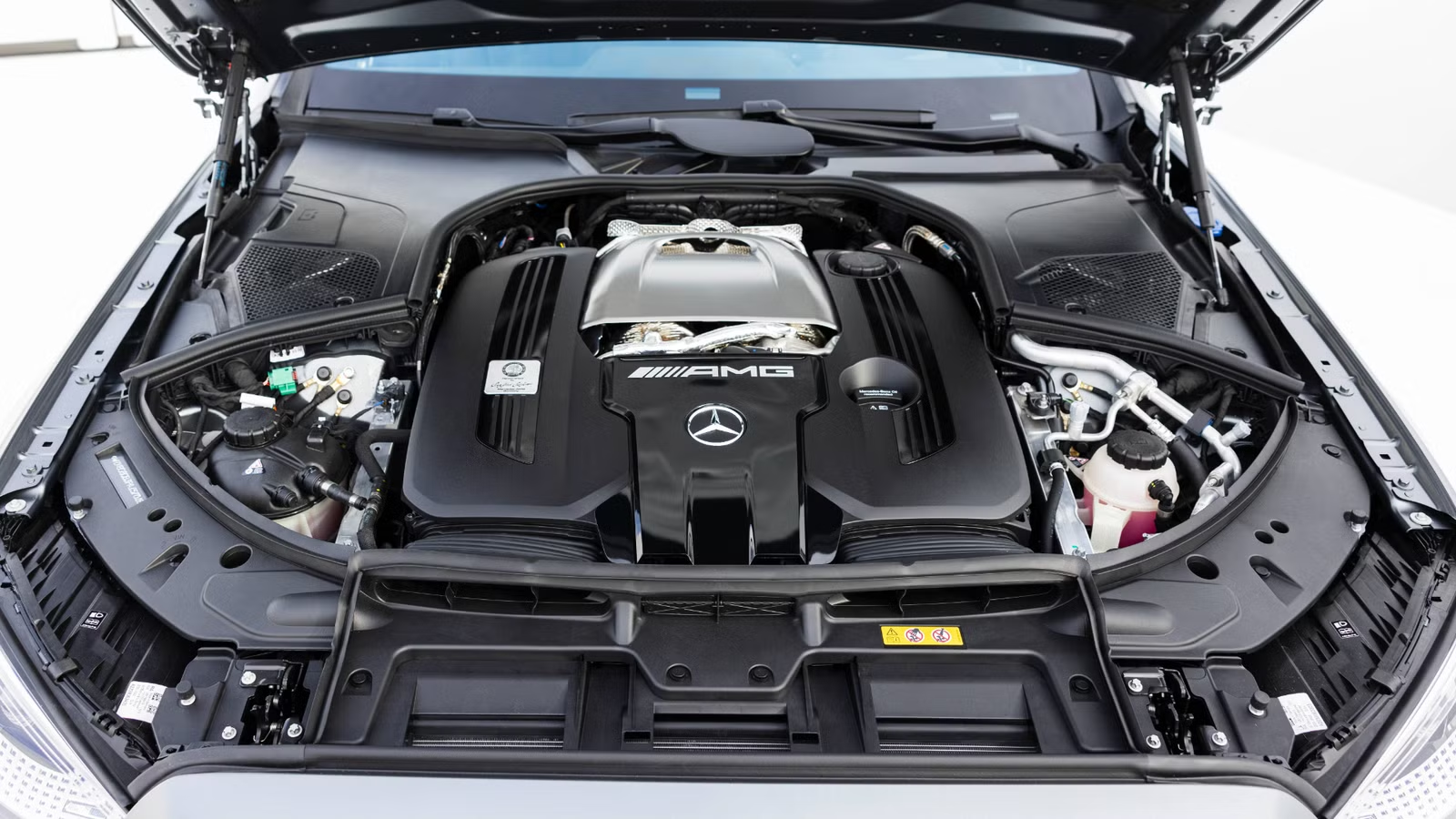
BMW has spearheaded the hybrid push as of late, as it’s invested heavily in next-gen inline-six and plug-in hybrid variants. For example, the 483-horsepower BMW 550e is now on the market, alongside the fully fledged BMW M5, which makes use of a 4.4-liter twin-turbocharged V8 hooked into a PHEV powertrain. Mercedes-Benz is also in on the action, currently producing models like the Mercedes-AMG S63 E Performance and the Mercedes-AMG C63 S E Performance, the former of which uses a hybridized V8. The C63 uses a hybridized, turbocharged four-pot that can chuck out a whopping 671 hp and 752 pound-feet of torque.
The Porsche 911 Carerra GTS comes with a T-Hybrid system, combining a powerful turbocharged flat-six engine with plenty of Volts.Porsche
Porsche released the 911 Carrera GTS T-Hybrid a couple of years ago, marking the first time the fabled nameplate used anything but a pure ICE power plant from the factory since its inception. Speaking of the Stuttgart-based marque, Porsche has also been investing heavily in synthetic fuels over the last few years, and is actively working to develop e-fuel-compatible 911s for the road.
Because the Germans have been hitting hybrid powerplants so hard, it’s no surprise that roughly 41 percent of all EU-based plug-in hybrid sales are made up of German brands. It looks as though the Germans may be in a good position to supply the market.
Germany Pushed Harder For The Revision Than Any Other EU Member
While the trends show EV adoption growing steadily in the EU, the bloc has arguably been the largest proponent of electric vehicles in the developed world, and even Chinese-made EVs are widely sold across continental Europe. However, with the sheer amount of investment in infrastructure and the huge selection of electric models at the average EU citizen’s disposal, new EV adoption still sits at around 20 percent. German policymakers argued EV adoption has been slowing, and infrastructure constraints were becoming more and more commonplace, creating an interest in looking elsewhere for viable, eco-friendly transportation.
At the same time, many mainstream German brands, such as BMW, Mercedes-Benz, and Audi, make a large chunk of their money from performance-oriented models. These models tend to use larger-than-standard engines, which means they’re less fuel efficient. These performance models are also hugely profitable, and, naturally, the marques are hesitant to give up or radically alter their bread-and-butter cars. Plus, these profitable models allow the brands to reinvest earnings into research on electric and alternative propulsion systems.
2027 Audi RS 5 in Progressive Red MetallicRoger Biermann/CarBuzz/Valnet
One of the larger arguments against the new emissions standards, which Germany has worked hard to combat, is the environmental one. With the implied rollback of tailpipe emissions requirements from 100% to 90%, environmental groups argue that the EU is selling itself out to large corporations by weakening the original 100% edict. However, the automakers at the center of the fight argue that the revised plan allows them to focus on a broader spectrum of alternative propulsion systems, rather than being pigeonholed into adopting electric vehicles as a whole.
Adding to the altered plan is a suggested three-year compliance window, allowing marques to transition slowly to the new targets, rather than having to shift completely in just a single year. It looks as though the EU heard the automakers’ cries for help and seems to be listening, too.
The Enthusiast Garage Of 2036 Suddenly Looks Better
2025 Mercedes-AMG S 63 E PERFORMANCE Sedan Front in cornerMercedes-AMG
A year ago, European-minded gearheads and our readers living there were probably dreading the 2035 deadline for the original, 100%-emissions-free EU edict. However, the new 90% target significantly changes the potential scope of the performance automotive market in the next 10 years, as well as complicates it.
Instead of being relegated to electric power entirely, enthusiasts will potentially have the ability to buy cars that run on hydrogen, e-fuels, biofuels, and even hybridized powertrains that use alternative, low-carbon fuels. BMW’s hybrid inline-sixes, Merc’s electrified V8s, and Porsche’s e-fuel-powered 911s will all be fair game if the 90% pitch goes through.
2026 BMW M2 CS. Burning rubber. Drifting. Power slide. Front, three-quarters. MotionBMW
While this is an exciting prospect, it’s not going to save the V8 as a whole from going extinct, at least not in the mill’s current state. The push to abandon internal combustion is also not totally gone; it would have been modified instead. The revised emissions plan simply broadens automakers’ scope of innovation to things outside of electricity.
Overall, the good news is the future would not be wholly electric, should the Commission’s new target be formally adopted by all members of the EU. The market would still look much different than it does today, but at least your car could still make some noise.
Sources: global electric vehicle market, German car industry reversal call, Yahoo News, EU cars and vans decarbonization.
