

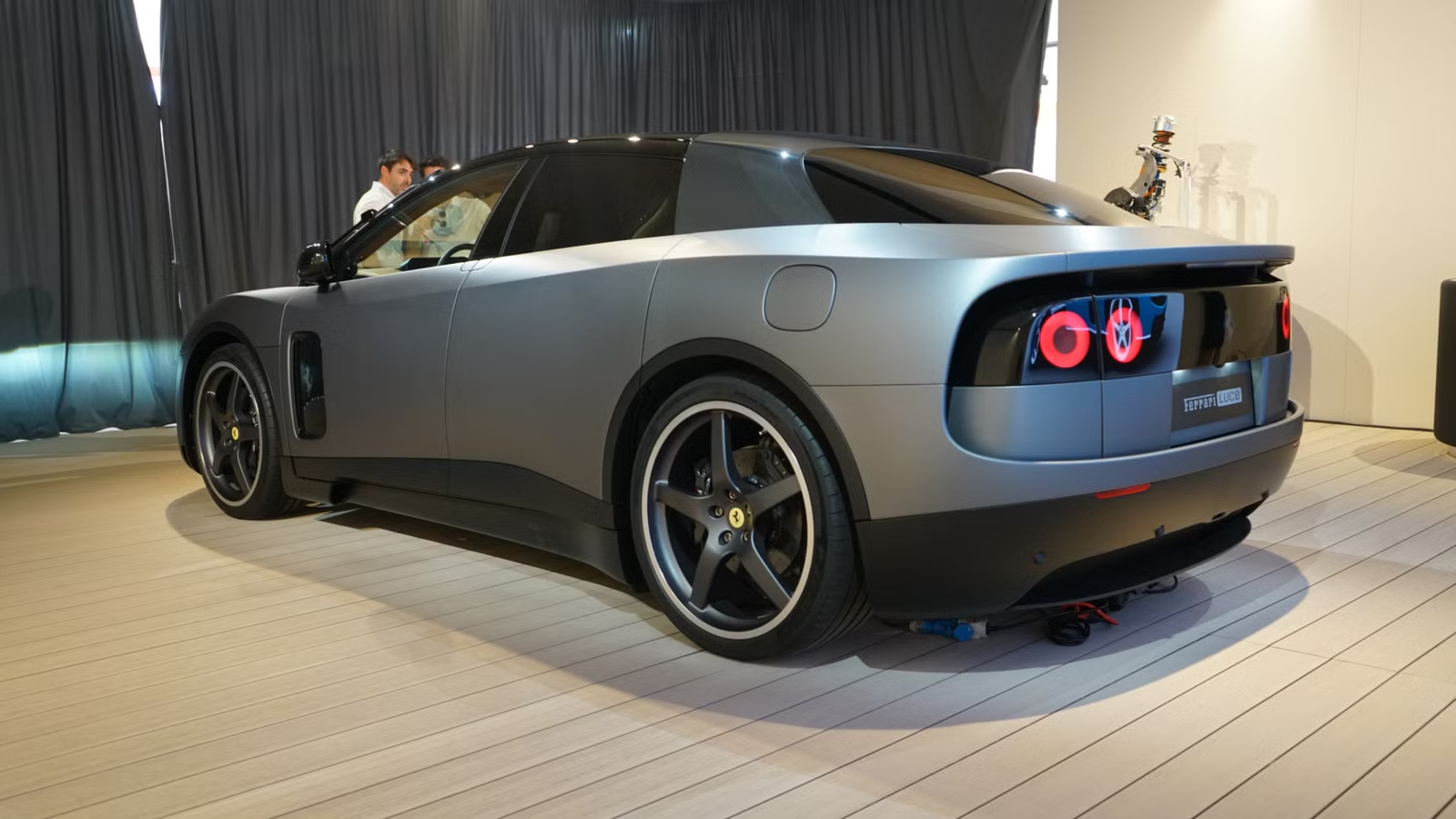
“Every Ferrari is forever,” the Ferrari executive tells CarBuzz. That might be easy when you’ve got mechanical engine components that you can easily swap out, but for battery-electric vehicles, it’s a whole new challenge. Cells degrade over time, technology gets outdated (rapidly), and we’re all too used to our computer chips getting slower as the years go on. Future-proofing the Luce was a key component of its development, and there are a few innovative ways that Ferrari has been able to do that.
Modular Batteries Can Be Replaced As Technology Evolves
2027 Ferrari Luce exterior at Goodwood Festival of SpeedMichal Okonski/CarBuzz/Valnet
We all knew that Ferrari would take a different approach to its first electric vehicle compared to rivals. It wasn’t just going to cram a load of cells into a current model and call it a day, as that’s just not how the Maranello-based manufacturer works. Unlike other automakers, Ferrari truly values building as much of its car in-house as possible, which is why it’s one of the only companies to still operate its own foundry to build its engines.
90% Of Ferraris Are Still On The Road
“We are proud that 90% of production Ferrari models are still on the road,” Pietro Virgolin, global marketing manager at Ferrari, says. “We had in mind that this car should still be driveable in 2050.” The way they’ve done this is by sacrificing some total capacity to install modular batteries in the floor that can be removed, replaced, and upgraded. Instead of replacing the whole 122 kWh pack, the 15 battery modules can be swapped out individually.
This approach to future proofing also extends to the factory. “In Ferrari, for the petrol car, we have our foundry. We have our production line for the electric motors, but also the battery,” Virgolin explains. Having a separate production facility for electric motors means that as they become more standardized across the range, there is a lot of headroom to increase range, performance, and production numbers.
It’s Not Just Better For The Customer
Ferrari ElettricaFerrari
Value and performance longevity through battery swapping isn’t just better for the owner, but also the planet. As battery technology gets better, those who are tempted to swap their Luce for something faster or more efficient only have to swap out the battery, not the whole car. That old battery can then be recycled instead of wasted.
“Forever, we’ll be able to deliver these new batteries to the customer. So this car should be driven forever, like every Ferrari, and this is still another important topic for our customer and for the brand.”
– Pietro Virgolin, Ferrari Global Marketing Manager
An interesting example of this is Ferrari’s upcoming retrofit upgrade to the LaFerrari using the F80’s battery technology. The increase in power density would not only make it faster, but also work better for longer. Ferrari has also started to increase its battery warranty, increasing confidence in their clients who might’ve been worried about longevity.
It’s said that an electric car needs one or two years of driving to offset the carbon emissions of mining the battery’s raw materials and assembly. Through this battery-swapping tech, the heavy use of recycled aluminum for the body, and an in-house building method, Ferrari has been able to lower the impact of the Luce on the planet throughout its life.
CarBuzz Insight — Why This Matters
2027 Ferrari Luce exterior at Goodwood Festival of SpeedMichal Okonski/CarBuzz/Valnet
EVs are truly the butts of jokes about depreciation, and the Porsche Taycan shows that no manufacturer is safe. While the 911 and Boxster models have incredible resale value long after production ends, the company’s electric sedan tumbles in value as soon as it’s off the dealer lot. Yes, it’s more of a mass-market vehicle than the Luce will be, but fears for battery longevity are still rife with every BEV on sale. Resale value is higher when the automaker takes care of its cars.
Creating this program where customers have the backing of Ferrari for the foreseeable future builds trust that if anything were to go wrong, or some new technology would come out in the future, they can simply drive in to get a hardware upgrade. Just think about something like the Nissan Leaf — the first generation could barely hit 80 miles of range, while now it floats over 300. If we could’ve saved the body materials and mechanical components and simply switched out the cells, the environmental impact of scrappage would be much lower.
