

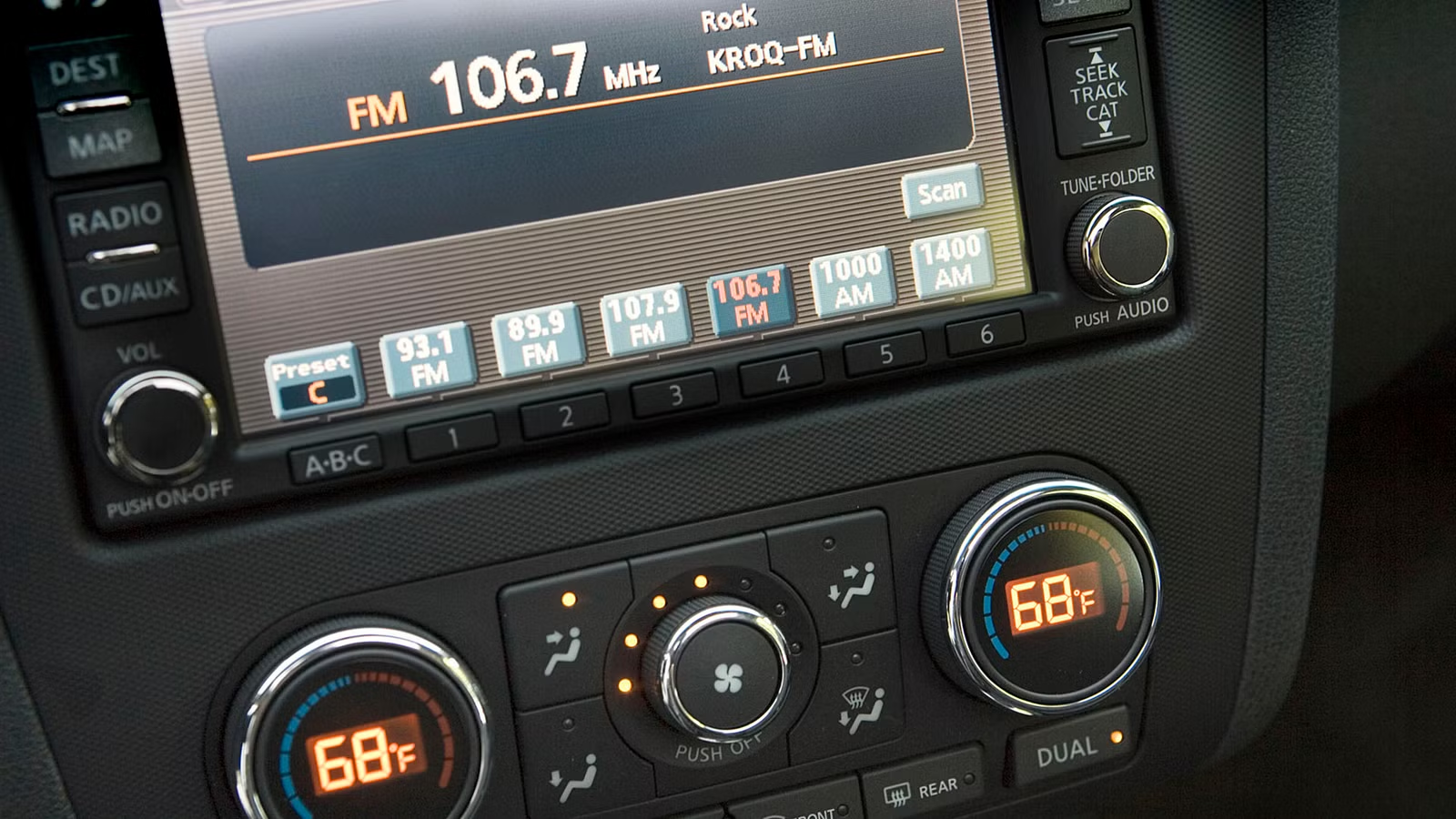
US lawmakers want to make sure that car companies are forced to give you the oldest infotainment technology around. No, not talking to the person beside you to keep you busy on a long drive or “eye-spy,” this is about AM radio. The hazy side of your radio dial that’s now limited to mostly talk and sports but even then is fading out. Car companies don’t want it, and they say that demanding it will add nearly $100 to the price of a vehicle.
AM Radio Has Been In Cars For Almost 100 Years
1977-1979 Mercedes-Benz S-Class Sedan radioMercedes Benz
The first commercial AM radio broadcasts were in 1920, and the first in-car accessory radios showed up in the 1930s. Now, thanks to electric vehicles, the in-car AM radio is starting to go away.
Related
AM Radio In Cars Might Be The Only Thing America’s Political Parties Agree On
The bill now makes a small concession to automakers.
Automakers are dropping the technology in EVs because the electrical noise of the high voltage systems causes interference. The Alliance for Automotive Innovation, an industry trade group, said that it’s not possible to completely resolve the interference, and that a mandate would cost $3.8 billion over the next seven years. That’s potentially $360 for every EV, or $32 per vehicle for the entire market.
Second Time Might Be The Charm
BMW 507 radioBMW
Multiple bills to mandate AM radio have been introduced in Congress. The latest, the AM Radio for Every Vehicle Act of 2025, is getting attention once again from legislators. Congressional representative Tom Emmer (R-MN) recently spoke to the National Association of Broadcasters in late June, talking about why he supported the bill.
He called AM radio “the most personal form of media that mankind has ever known,” and stressed its importance to local areas in emergencies. Automakers dispute this, saying that the Federal Emergency Management Agency’s public warning system uses digital and analog AM and FM radio, internet radio, satellite radio, and cell networks. The Alliance for Automotive Innovation cites a 2023 study showing that just 1% of American adults heard emergency alerts on AM radio.
A 2023 bill by the same name died in committee after pushback from automakers. This time, though, it could have legs. The House resolution has 317 co-sponsors, but more importantly, it has become part of the Build America 250 infrastructure act. If it remains in that larger group of legislation, it is likely to become law. The Build America 250 Act has passed committee, but not yet Congress or the Senate. It’s likely to be pushed through before the end of September, but that doesn’t guarantee the AM radio sections will make it to the finish line.
Related
Automakers Fail To Block Independent Shop’s Right To Repair In Massachusetts
This is a bigger deal than you think it is.
It comes down to automakers versus broadcasters. Which of the two groups has more to lose and more to spend lobbying elected officials. The share of AM radio listeners has been falling since 1978, and currently many stations are also broadcast on FM and online. There are currently approximately 4,342 AM radio broadcast licenses in the US versus 22,205 FM licenses.
CarBuzz Insight – Why This Matters:
2027 BMW iX3Johnson Chen/CarBuzz/Valnet
US broadcasters claim 82 million Americans listen to AM radio at least once a month, though it doesn’t say how many of those are in vehicles. There are already countless ways to alert Americans during emergencies, including FM radio and the internet. The automakers point out that Congress isn’t looking at mandating cars receive digital emergency alerts, which would help ensure those EVs get warnings.
This is really about access. AM radio broadcasters want to continue to have it, while automakers want to avoid an expensive fix to give it to them. That’s ultimately what will settle this issue.
H/T: The Drive
